
If you have been asking yourself, “can I hire a remote paralegal without a staffing firm?” the short answer is yes, and thousands of law firms and legal departments are already doing it in 2026. The traditional staffing agency model is no longer the only path to quality legal support. Direct hiring of remote paralegals is now not only possible but increasingly preferred by practices that want control, speed, and cost savings.
This guide breaks down exactly how to hire a remote paralegal on your own, what to look for, what to avoid, and how platforms like The Remote Reps are making the entire process straightforward for legal professionals.
Why So Many Attorneys Are Moving Away from Staffing Firms
Staffing agencies have long positioned themselves as the gatekeepers of legal talent. But in 2026, that model is showing its age. Here is why more firms are going direct:
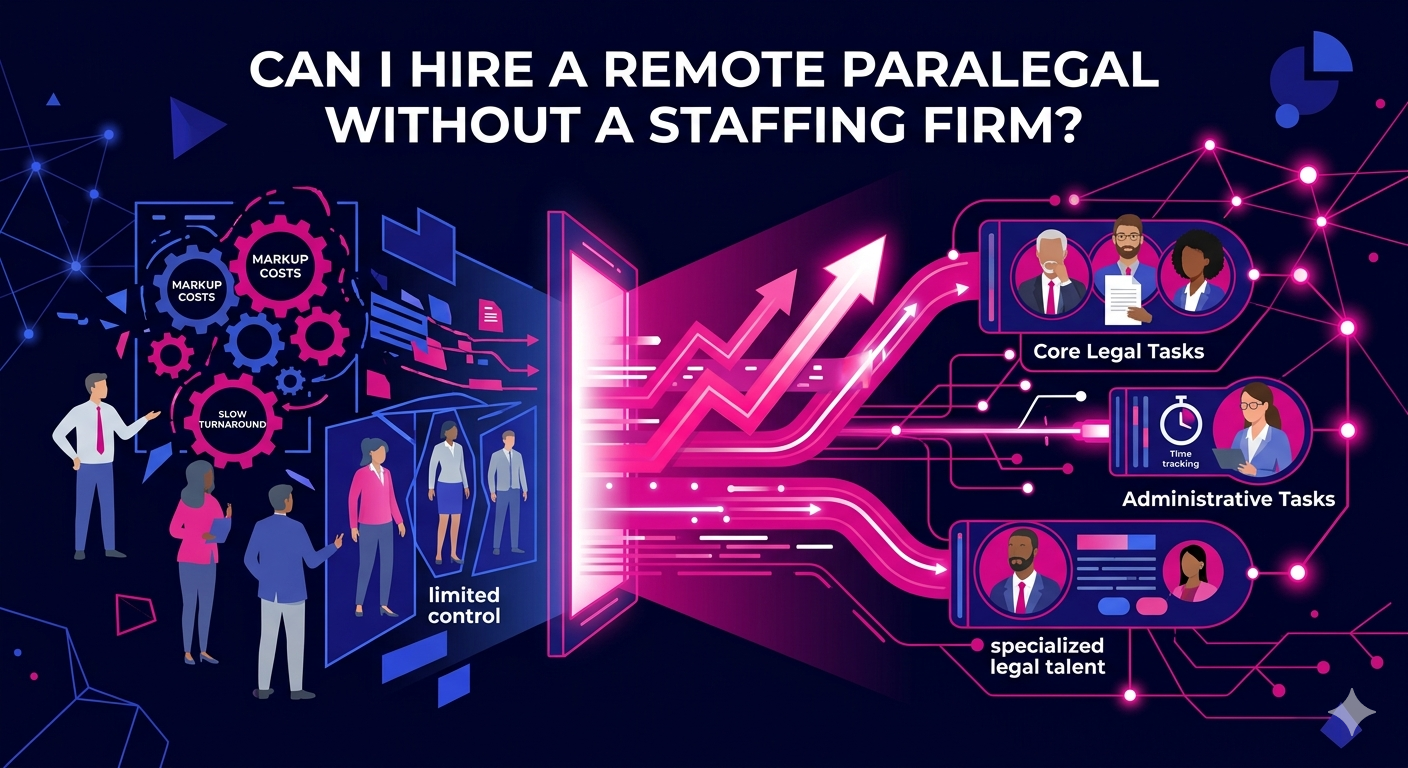
- High markup costs: Traditional staffing firms typically add a 25% to 50% markup on top of the paralegal’s hourly rate, significantly inflating your budget.
- Slow turnaround: Agency pipelines can take weeks. Direct hiring through a vetted platform often produces qualified candidates within days.
- Limited control: When a firm places someone with you, you have less ability to screen for your specific practice area, communication style, or software proficiency.
- Lock-in contracts: Many agencies require long-term agreements or conversion fees if you want to hire the paralegal permanently.
The good news is that you do not need an intermediary to access skilled, experienced remote paralegal professionals anymore.
What a Remote Paralegal Can Actually Do for Your Practice
Before diving into the how, it helps to understand the full scope of what a remote paralegal can handle. Many attorneys underestimate just how much remote legal support can cover:
Core Legal Tasks
- Drafting and proofreading legal documents, contracts, and correspondence
- Legal research using Westlaw, LexisNexis, and Fastcase
- Case file organization and document management
- Client intake and initial interviews
- Court filing coordination and deadline tracking
- Discovery support including document review and Bates stamping
Administrative and Support Tasks
- Calendar and scheduling management for hearings and depositions
- Billing, time tracking, and invoice preparation
- Communication with courts, opposing counsel, and clients
- Maintaining compliance checklists and case timelines
Whether you run a solo practice, a boutique firm, or an in-house legal team, a remote paralegal can become an indispensable part of your operations without the overhead of an in-office hire.
How to Hire a Remote Paralegal Without a Staffing Firm: A Step-by-Step Guide
Hiring a remote paralegal independently is not complicated when you follow a clear process. Here is how to do it right in 2026.
Step 1: Define the Role Clearly
Start by outlining exactly what you need. Specify the practice area, required software tools (Clio, MyCase, NetDocuments, etc.), expected weekly hours, and whether the role is project-based or ongoing. A well-defined job description will attract the right candidates and filter out mismatches early.
Step 2: Choose the Right Platform or Channel
You have several options beyond a staffing agency:
- Specialized remote hiring platforms: Sites like The Remote Reps pre-screen legal professionals, saving you considerable time.
- Legal-specific job boards: Platforms such as LawCrossing and Indeed Legal attract paralegal candidates with relevant credentials.
- LinkedIn: Searching for “remote paralegal” with filters for your jurisdiction or specialty can surface strong candidates quickly.
- Bar association referral networks: Many state bars have affiliate or referral directories that include paralegal associations.
If you want pre-vetted professionals without the agency fees, explore remote paralegal hiring through The Remote Reps, where candidates are screened for legal expertise, communication skills, and remote work readiness before you ever speak with them.
Step 3: Screen for Legal Competency and Remote Readiness
Not every paralegal who works remotely thrives in that environment. During your screening process, look for:
- Relevant paralegal certification (NALA, NFPA, or equivalent) or a paralegal studies degree
- Demonstrated experience in your specific practice area
- Proficiency in legal practice management software
- Strong written communication skills (essential for remote work)
- References from attorneys or legal professionals who supervised their work
- A reliable home office setup with secure internet access
Step 4: Conduct a Structured Interview
Treat the interview like you would any professional hire. Ask scenario-based questions tied to real tasks in your practice. For example: “Walk me through how you would organize discovery documents for a complex commercial litigation case with 5,000 pages.” The quality of the answer tells you far more than a resume ever could.
Step 5: Use a Trial Project
Before committing to a long-term arrangement, assign a paid trial task. This might be drafting a motion template, organizing a sample case file, or conducting research on a specific legal question. A short paid assignment reveals work quality, communication habits, and deadline reliability better than any interview.
Step 6: Set Up a Proper Agreement
Whether you classify your remote paralegal as an independent contractor or an employee matters legally. Consult with an employment attorney or HR professional to ensure your classification is compliant with IRS and state labor rules in 2026. Your agreement should cover confidentiality, data security protocols, scope of work, payment terms, and dispute resolution.
Common Concerns About Hiring Without a Staffing Firm
Is It Legal to Hire a Remote Paralegal Independently?
Absolutely. There is no legal requirement to use a staffing agency to hire a paralegal. You are free to hire directly as a contractor or employee. The key is proper classification, a written agreement, and adherence to your state bar’s rules on paralegal supervision.
How Do I Ensure Confidentiality?
Include a robust confidentiality and non-disclosure agreement in your engagement contract. Require the use of encrypted communication tools, secure cloud storage (such as Clio or NetDocuments), and multi-factor authentication on all shared accounts.
What If the Paralegal Does Not Work Out?
When you hire directly, you retain full flexibility. Without an agency lock-in, you can end or adjust the engagement according to your contract terms. This is one of the most significant advantages of hiring without a staffing firm.
Cost Comparison: Agency vs. Direct Hire in 2026
Understanding the financial impact makes the case even clearer. Here is a rough breakdown based on current market rates:
- Remote paralegal direct rate: $25 to $55 per hour depending on specialty and experience
- Staffing agency markup: Typically adds 30% to 50% on top of that rate
- Effective agency cost: $33 to $82 per hour for the same talent
- Annual savings on a 20-hour/week engagement: $10,000 to $28,000 or more
For solo practitioners and small firms where every dollar matters, that difference is significant. Direct hiring also eliminates placement fees, which can range from $3,000 to $8,000 per hire at traditional agencies.
Why The Remote Reps Is a Smart Alternative to a Staffing Agency
The Remote Reps operates differently from a staffing firm. Rather than acting as a middleman that marks up talent and locks you into contracts, The Remote Reps connects you with pre-vetted remote professionals across legal and business functions. You get the quality assurance of a screened candidate without the agency overhead or control limitations.
You can also explore related remote legal support roles including remote legal assistants and remote legal secretaries if your needs extend beyond paralegal tasks. And if your practice relies on client acquisition, consider pairing your legal support team with a remote virtual assistant to handle administrative overflow.
Tips for Managing a Remote Paralegal Successfully
- Use a project management tool: Asana, Monday.com, or Notion helps both parties stay aligned on tasks and deadlines.
- Schedule regular check-ins: A weekly 30-minute video call keeps communication flowing and prevents misunderstandings.
- Document your processes: Create written SOPs for recurring tasks so your paralegal can work independently without constant oversight.
- Set clear deadlines and priorities: Remote workers perform best when expectations are explicit and written.
- Invest in secure tools: Use password managers, VPNs, and encrypted file sharing from day one.
The Bottom Line
The question of “can I hire a remote paralegal without a staffing firm” is answered clearly by the market in 2026: yes, and it is increasingly the smarter choice. Direct hiring gives you better cost control, faster placement, and full flexibility over the engagement. With the right platform, a clear process, and a solid contract, you can onboard a highly skilled remote paralegal without paying agency fees or surrendering control of the hiring decision.
Ready to find your next remote paralegal? Browse pre-vetted remote paralegals at The Remote Reps and start building your ideal remote legal team today without a staffing firm in between.
Frequently Asked Questions
Can I hire a remote paralegal without a staffing firm legally?
Yes. You can hire a remote paralegal without a staffing firm as either an independent contractor or an employee. There is no law requiring you to use an agency. Ensure you follow IRS worker classification guidelines, your state bar’s paralegal supervision rules, and include a proper written agreement covering confidentiality and data security.
How do I find qualified candidates if I hire a remote paralegal without a staffing firm?
You can hire a remote paralegal without a staffing firm through legal job boards, LinkedIn, bar association networks, and platforms like The Remote Reps that pre-screen legal candidates. These channels give you direct access to experienced paralegals without agency markups or placement fees.
What should my contract include when I hire a remote paralegal without a staffing firm?
When you hire a remote paralegal without a staffing firm, your contract should cover scope of work, hourly rate or project fees, payment schedule, confidentiality obligations, data security requirements, intellectual property ownership, and termination terms. Having an employment attorney review the agreement is a smart step.
How much does it cost to hire a remote paralegal without a staffing firm in 2026?
When you hire a remote paralegal without a staffing firm, you typically pay between $25 and $55 per hour depending on experience and specialty. This compares favorably to agency rates, which add a 30% to 50% markup on top of the paralegal’s base rate. Direct hiring can save a small firm $10,000 or more annually.
How do I manage confidentiality when I hire a remote paralegal without a staffing firm?
When you hire a remote paralegal without a staffing firm, protect client data by requiring an NDA, using encrypted legal practice management software, enforcing multi-factor authentication, and limiting access to only the files needed for each matter. These practices meet professional responsibility standards and protect your clients under applicable bar rules.
Is hiring a remote paralegal without a staffing firm faster than using an agency?
In most cases, yes. When you hire a remote paralegal without a staffing firm through a platform like The Remote Reps, you can review pre-vetted candidates within days rather than waiting weeks for an agency pipeline. You also avoid the back-and-forth that typically comes with agency-mediated placements, giving you faster time-to-hire and faster time-to-productivity.