
If you have been considering expanding your team beyond borders, you have almost certainly asked yourself: are offshore employees reliable? It is one of the most common concerns among business owners who are exploring remote and international hiring for the first time. The short answer is yes, offshore employees can absolutely be reliable. But like any hiring decision, the outcome depends heavily on how you source, vet, onboard, and manage your team. This guide breaks down everything you need to know before making the decision.
Why the Question of Reliability Comes Up So Often
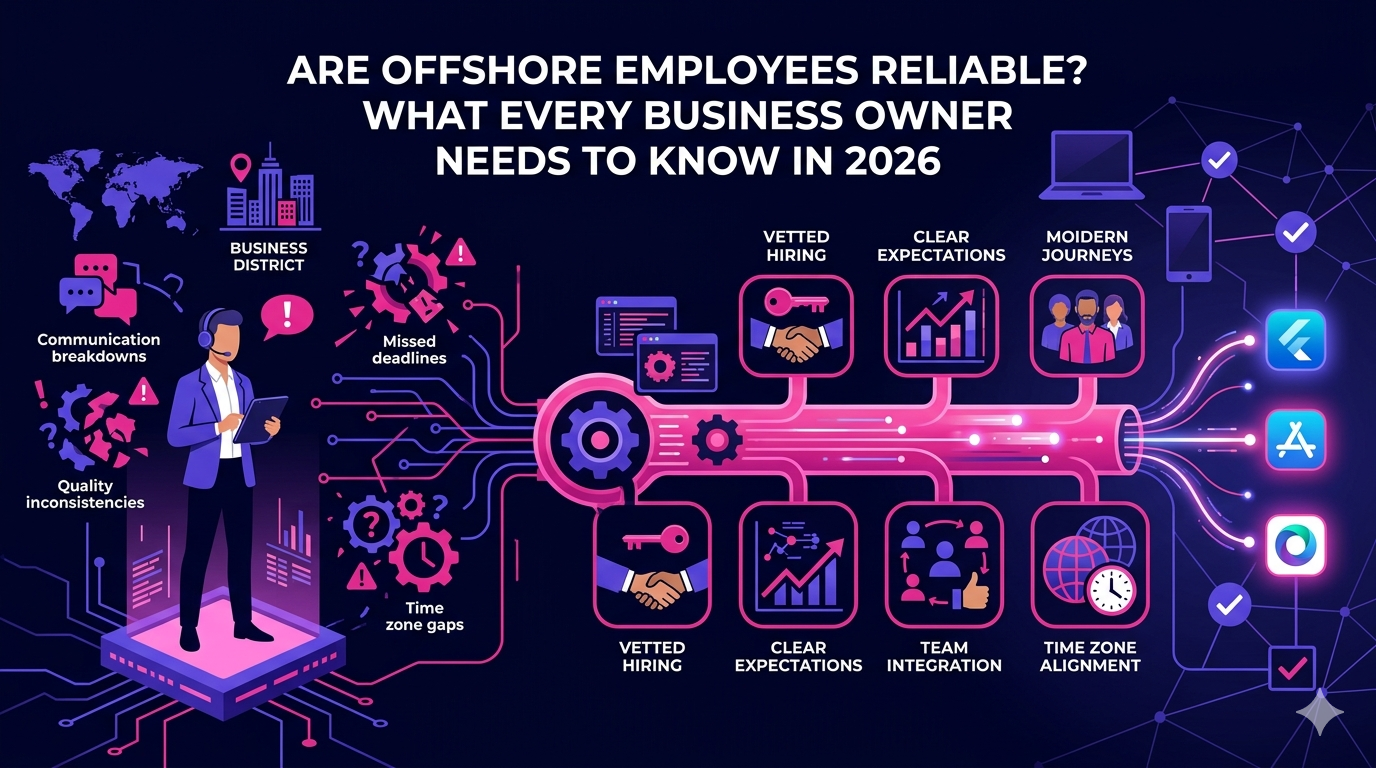
The concern around whether offshore employees are reliable usually stems from a handful of common fears: communication breakdowns, missed deadlines, quality inconsistencies, and time zone gaps. These are legitimate concerns, but they are not inherent to offshore hiring. They are management and process challenges that occur just as often with domestic remote workers when the right systems are not in place.
In 2026, millions of businesses across the United States, United Kingdom, Canada, and Australia operate with offshore teams that deliver consistent, high-quality work every single day. The difference between those businesses and the ones that had bad experiences comes down to three things: who they hired, how they managed them, and what expectations were set from the start.
What the Data Says About Offshore Employee Reliability
Reliability in a workforce is not geography-dependent. It is people-dependent. Research consistently shows that offshore workers who are properly sourced, compensated fairly, and integrated into a team culture perform at the same level as their domestic counterparts, and in many cases, higher due to higher motivation and lower turnover.
In fact, offshore professionals in regions like Latin America, South and Southeast Asia, and Eastern Europe often cite job stability, international exposure, and above-market compensation as key motivators for performing at a high level. When someone genuinely values their role, reliability follows naturally.
According to McKinsey research on the reliability and productivity of global remote workforces, distributed teams with clear processes and proper management tools match or exceed the output of fully in-office teams across most knowledge work categories.
Factors That Determine Whether Offshore Employees Are Reliable
The Quality of the Hiring Process
Reliability starts before the hire. If you source offshore talent through unvetted job boards without a structured screening process, you are taking a significant risk regardless of geography. Working with a specialized offshore staffing platform that pre-screens candidates for skills, English proficiency, availability, and work history dramatically increases your chances of hiring someone dependable from day one.
Role Clarity and Expectations
Offshore employees are not unreliable. But ambiguous job descriptions, unclear KPIs, and inconsistent feedback create the conditions for poor performance. When expectations are crystal clear from the first week, offshore team members have every tool they need to meet and exceed them.
Communication Infrastructure
Reliable offshore employees need reliable communication channels. Businesses that integrate their offshore hires into Slack, project management tools like Asana or ClickUp, and regular video check-ins report dramatically higher satisfaction with offshore performance. Without these touchpoints, any remote worker, onshore or offshore, is likely to drift.
Time Zone Alignment
One of the most practical reliability concerns is availability. If your offshore team is not available during your business hours, real-time collaboration becomes difficult. This is why US-hours alignment is a key factor when hiring offshore support staff. Many offshore professionals specifically choose US-aligned roles and build their schedules around your time zone, which removes one of the most common reliability objections entirely.
Compensation and Job Satisfaction
Offshore employees who are paid fairly relative to their local market and treated with respect are highly motivated to perform well. High turnover and inconsistency in offshore teams are almost always symptoms of poor compensation, unclear growth paths, or a dismissive management culture. Treat offshore team members as full members of your team and reliability improves significantly.
Common Myths About Offshore Employee Reliability
Myth 1: Offshore Employees Are Just Looking for a Temporary Job
This is one of the most persistent myths. In 2026, offshore remote work has become a primary career path for millions of skilled professionals around the world. Many offshore employees have spent years building careers with US and European companies specifically because of the stability, growth, and compensation those roles offer. Long-term offshore hires are the norm when companies invest in the relationship.
Myth 2: Language Barriers Make Offshore Teams Unreliable
Language proficiency is a screening criterion, not a fixed limitation. The global talent pool includes enormous numbers of highly fluent English speakers, particularly in the Philippines, India, Latin America, and Eastern Europe. A proper hiring process screens for communication skills specifically, which eliminates this concern before anyone is onboarded.
Myth 3: You Cannot Hold Offshore Employees Accountable
Accountability is a systems problem, not a location problem. Businesses with clear KPIs, weekly check-ins, time tracking where appropriate, and structured performance reviews hold their offshore employees just as accountable as any in-house team member. The tools exist. The processes just need to be implemented.
Which Offshore Roles Tend to Be the Most Reliable
Reliability varies not just by individual but by role type. Offshore employees in structured, process-driven roles tend to demonstrate the highest consistency because the work is measurable and the expectations are clear. Roles that frequently perform well in offshore models include:
- Sales Development Representatives: Outbound calling and prospecting with clear daily targets and CRM tracking
- Customer support agents: Ticket-based workflows with defined response time SLAs
- Virtual assistants: Task-based support with recurring daily or weekly deliverables
- Digital marketers and SEO specialists: Campaign-based work with clear reporting structures
- Lead generation experts: Measurable outputs like qualified leads per week or per month
- Cold email specialists: Template-driven outreach with performance metrics
For businesses in growth mode, hiring reliable offshore lead generation experts is one of the highest-ROI moves available, combining cost efficiency with measurable, trackable output that makes reliability easy to verify week over week.
How to Maximize Reliability When Hiring Offshore in 2026
If you want offshore employees who are reliable, here is a practical framework that works in 2026:
- Use a vetted staffing platform: Skip unscreened freelancer marketplaces and work with a service that pre-qualifies candidates for your specific role requirements.
- Run a paid trial period: Before committing to a long-term contract, engage the candidate for two to four weeks on a defined project. Real performance under real conditions is the best reliability test available.
- Define KPIs from day one: Every offshore hire should know exactly what success looks like at 30, 60, and 90 days. Vague expectations produce vague results.
- Build in regular communication rhythms: Weekly video check-ins, daily Slack standups, and monthly performance reviews keep offshore employees connected, motivated, and accountable.
- Treat them as part of the team: Include offshore employees in company meetings, celebrate their wins, and invest in their development. This transforms a transactional relationship into a committed partnership.
The Bottom Line on Offshore Employee Reliability
Are offshore employees reliable? Yes, when you hire well, manage effectively, and create an environment where performance is both expected and rewarded. The businesses that report the best experiences with offshore hiring are the ones that treat it with the same strategic intention they bring to any other hiring decision.
In 2026, offshore hiring is not a gamble. It is a proven growth strategy used by thousands of companies to build high-performing teams at a fraction of the domestic cost. The reliability is there. You just need the right partner to access it.
Ready to start building your reliable offshore team? Explore the full range of pre-vetted remote professionals at The Remote Reps and hire with confidence from day one.
Frequently Asked Questions
Are offshore employees reliable enough for customer-facing roles?
Yes, offshore employees are reliable in customer-facing roles when they are screened for communication skills, product knowledge, and professional conduct. Many of the most effective customer support teams in 2026 are fully offshore, running on structured workflows with clear SLAs and regular quality monitoring. The key is hiring through a platform that specifically vets for customer-facing experience and English fluency.
Are offshore employees reliable when working independently without daily supervision?
Offshore employees are reliable when working independently as long as expectations, deliverables, and check-in rhythms are clearly established upfront. Autonomy works when the employee understands the goals and has the tools to track and report their own progress. Self-managed offshore professionals are common in roles like SEO, digital marketing, virtual assistance, and lead generation.
What makes offshore employees unreliable in some cases, and how can I avoid that?
Offshore employees tend to underperform when they are hired without a proper vetting process, given unclear instructions, paid below market rate, or managed inconsistently. These are process failures, not personal ones. Avoiding them is straightforward: use a structured hiring process, set clear expectations from day one, pay competitively, and build regular communication touchpoints into your workflow.
Are offshore employees reliable for long-term positions, or is turnover a problem?
Offshore employees in well-managed roles with fair compensation and growth opportunities show strong long-term retention. Turnover is primarily a symptom of poor pay, lack of recognition, or unclear career progression. Businesses that invest in their offshore team members as genuine long-term hires regularly maintain relationships spanning multiple years.
Are offshore employees reliable when it comes to data security and confidentiality?
Data security with offshore employees is manageable with the right protocols in place. This includes signed NDAs, role-based access to systems, the use of secure collaboration tools, and clear data handling policies during onboarding. Many offshore professionals working with US companies in 2026 are well-versed in data privacy standards and take confidentiality seriously as a condition of their employment.
How do I know if an offshore employee is reliable before I commit to hiring them full time?
The most reliable indicator is a structured paid trial period. Engaging a candidate for two to four weeks on a defined task with measurable outputs gives you real performance data before any long-term commitment is made. Pairing this with reference checks, skills assessments, and hiring through a vetted platform significantly reduces the risk of a poor fit.