If you are building a remote sales team and asking what should I look for when hiring a remote SDR, you are asking the right question at the right time. Sales Development Representatives are the engine of your pipeline. They prospect, qualify, and book meetings that drive revenue. Hire the wrong one and your pipeline stalls. Hire the right one and your entire sales motion accelerates.
But hiring a remote SDR is different from hiring someone in-house. You cannot rely on body language in the interview, casual office check-ins for accountability, or a shared floor culture to keep energy high. You need to evaluate specific skills, habits, and mindsets that translate directly to remote performance. This guide covers everything you need to know.
Why Remote SDR Hiring Demands a Different Standard
In 2026, the remote sales landscape is more competitive than ever. Companies across the globe are vying for the same top SDR talent. That means the pool is large but so is the noise. Generic salespeople who thrive in supervised office environments often struggle when left to manage their own schedule, motivation, and output without a manager walking the floor.
A remote SDR must be self-directed, digitally fluent, and genuinely resilient. The traits that make someone a great in-office SDR and a great remote SDR overlap but are not identical. Understanding where they diverge will sharpen your hiring process significantly.
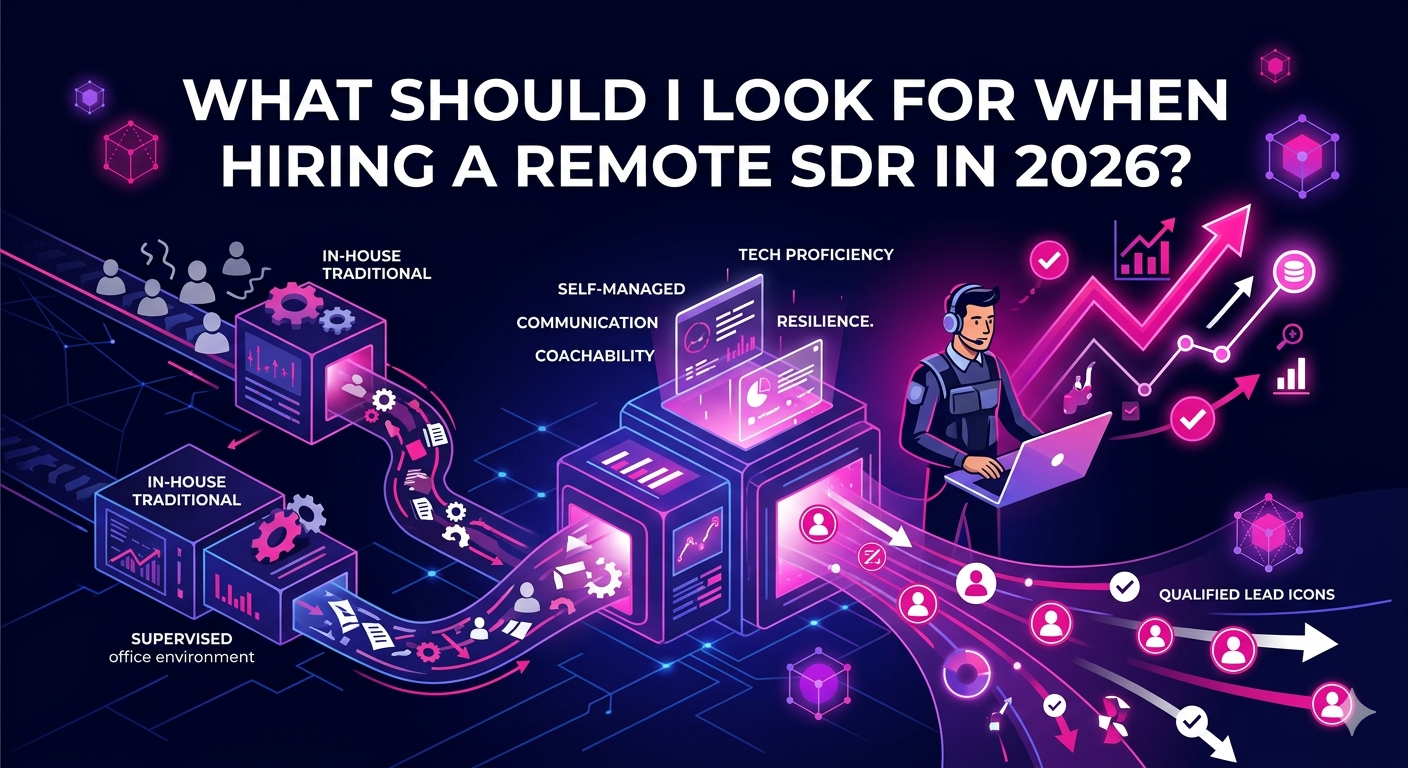
What Should I Look for When Hiring a Remote SDR: The Core Traits
1. Proven Self-Management Skills
The number one differentiator in remote SDR performance is self-management. Without a manager physically present, your SDR must set their own daily call targets, manage their outreach cadences, track their activity, and hit quota through internal motivation rather than external pressure.
Ask candidates how they structure their workday. Look for specific systems, not vague answers. A strong candidate will describe blocking time for prospecting, using a CRM to log every touchpoint, and reviewing their own numbers weekly. If they cannot explain their personal productivity system, that is a red flag.
2. Strong Written and Verbal Communication
Remote SDRs live in email inboxes, LinkedIn messages, Slack threads, and video calls. Their ability to communicate clearly and persuasively across every channel determines whether prospects respond or ignore them.
During interviews, pay close attention to how they write follow-up emails, how they present themselves on a video call, and whether their messaging is crisp and professional. Ask for writing samples or run a live cold email exercise. This will tell you more than any resume bullet point.
3. Coachability and a Growth Mindset
The best remote SDRs in 2026 are not just talented, they are learnable. Markets shift. Messaging needs to evolve. Objections change as buyer awareness grows. A coachable SDR will take feedback, apply it quickly, and improve their output over time.
Test for coachability during the interview by giving real-time feedback on something they say and watching how they respond. Do they defend themselves immediately or do they pause, reflect, and adjust? The response tells you a great deal about what managing them remotely will look like.
4. Technology Proficiency
A remote SDR in 2026 operates across a stack of tools including CRM platforms like Salesforce or HubSpot, sales engagement tools like Outreach or Apollo, LinkedIn Sales Navigator, video prospecting tools, and communication platforms like Slack or Zoom.
You do not need someone who knows every tool you use on day one, but you do need someone who learns new software quickly and approaches technology with curiosity rather than resistance. Ask which tools they have used and how deeply. Ask them to walk you through how they managed a prospecting cadence in their last role.
5. Resilience and Rejection Tolerance
SDR work involves a high volume of rejection every single day. In a remote environment, that rejection can feel amplified because there is no team energy nearby to counterbalance it. A remote SDR needs a thick skin and a short memory.
During the interview, ask how they handle a stretch of bad days where no one books a meeting. Listen for candidates who frame rejection as data rather than personal failure. The ones who say things like “I adjust my approach” or “I analyze what is not working” are far more likely to sustain performance over time than those who say “I just push through.”
Key Skills to Evaluate When Hiring a Remote SDR
Cold Outreach Ability
Cold outreach is the primary job function of an SDR. Whether it is cold calling, cold email, or LinkedIn outreach, you need to assess their actual ability to start conversations with strangers who have no prior relationship with your brand.
Run a role play. Give them a brief product description and a fictional prospect profile, then ask them to cold call you. Evaluate their tone, their opening line, how they handle your objections, and whether they try to qualify or just pitch. This exercise reveals more than any interview question.
Qualification Skills
Booking meetings is only half the job. A great remote SDR qualifies prospects before booking them so your account executives are not wasting time on calls that should never have been scheduled. Look for familiarity with frameworks like BANT, MEDDIC, or CHAMP and an understanding of why qualification matters upstream.
Research and Personalization
Generic outreach does not convert in 2026. Buyers have seen every template. The best remote SDRs invest time researching their prospects, finding relevant triggers like funding announcements or hiring signals, and personalizing their outreach in ways that demonstrate genuine understanding of the prospect’s world.
Ask candidates how they research a prospect before reaching out. A strong answer will include specific sources, specific signals they look for, and a clear logic for why personalization drives better reply rates.
Red Flags to Watch for in Remote SDR Candidates
Knowing what to look for is only half the picture. You also need to recognize what disqualifies a candidate quickly.
- Vague answers about past quota attainment without specific numbers
- No clear daily structure or productivity system when asked
- Defensiveness when given constructive feedback during the interview
- No familiarity with CRM or sales engagement tools despite claiming SDR experience
- Blaming past managers or teammates for missed targets rather than owning outcomes
- Inability to explain their prospecting process step by step
- Weak written communication in emails or LinkedIn messages they share as examples
None of these disqualifiers on their own is necessarily fatal, but patterns matter. Two or more of these red flags appearing in a single candidate is a strong signal to keep looking.
How to Structure Your Remote SDR Interview Process
A thoughtful interview process reduces the risk of a bad hire significantly. Here is a practical structure that works well for remote SDR roles in 2026.
Round One: Screening Call
Keep this to 20 to 30 minutes. Focus on communication style, basic qualification, and whether the candidate understands what SDR work actually involves. Many candidates apply without fully understanding the role, and this round filters them out efficiently.
Round Two: Skills Assessment
This is where you run the cold call role play and ask for a written cold email. Give them the same brief and fictional prospect and evaluate both outputs against the same rubric. This creates a fair, comparable data point across all candidates.
Round Three: Culture and Coachability
Bring in a second interviewer, ideally someone from your sales leadership team. Give the candidate feedback from round two and watch how they incorporate it. Discuss their career goals, their working style preferences, and how they have handled adversity in past roles.
If you want to connect directly with pre-vetted candidates who have already been screened for remote sales aptitude, explore the remote SDR services at The Remote Reps. Every candidate in their network has been evaluated for the exact traits that drive remote pipeline performance.
Compensation and Expectations for Remote SDRs in 2026
Competitive compensation is essential for attracting quality remote SDR talent. In 2026, most experienced remote SDRs expect a base salary between $40,000 and $60,000 annually, with on-target earnings reaching $65,000 to $90,000 when commission is included. Rates vary based on industry, market, and the complexity of the product being sold.
Be transparent about quota expectations, ramp periods, and how commission is calculated. Candidates who ask detailed questions about these elements are typically the serious ones worth investing in.
The Bottom Line on Hiring a Remote SDR
When you ask what should I look for when hiring a remote SDR, the answer comes down to five pillars: self-management, communication, coachability, tech fluency, and resilience. Nail the evaluation of those five areas and you dramatically increase the probability of a successful hire.
The remote SDR role is one of the highest-leverage positions in a modern sales organization. Done right, one great remote SDR can generate hundreds of qualified opportunities per year. Done wrong, you lose months of runway and pipeline momentum.
Take your time, run a structured process, and do not skip the skills assessment round. The extra effort at the hiring stage pays dividends throughout the entire employment relationship.
Ready to find your next remote SDR without the guesswork? Visit The Remote Reps to get matched with qualified, screened remote sales professionals today.
Want additional data on what top SDR performance looks like in 2026? Read the Sales Benchmark Index research on what to look for when hiring a remote SDR and building high-performing remote sales teams for industry benchmarks and best practices.
Frequently Asked Questions
What should I look for when hiring a remote SDR with no prior remote experience?
Focus on self-discipline, communication quality, and tech proficiency rather than remote experience specifically. Many strong SDRs transition well to remote work if they have a clear daily structure, strong written communication habits, and a track record of hitting quota in their previous role. Ask how they plan to manage their time and hold themselves accountable without an in-office environment.
What should I look for when hiring a remote SDR in terms of quota history?
Ask for specific attainment percentages over their last two to three roles. Strong remote SDR candidates should be able to say they hit 90 percent or more of quota consistently. Be cautious of candidates who speak only in vague terms like “I performed well” without backing it up with numbers. Quota history is one of the most reliable predictors of future performance.
What should I look for when hiring a remote SDR to ensure cultural fit?
Look for candidates who demonstrate genuine curiosity about your product, your market, and your team. Ask how they prefer to receive feedback and how often they want check-ins with their manager. Remote SDRs who thrive typically enjoy autonomy but also value regular communication and team connection. Misalignment on communication preferences is a common cause of early attrition in remote roles.
What tools should a remote SDR know when I am hiring for a B2B tech company?
At minimum, look for familiarity with a CRM such as Salesforce or HubSpot, a sales engagement platform like Apollo or Outreach, and LinkedIn Sales Navigator. Bonus points for experience with video prospecting tools, intent data platforms, or AI-assisted outreach tools that have become standard in B2B sales stacks in 2026. Tool fluency reduces onboarding time and accelerates ramp-up to quota.
What should I look for when hiring a remote SDR to fill a pipeline quickly?
Prioritize candidates with experience in your specific industry or selling to a similar buyer persona. They will ramp faster because they already understand the language, the objections, and the buying process of your target market. Also look for candidates who can demonstrate a high-volume outreach history, which signals they are comfortable with the activity levels needed to fill a pipeline rapidly.
How many interviews should I conduct when hiring a remote SDR?
Three rounds is the standard for most remote SDR roles. A 20 to 30 minute screening call, a skills assessment round that includes a live role play and writing exercise, and a final culture and coachability interview with sales leadership. More than three rounds for an SDR role risks losing strong candidates to faster-moving competitors in a tight talent market.