Businesses that are winning in 2026 are not working harder. They are automating smarter. If you have been searching for a remote worker for Zapier and automation setup, you already understand that the right hire can eliminate hours of manual work every single week, reduce human error, and free your team to focus on high-value tasks that actually grow the business.
The challenge is knowing exactly what this type of hire should do, what skills to look for, and where to find someone who can deliver real results rather than just basic Zap templates anyone could build from a YouTube tutorial.
This guide covers everything you need to know about hiring a remote Zapier and automation specialist, including what the role involves, what separates a great hire from a mediocre one, and how to get started quickly.
Why Businesses Are Hiring Remote Workers for Zapier and Automation Setup in 2026
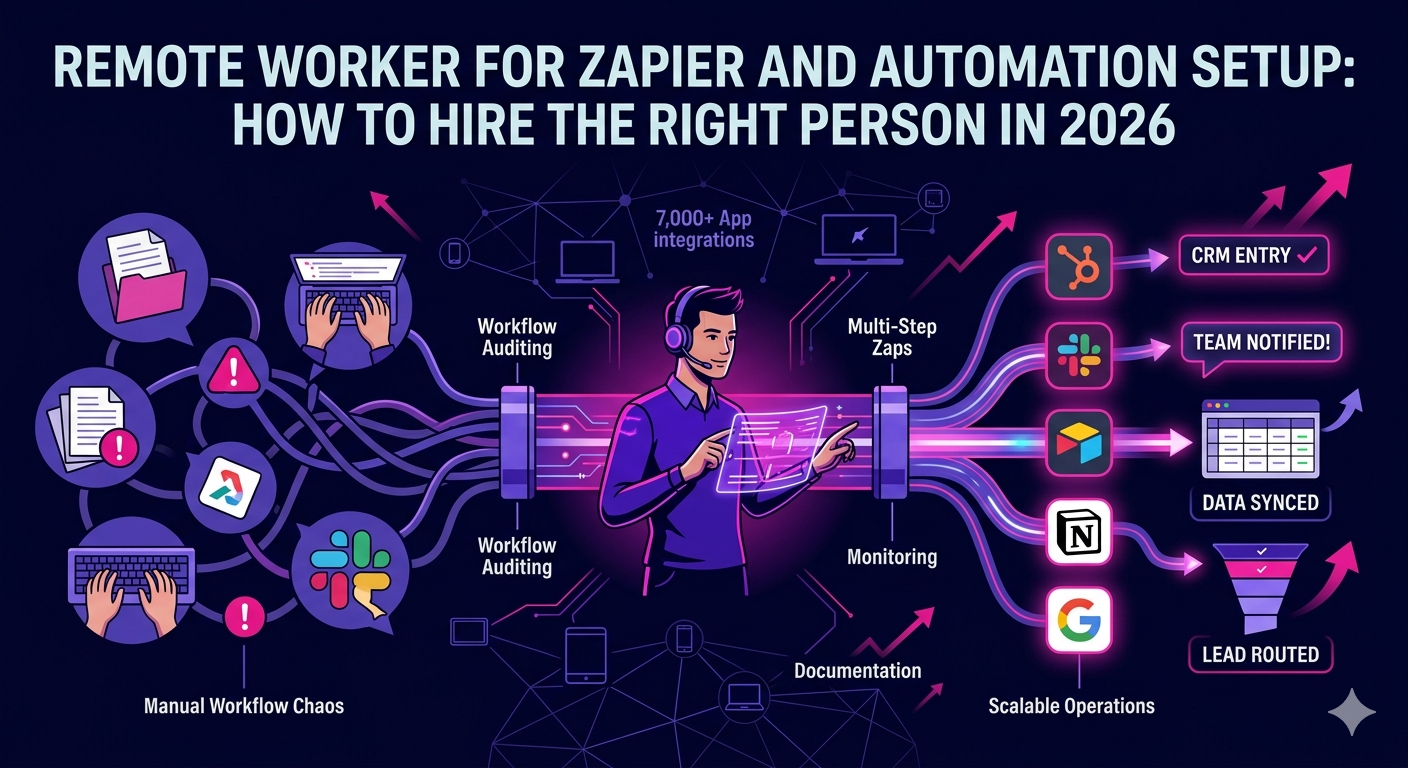
Zapier connects over 7,000 apps as of 2026. That number continues to grow. For businesses running on tools like HubSpot, Slack, Google Workspace, Airtable, Notion, Stripe, and dozens of others, the opportunity to automate repetitive workflows between these platforms is enormous.
But most business owners and operators do not have the time or technical depth to build and maintain these automations themselves. They know what they want to stop doing manually. They just need someone who can make that happen.
That is exactly where a remote worker for Zapier and automation setup adds immediate, measurable value.
The Real Cost of Manual Workflows
Think about how many times per day someone on your team copies data from one tool to another, sends a follow-up email that could be triggered automatically, or manually updates a spreadsheet that should refresh on its own. Each of those tasks is a drain on time that compounds over weeks and months into thousands of dollars in lost productivity.
A skilled Zapier automation specialist can identify these bottlenecks, design solutions, and implement them quickly. Many businesses recover their entire investment within the first month.
What a Remote Zapier and Automation Specialist Actually Does
When you hire a remote worker for Zapier and automation setup, you are not just paying someone to click buttons in a workflow builder. The best specialists bring a systems-thinking mindset to your business operations.
Workflow Auditing and Opportunity Mapping
Before building anything, a strong automation specialist will spend time understanding how your business currently operates. They map out your existing tech stack, identify where manual handoffs are happening, and prioritize the automations that will deliver the highest return first.
Zapier Zap Building and Multi-Step Automation Design
This is the core of the role. Your remote automation worker will build single and multi-step Zaps that connect your apps and trigger actions based on specific events. Examples include:
- Automatically adding new form submissions to your CRM and sending a personalized welcome email
- Syncing new Stripe payments to a Google Sheet and notifying your team in Slack
- Routing new leads from Facebook Lead Ads directly into your sales pipeline with task assignments
- Creating Notion database entries whenever a new project is initiated in a project management tool
- Sending weekly performance reports assembled automatically from data across multiple platforms
Testing, Troubleshooting, and Maintenance
Automation is not a set-it-and-forget-it system. Apps update their APIs, workflows break, and business processes change. A dedicated remote Zapier specialist monitors your automations, catches errors before they cause problems, and updates workflows as your tools and processes evolve.
Documentation and Process Building
The best automation workers document everything they build so your team always understands how a workflow functions and what to do if something needs to change.
Key Skills to Look for in a Remote Automation Worker
Not every virtual assistant who lists “Zapier” on their profile is truly qualified for complex automation setup. When you are hiring a remote worker for Zapier and automation setup, look for these specific competencies:
- Hands-on Zapier experience at an intermediate to advanced level, including multi-step Zaps, conditional logic (Filters and Paths), Formatters, and Webhooks
- Familiarity with the tools in your tech stack, such as CRMs, project management platforms, email marketing tools, and payment processors
- Basic understanding of APIs and data structures so they can handle custom webhook setups and troubleshoot integration issues
- Process documentation skills so their work is understandable and maintainable by your broader team
- Clear communication and proactive reporting so you always know what was built, what is running, and what improvements are planned
Bonus Skills That Add Significant Value
Some remote automation workers bring additional capabilities that can expand what is possible for your business:
- Experience with Make (formerly Integromat) for more complex automation scenarios
- Familiarity with tools like n8n or native automation features within platforms like HubSpot Workflows or ActiveCampaign
- Light coding ability in JavaScript for Zapier’s Code by Zapier steps
- Experience building automated reporting dashboards using tools like Google Looker Studio
How to Structure the Role for Maximum Impact
One of the most common mistakes businesses make when they hire a remote worker for Zapier and automation setup is treating the role as purely reactive. They only bring in their automation specialist when something breaks or when they have a one-off request.
A better approach is to give your remote automation worker a dedicated number of hours per week with a standing agenda that includes:
- A weekly check-in to review any new automation needs from the team
- Ongoing monitoring and error resolution for existing Zaps
- A rolling backlog of automation opportunities to work through systematically
- Monthly reporting on time saved, errors caught, and new workflows delivered
This structure turns your remote automation hire from a reactive resource into a proactive operations asset that continuously improves how your business runs.
Where to Find a Qualified Remote Zapier Automation Specialist
The fastest way to find a vetted, experienced remote worker for Zapier and automation setup is to work with a provider who has already done the screening for you. Generic freelance marketplaces are full of candidates who overstate their Zapier experience and underdeliver on the actual work.
At The Remote Reps, we specialize in connecting businesses with skilled remote professionals across sales, marketing, and operations. Our remote virtual assistants and automation specialists are pre-vetted for real-world technical capability, not just self-reported skills. You get someone who can hit the ground running from day one.
You can also explore how businesses like yours have benefited from our remote placements by visiting our client testimonials page.
For a deeper look at what Zapier itself recommends for building scalable automation workflows, Zapier’s official workflow automation blog is one of the most authoritative resources available for remote automation setup best practices.
The Bottom Line: Stop Doing Manually What a Remote Automation Worker Can Handle
Every week you delay hiring a remote worker for Zapier and automation setup is another week of manual tasks, duplicated effort, and preventable errors slowing your business down. In 2026, automation is not a competitive advantage reserved for large companies. It is a baseline operational requirement for any business that wants to scale without burning out its team.
The right remote Zapier specialist will pay for themselves many times over by saving time, reducing mistakes, and building systems that make your entire operation run more smoothly.
Ready to find a skilled remote worker for Zapier and automation setup? Visit The Remote Reps and connect with a pre-vetted automation professional who can start transforming your workflows today.
Frequently Asked Questions
What does a remote worker for Zapier and automation setup actually build?
A remote worker for Zapier and automation setup builds automated workflows that connect the apps your business already uses. This includes lead routing automations, CRM data syncing, automated notifications, report generation, follow-up email triggers, and any other workflow where manual data entry or task handoffs are currently slowing your team down.
How many hours per week does a remote worker for Zapier and automation setup typically need?
It depends on the size of your tech stack and the number of workflows you want to build or maintain. Many small to mid-sized businesses start with 10 to 20 hours per week for their remote Zapier automation worker. As the number of active automations grows, so does the value of having dedicated ongoing support for monitoring, troubleshooting, and expanding your automation library.
Is a remote worker for Zapier and automation setup the same as a virtual assistant?
Not exactly. While some virtual assistants have Zapier skills, a dedicated remote worker for Zapier and automation setup has a deeper technical focus. They specialize in workflow design, multi-step automation logic, API integrations, and operational systems thinking. For complex automation projects, a specialist is a better choice than a general VA with basic Zapier exposure.
What tools should a remote worker for Zapier and automation setup be familiar with besides Zapier?
In addition to Zapier, a strong remote automation worker in 2026 should have working knowledge of the tools in your specific stack. Common platforms include HubSpot, Salesforce, Airtable, Notion, Slack, Google Workspace, Stripe, ActiveCampaign, and various project management tools. Familiarity with Make (formerly Integromat) and basic API concepts is also valuable for more advanced automation scenarios.
How quickly can a remote worker for Zapier and automation setup start delivering results?
Most experienced remote Zapier automation specialists can deliver their first completed workflows within the first week of onboarding. After a brief orientation to your tools, goals, and processes, they can begin building and testing automations immediately. Many clients see meaningful time savings within the first two to three weeks of working with a dedicated remote automation worker.
How do I know if a remote worker for Zapier and automation setup is actually qualified?
Ask for a portfolio of past Zaps or automation projects they have built, and request a brief technical screening that tests their knowledge of conditional logic, multi-step workflows, and error handling in Zapier. Working with a vetting service like The Remote Reps removes this burden by pre-screening candidates for verified technical ability before they ever reach you.