
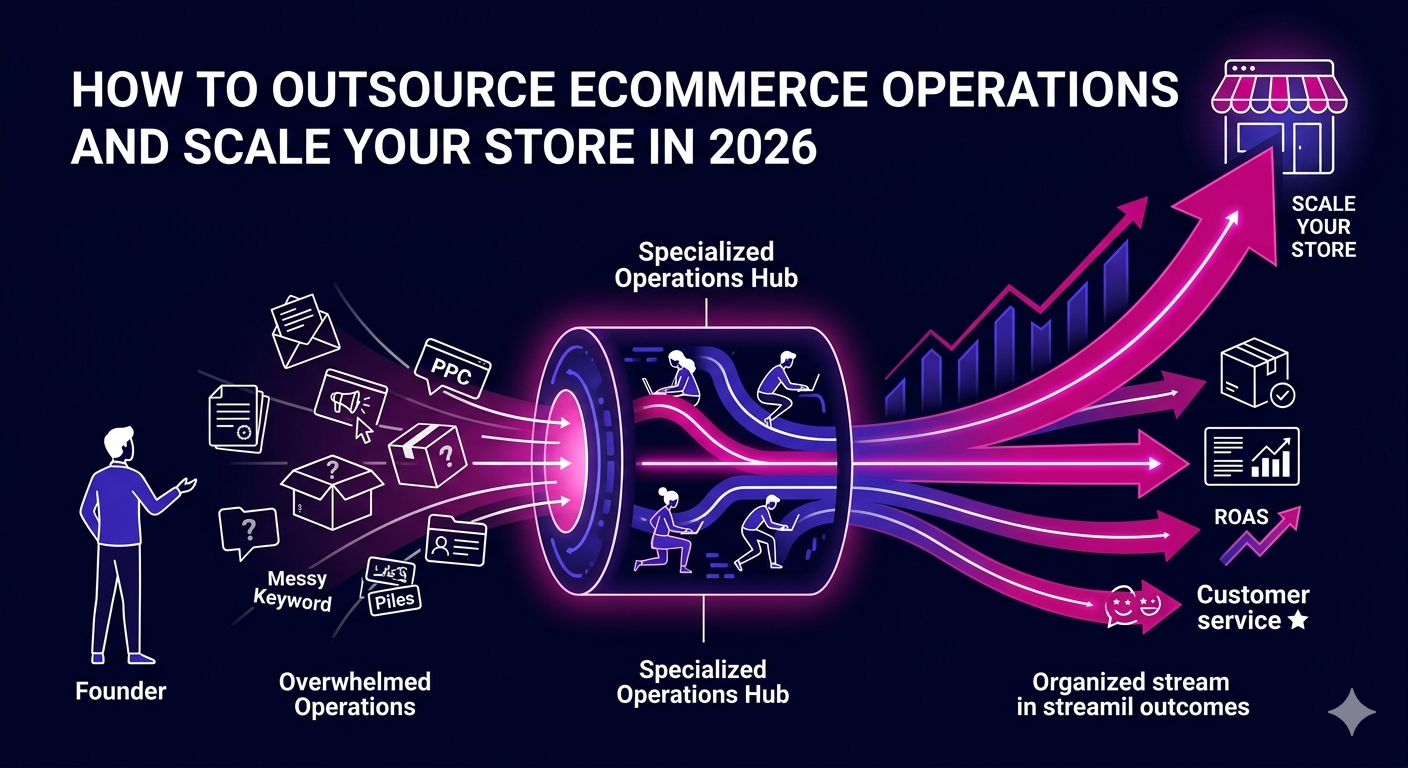
Running an ecommerce business in 2026 means juggling more tasks than ever before. From inventory management and customer support to paid advertising, SEO, and marketplace selling, the operational load can quickly overwhelm even the most driven founders. That is why more store owners are learning how to outsource ecommerce operations to skilled remote professionals who can handle the heavy lifting while they focus on growth.
Outsourcing is no longer a last resort. It is a deliberate, strategic move that allows ecommerce brands to reduce overhead, improve efficiency, and tap into specialized talent on demand. In this guide, we break down exactly how to do it right.
Why Outsourcing Ecommerce Operations Makes Sense in 2026
The ecommerce landscape has never been more competitive. Consumer expectations are higher, ad costs have risen, and managing a profitable store requires expertise across multiple disciplines. Hiring full-time in-house staff for every function is expensive and often unnecessary.
Outsourcing ecommerce work gives you access to professionals who specialize in specific areas, whether that is Amazon marketplace management, social media content, PPC campaigns, or customer service. You get results without the cost of benefits, office space, or lengthy onboarding periods.
According to Shopify’s enterprise resource on ecommerce outsourcing, brands that delegate non-core operations consistently report faster time-to-market and stronger profit margins.
What Ecommerce Operations Can You Outsource?
Before you begin, it helps to identify which parts of your business are best suited for outsourcing. Here is a breakdown of the most commonly outsourced ecommerce functions:
1. Customer Support
Handling inquiries, returns, refunds, and complaints is time-intensive. A dedicated remote customer support expert can manage your helpdesk, live chat, and email queues professionally and affordably. You can explore remote customer support experts who are already trained to handle high-volume ecommerce environments.
2. Ecommerce Marketing
From product promotions to email campaigns and influencer outreach, ecommerce marketing requires consistent effort and creativity. Remote marketing specialists can manage your entire promotional calendar without being on your payroll full-time.
3. Amazon and Marketplace Management
Selling on Amazon demands dedicated attention to listings, reviews, PPC ads, and inventory health. Outsourcing to an Amazon expert ensures your marketplace presence stays optimized and profitable.
4. Paid Advertising (PPC and Media Buying)
Running profitable ad campaigns on Google, Meta, and TikTok requires deep platform knowledge. Remote PPC experts and media buyers can manage your budgets and improve your return on ad spend without the learning curve eating into your profits.
5. SEO and Content
Organic traffic is one of the most cost-effective growth channels for ecommerce. Outsourcing SEO tasks like keyword research, on-page optimization, and link building to a remote specialist keeps your store visible in search results year-round.
6. Social Media Management
Consistent, branded content across Instagram, TikTok, Pinterest, and Facebook takes hours each week. A remote social media manager can plan, create, and schedule content while engaging your audience daily.
7. Virtual and Executive Assistants
Order processing, supplier communication, data entry, and admin coordination can be handled efficiently by skilled virtual assistants who free up your time for higher-value decisions.
How to Outsource Ecommerce Operations: A Step-by-Step Process
Outsourcing works best when approached with a clear plan. Follow these steps to build a reliable remote ecommerce team:
Step 1: Audit Your Current Operations
List every recurring task in your business. Categorize them by time required, skill level needed, and whether the task directly generates revenue. Tasks that are repetitive and do not require your personal input are ideal candidates for outsourcing.
Step 2: Define the Role Clearly
Write a detailed job description for each function you want to outsource. Include tools used, expected deliverables, weekly hours, and performance benchmarks. Vague briefs lead to poor results. Specificity is everything when hiring remote talent.
Step 3: Choose a Reliable Talent Source
There are many places to find remote ecommerce professionals, but not all platforms pre-vet their talent. Working with a specialized agency like The Remote Reps ecommerce marketing experts connects you with candidates who already understand the ecommerce ecosystem, reducing ramp-up time significantly.
Step 4: Start With a Trial Project
Before committing to a long-term arrangement, assign a paid test project. This could be a week of customer support tickets, a short ad campaign, or an SEO audit. Use the output to evaluate communication, quality, and deadline adherence.
Step 5: Set Up Systems and Communication Channels
Remote teams thrive when systems are clear. Use project management tools like Asana or ClickUp, document your standard operating procedures, and schedule regular check-ins. The smoother your onboarding process, the faster your remote team becomes productive.
Step 6: Measure and Optimize
Define key performance indicators for every outsourced role. Track them weekly or monthly and provide feedback regularly. Good remote workers are responsive to data and iterate quickly when expectations are clear.
Common Mistakes to Avoid When Outsourcing Ecommerce Work
- Outsourcing too early: Make sure your core processes are documented before handing them off. If you do not understand the task yourself, it is difficult to manage someone else doing it.
- Choosing the cheapest option: Extremely low rates often reflect low quality. Budget for talent that can genuinely move the needle, not just complete tasks.
- Lack of accountability: Without clear KPIs and regular reviews, outsourced roles can drift. Set expectations from day one and hold to them.
- Ignoring time zone considerations: If customer support or ad management needs to happen during specific hours, confirm availability before hiring.
- Failing to integrate remote staff: The best remote hires feel like part of your team. Include them in relevant meetings and keep them informed about broader business goals.
The Cost Advantage of Outsourcing Ecommerce Operations
One of the most compelling reasons to outsource ecommerce operations is cost efficiency. Hiring a full-time in-house digital marketer, customer support rep, and Amazon specialist could easily cost $150,000 or more annually in salaries alone, not counting benefits and equipment.
Outsourcing those same functions to skilled remote professionals typically costs a fraction of that amount, especially when working with talent from regions where compensation expectations differ. The quality can be identical or superior, while your fixed costs remain lean and flexible as your revenue fluctuates.
Final Thoughts: Build a Scalable Ecommerce Business With Remote Talent
Learning how to outsource ecommerce operations is one of the most valuable skills a store owner can develop. It removes the bottleneck of doing everything yourself, allows you to scale without ballooning your payroll, and lets you bring in specialized expertise exactly when you need it.
The key is to be intentional. Audit your workload, define roles clearly, hire from trusted sources, and build systems that keep your remote team aligned with your goals. Done right, outsourcing transforms your business from a one-person hustle into a scalable operation ready to compete at any level.
If you are ready to start building your remote ecommerce team, explore the full range of specialists available at The Remote Reps and connect with pre-vetted talent across every ecommerce function.
Frequently Asked Questions About Outsourcing Ecommerce Operations
What does it mean to outsource ecommerce operations?
To outsource ecommerce operations means delegating specific business functions, such as customer support, marketing, inventory management, or paid advertising, to external remote professionals or agencies rather than handling them in-house. This allows store owners to focus on strategy while specialists manage day-to-day execution.
Is it safe to outsource ecommerce operations to remote workers?
Yes, outsourcing ecommerce operations to remote workers is safe when done through a reputable platform or agency that vets candidates. Using signed contracts, limited access permissions, and secure communication tools further reduces any risk. Many top ecommerce brands rely heavily on remote teams for their daily operations.
Which ecommerce tasks should I outsource first?
When learning how to outsource ecommerce operations, most experts recommend starting with time-intensive, repetitive tasks like customer support and order management. These are well-defined, easy to document, and do not require deep knowledge of your overall business strategy. Once those are running smoothly, expand outsourcing to marketing, SEO, and paid ads.
How much does it cost to outsource ecommerce operations?
The cost of outsourcing ecommerce operations varies based on the role, skill level, and region of your remote hire. Virtual assistants and customer support specialists may start at $8 to $20 per hour, while specialized roles like Amazon experts or media buyers may range from $25 to $60 per hour. Overall, outsourcing typically costs 40 to 70 percent less than hiring in-house equivalents.
How do I manage remote ecommerce workers effectively?
Managing outsourced ecommerce operations effectively requires clear communication, documented processes, and consistent performance tracking. Use project management tools to assign tasks and deadlines, hold weekly check-ins via video call, and review KPIs monthly. The more transparent and organized your management style, the better your remote team will perform.
Can outsourcing ecommerce operations help me scale faster?
Absolutely. Outsourcing ecommerce operations removes the operational bottlenecks that slow growth. By delegating execution to skilled specialists, you free up time to focus on product development, partnerships, and strategy. Many ecommerce brands report doubling their output within months of building a structured remote team.