
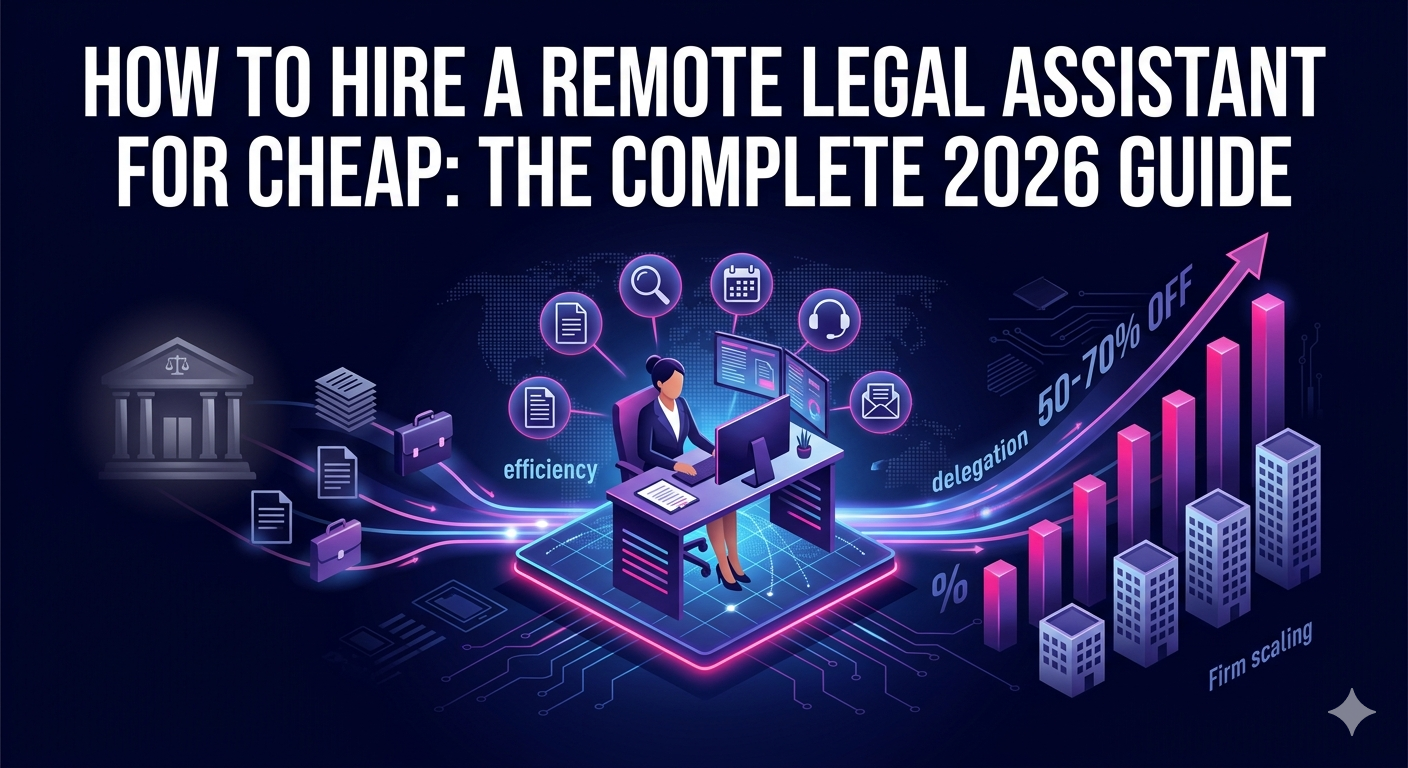
If you are running a law firm or managing legal work as a solo practitioner, you already know that overhead costs can eat into your bottom line fast. One of the smartest moves you can make this year is to hire a remote legal assistant for cheap, without cutting corners on quality. With the right approach, you can reduce staffing costs by 50 to 70 percent while gaining a skilled, dedicated professional who supports your caseload every single day.
This guide walks you through exactly how to find, vet, and onboard an affordable remote legal assistant in 2026, so you can scale your practice without scaling your expenses.
Why Hiring a Remote Legal Assistant Makes Financial Sense in 2026
The legal staffing landscape has shifted dramatically. Traditional in-house legal assistants in the United States command salaries of $45,000 to $65,000 per year, plus benefits, office space, and equipment. That is a significant fixed cost for any firm.
Remote legal assistants, particularly those based in talent-rich regions with lower costs of living, offer comparable skills at a fraction of that price. You get the same level of support, including document drafting, case management, client communication, and research, at rates that fit a lean operational budget.
Key Financial Benefits at a Glance
- Save 50 to 70 percent on annual staffing costs compared to local hires
- No office space, equipment, or utility expenses
- Flexible engagement models: full-time, part-time, or project-based
- No employer payroll taxes or benefits obligations in most remote arrangements
- Scale up or down based on your caseload with minimal risk
What Tasks Can a Remote Legal Assistant Handle?
Before you hire, it helps to understand the full scope of what a skilled remote legal assistant can do. Many attorneys underestimate just how much can be delegated effectively.
Core Responsibilities
- Drafting and formatting legal documents, contracts, and correspondence
- Managing case files and document management systems
- Scheduling client appointments, depositions, and court dates
- Conducting legal research and preparing case summaries
- Handling client intake forms and follow-up communications
- Billing, invoicing, and time tracking support
- Filing court documents electronically
- Maintaining compliance calendars and deadline tracking
The breadth of support available means you can delegate the administrative burden and focus entirely on billable work. If you are also considering broader support roles, our remote virtual assistant services offer a flexible solution that can complement dedicated legal support.
Where to Find Affordable Remote Legal Assistants
Knowing where to look is half the battle when you want to hire a remote legal assistant for cheap. Here are the most effective sourcing channels in 2026.
Specialized Remote Staffing Platforms
Platforms that focus exclusively on remote professional talent tend to deliver higher-quality candidates than general job boards. They pre-screen applicants, verify experience, and often handle onboarding logistics on your behalf. This dramatically reduces the time you spend sifting through unqualified applications.
Legal-Specific Talent Pools
Look for agencies or platforms that maintain dedicated pipelines of legal professionals. These candidates understand legal terminology, confidentiality requirements, and the pace of a working law office. A general virtual assistant, while useful, may lack the legal context needed to handle sensitive documents effectively.
Referrals and Professional Networks
Bar associations, legal tech communities, and attorney forums are excellent sources for word-of-mouth referrals. Other attorneys who have already made the transition to remote legal support can point you toward reliable, affordable talent they have personally vetted.
For a vetted shortlist of qualified professionals, browse our remote legal assistant services to connect with pre-screened candidates ready to support your practice.
How to Evaluate Candidates Without Overspending on Recruitment
One of the hidden costs of hiring is the recruitment process itself. Here is a lean, effective framework for evaluating remote legal assistant candidates without burning time or budget.
Step 1: Define the Role Precisely
Write a job description that outlines the specific tasks, tools, and time zones you require. The more specific you are, the fewer irrelevant applications you receive. Include details about your practice area, the software you use (Clio, MyCase, LexisNexis, etc.), and your preferred communication style.
Step 2: Use a Skills-Based Screening Test
Before any interview, send shortlisted candidates a short practical task. This could be formatting a legal document, summarizing a case brief, or drafting a client intake email. A 30-minute task tells you more about a candidate than a one-hour interview.
Step 3: Conduct a Structured Video Interview
Ask consistent questions across all candidates to enable fair comparison. Focus on legal experience, familiarity with confidentiality protocols, communication skills, and their home office setup. Connectivity and equipment reliability matter more for remote roles than many hiring managers realize.
Step 4: Check References Thoroughly
Always speak directly with at least two professional references, ideally previous attorneys or legal employers. Ask specific questions about the candidate’s reliability, accuracy, and ability to handle sensitive information discreetly.
Setting Up a Remote Legal Assistant for Success
The onboarding phase is where many remote hiring arrangements succeed or fail. A few intentional steps early on pay dividends for months and years ahead.
Establish Clear Communication Protocols
Decide upfront how you will communicate daily, which tools you will use (Slack, email, video calls), and what your expected response times are. Ambiguity in communication is the leading cause of remote work friction.
Invest in the Right Tools
Legal practice management software, secure document sharing platforms, and encrypted communication channels are non-negotiable. Popular tools in 2026 include Clio, Filevine, NetDocuments, and Microsoft 365. Budget for these tools as part of your total staffing cost.
Protect Client Confidentiality
Have your remote legal assistant sign a comprehensive non-disclosure agreement and a remote work policy before they begin. Include provisions around data handling, device security, and client communication. Many bar associations have published updated guidance on remote legal support arrangements, and staying compliant protects both you and your clients.
For further compliance and ethics guidance, the American Bar Association’s professional responsibility resources provide authoritative guidance on working with remote legal support staff in 2026.
What to Expect to Pay in 2026
Pricing varies based on experience level, specialization, and geographic location of the assistant. Here is a general benchmark for hiring a remote legal assistant for cheap in 2026:
- Entry-level remote legal assistant: $8 to $14 per hour
- Mid-level with 3 to 5 years of experience: $15 to $25 per hour
- Senior or specialized (litigation, IP, real estate): $26 to $40 per hour
- Full-time monthly retainer (40 hrs/week): $1,400 to $3,500 per month depending on experience
Compared to a U.S.-based in-house hire at $50,000 or more per year plus benefits, even a senior remote legal assistant represents substantial savings. You can also explore our remote paralegal services if your needs require a higher level of legal research and case preparation support.
Common Mistakes to Avoid When Hiring Cheap
Hiring affordably does not mean hiring carelessly. These are the pitfalls that attorneys most commonly encounter when trying to reduce legal staffing costs.
- Hiring based on price alone without verifying legal experience or references
- Skipping a non-disclosure agreement or confidentiality protocols
- Failing to provide clear onboarding documentation and role expectations
- Ignoring time zone differences that affect real-time collaboration
- Underestimating the learning curve and not allowing adequate ramp-up time
FAQ: How to Hire a Remote Legal Assistant for Cheap
Is it possible to hire a remote legal assistant for cheap without compromising quality?
Yes. When you hire a remote legal assistant for cheap through a reputable platform or agency, you access pre-vetted professionals with genuine legal experience. The cost savings come from geographic wage differences, not from a reduction in skill or professionalism. Careful vetting and a structured trial period ensure you find the right fit.
What qualifications should I look for when hiring a remote legal assistant for cheap?
Look for candidates with at least one to two years of legal administrative experience, familiarity with legal practice management software, strong written communication skills, and a demonstrated understanding of client confidentiality. Certifications from organizations like NALA (National Association of Legal Assistants) are a strong indicator of professional training.
How do I protect client confidentiality when I hire a remote legal assistant for cheap?
Require a signed non-disclosure agreement before work begins. Ensure your remote legal assistant uses encrypted tools for document handling and communication. Restrict access to only the files and systems they need for their assigned tasks. Regularly review your data security practices to stay aligned with bar association guidance.
Can I hire a remote legal assistant for cheap on a part-time or project basis?
Absolutely. Many remote legal assistants are available for part-time engagements, hourly contracts, or specific project-based arrangements. This flexibility is one of the major advantages of the remote model, especially for solo practitioners or small firms with fluctuating workloads.
How long does it take to onboard a remote legal assistant I hire for cheap?
Most remote legal assistants can become fully operational within two to four weeks, assuming you provide thorough onboarding documentation, clear task assignments, and regular check-ins during the initial period. A well-structured onboarding process significantly reduces this timeline and improves long-term retention.
Are there risks to hiring a remote legal assistant for cheap from overseas?
The primary risks involve communication barriers, time zone mismatches, and differences in legal system familiarity. These risks are manageable with thorough screening, a structured onboarding process, and clear communication protocols. Working with a specialized remote staffing provider that understands legal workflows reduces these risks considerably.
Start Building Your Lean Legal Team Today
The decision to hire a remote legal assistant for cheap is one of the highest-return investments a modern law practice can make. You reduce fixed overhead, gain flexible capacity, and free yourself to focus on the legal work that grows your practice and serves your clients.
The key is to approach the process strategically: define your needs clearly, vet candidates rigorously, protect confidentiality from day one, and invest in a solid onboarding process. Do those things well, and a remote legal assistant becomes one of your most valuable team members at a fraction of the cost of a traditional hire.
Ready to get started? Explore our remote legal assistant services at The Remote Reps and connect with skilled, affordable professionals who are ready to support your practice today.