
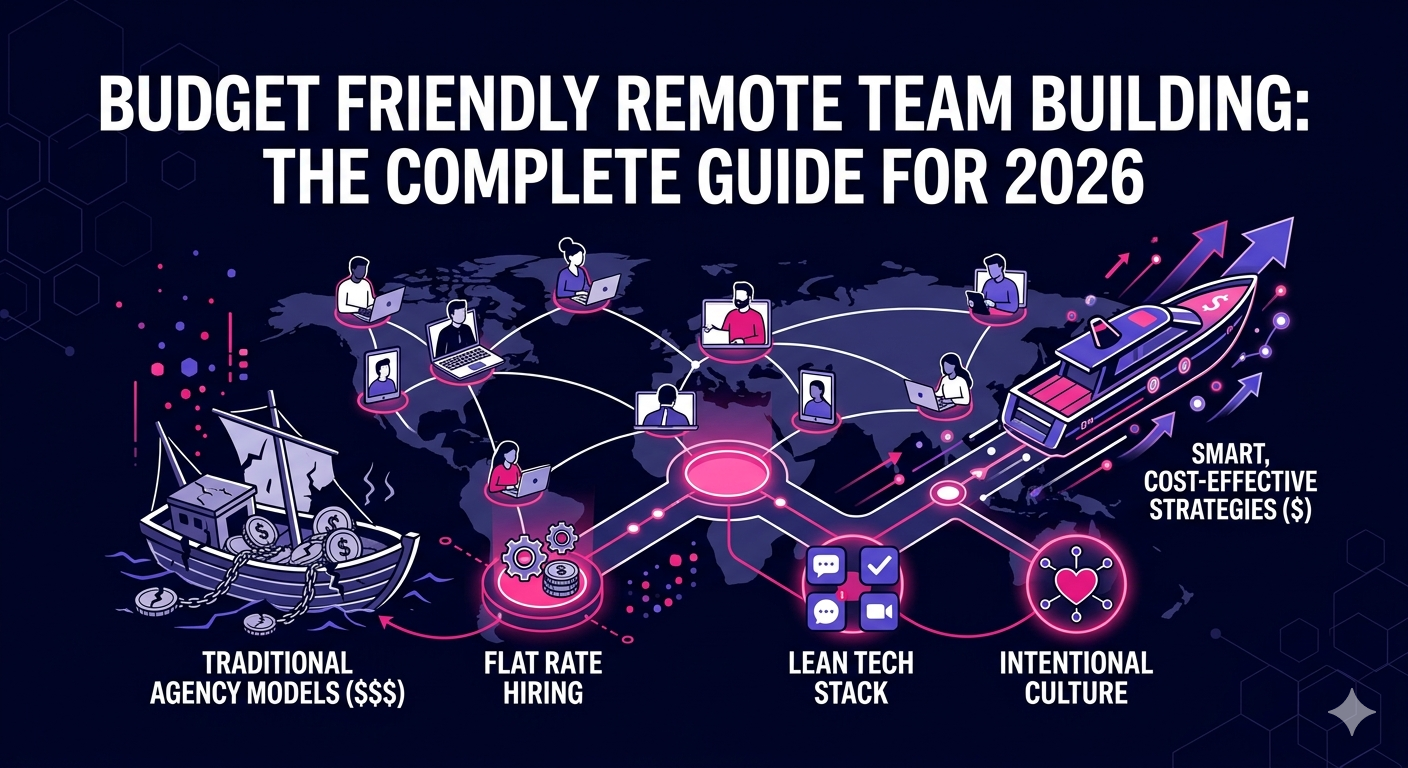
Building a strong, connected remote team does not have to drain your budget. In 2026, more businesses than ever are managing distributed workforces across time zones, and the ones succeeding are not necessarily the ones spending the most. They are the ones being intentional. Budget friendly remote team building is about using the right strategies, tools, and hiring practices to create a cohesive team without paying a premium for it.
Whether you are a startup hiring your first remote employees or an established business scaling fast, this guide gives you a practical, cost-conscious roadmap to building a remote team that performs, communicates, and stays together.
Why Budget Friendly Remote Team Building Matters in 2026
The remote work landscape has matured significantly. Employees expect flexibility, and businesses have realized that geography no longer limits who they can hire. But as competition for remote talent grows, so does the temptation to overspend on recruitment, tools, and perks in an attempt to attract and retain the best people.
The reality is that most of what drives remote team performance has nothing to do with expensive software or lavish benefits packages. It comes down to clear communication, smart hiring, and consistent team culture practices that cost very little to implement. Understanding that is the foundation of any effective, affordable remote team strategy.
Start With Smart, Cost-Effective Remote Hiring
The single biggest lever in budget friendly remote team building is where and how you hire. Traditional staffing agencies charge enormous markups, placement fees, and monthly surcharges that compound quickly when you are building a team of multiple people. Those fees eat into your hiring budget before a single person has done a day of work for you.
Use Flat Rate Staffing Providers
One of the most effective cost controls in remote hiring is choosing a staffing provider that charges a transparent, flat monthly rate with no hidden fees. Instead of paying a 40 to 60 percent markup on every hire, you pay one clear number that covers your dedicated remote professional. This makes your workforce budget predictable and dramatically reduces your cost per hire over time.
Hire for Role Fit, Not Just Availability
Rushed hiring leads to poor fits, which leads to turnover, which leads to rehiring costs. Slow down the front end of the process. Define the role clearly, assess for relevant skills, and take the time to evaluate communication ability since remote work depends on it. The cost of a bad hire in a remote setting is high in terms of both dollars and team morale.
Build a Diverse Role Mix
Budget friendly remote team building often means being strategic about which roles you hire for first. Prioritize roles that generate revenue or directly support operations. A well-placed remote virtual assistant through a budget-friendly staffing model can free up dozens of hours per month for your leadership team, delivering far more value than their cost.
Low-Cost Tools That Support Remote Team Collaboration
You do not need a sprawling tech stack to run a high-functioning remote team. Many of the most effective remote teams in 2026 operate on a lean set of tools that cover the core needs without paying for features they never use.
Communication
- Slack or Discord: Free tiers work well for teams under a certain size and provide organized, channel-based communication.
- Google Meet or Zoom: Video calls remain essential for team alignment. Free tiers cover most small team needs.
- Loom: Asynchronous video messaging reduces the need for live meetings, saving time across time zones.
Project Management
- Trello or Asana: Both offer free plans with enough functionality for most growing remote teams.
- Notion: Acts as a team wiki, project tracker, and documentation hub all in one place at a low monthly cost.
- ClickUp: A feature-rich free tier that competes with paid alternatives for small to mid-sized teams.
File Sharing and Storage
- Google Workspace: Affordable per-seat pricing with Docs, Sheets, Drive, and Meet bundled together.
- Dropbox Basic: Covers storage needs for smaller teams at no cost.
The key is to audit your tools regularly. Many remote teams are paying for three or four overlapping tools that each do a version of the same thing. Consolidate where possible and redirect that budget toward your people.
Affordable Practices That Build Remote Team Culture
Culture is not built by spending money. It is built by consistent, deliberate actions that make people feel included, valued, and connected to a shared purpose. The following practices cost almost nothing but deliver outsized returns in team cohesion and retention.
Weekly Team Check-Ins
A short, structured weekly video call keeps the team aligned on priorities, surfaces blockers early, and creates a regular rhythm of face-to-face connection. Keep it to thirty minutes or less and make attendance a norm, not an option.
Async Recognition Systems
Set up a dedicated Slack channel for team shoutouts. Encourage managers and peers to call out wins publicly and often. Recognition costs nothing and is one of the most powerful retention tools available to remote managers.
Virtual Onboarding Playbooks
Creating a structured onboarding document that new hires can work through independently reduces the time managers spend hand-holding during the first two weeks. It also sets clear expectations and makes new team members feel prepared and confident faster.
Clear Communication Norms
Define when team members are expected to be responsive, how urgent versus non-urgent messages should be handled, and which channels are used for which types of communication. These norms prevent the anxiety and miscommunication that quietly kill remote team morale.
Scaling Your Remote Team Without Scaling Your Costs
One of the biggest advantages of budget friendly remote team building is that the model scales efficiently. Once you have the right hiring process, tools, and culture practices in place, adding the next team member is a relatively low-friction exercise. You are not reinventing the wheel every time you hire.
Standardize Your Onboarding Process
Every new hire should go through the same structured onboarding experience. Document your processes, tools, and expectations once and update them as your team evolves. This saves hours of manager time with every new hire and creates consistency across the team.
Promote From Within Where Possible
Before hiring externally for a senior role, assess whether someone on your existing remote team is ready to step up. Internal promotions cost far less than external recruitment and signal to your team that growth is available without leaving.
Partner With Staffing Experts Who Understand Remote Roles
Working with a staffing provider that specializes in remote talent gives you access to pre-vetted professionals at a cost that fits a lean hiring budget. Whether you need cost-effective remote digital marketers or sales professionals, the right partner accelerates your hiring without the overhead of traditional recruitment.
Research consistently shows that budget friendly remote team building strategies focused on communication and trust outperform high-spend approaches that rely on perks and tools to compensate for poor management practices.
Common Mistakes That Inflate Remote Team Building Costs
Understanding what not to do is just as important as knowing what to do. Here are the most common ways businesses accidentally overspend when building remote teams:
- Over-hiring too fast: Bringing on too many people before your processes are solid leads to confusion and turnover.
- Paying for bloated tool stacks: More software does not mean better collaboration. Fewer, well-used tools are always more effective.
- Neglecting onboarding: Poor onboarding leads to early attrition, forcing you to rehire and retrain repeatedly.
- Ignoring time zone overlap: Hiring without accounting for working hour alignment creates communication delays that slow down every project.
- Using agencies with hidden fees: Percentage-based markups and placement charges quietly double your cost-per-hire if you are not watching the invoices carefully.
Building a High-Performing Remote Team on Any Budget
Budget friendly remote team building is not about cutting corners. It is about being deliberate with where you invest your resources. The businesses building the strongest remote teams in 2026 are focusing on transparent hiring costs, lean but effective tools, and culture practices that create genuine connection without requiring a large financial outlay.
If you are ready to start building your remote team the right way, explore The Remote Reps for transparent, budget friendly remote staffing solutions that take the guesswork out of remote hiring costs.
Frequently Asked Questions About Budget Friendly Remote Team Building
What is the most cost-effective approach to budget friendly remote team building?
The most cost-effective approach to budget friendly remote team building starts with transparent, flat rate hiring rather than traditional agency models that charge percentage-based markups. Combine that with free or low-cost collaboration tools, a structured onboarding process, and consistent culture practices, and you have the foundation of an efficient, affordable remote team.
How many tools does a budget friendly remote team actually need?
Most budget friendly remote teams operate effectively with three to five tools covering communication, project management, and file sharing. Adding more tools rarely improves performance and often creates confusion. Start lean, identify genuine gaps, and only add tools when there is a clear need that cannot be met by your existing stack.
Can budget friendly remote team building still produce high-quality hires?
Absolutely. Budget friendly remote team building is about removing unnecessary cost layers like agency markups and hidden fees, not about lowering your talent standards. Working with a staffing provider that offers transparent flat rate pricing gives you access to pre-vetted, skilled professionals at a fraction of what traditional agencies charge.
How do you maintain team culture in a budget friendly remote team?
Budget friendly remote team building culture practices include regular video check-ins, async recognition channels, clear communication norms, and structured onboarding. None of these require significant financial investment. The most impactful culture builders in remote teams are consistency and intentionality, both of which are free.
What roles should I hire first when building a budget friendly remote team?
When budget friendly remote team building is the priority, start with roles that deliver the highest return on investment relative to their cost. Virtual assistants, customer support professionals, and digital marketers often deliver immediate operational value. As revenue grows, you can expand into more specialized roles like sales development reps, SEO specialists, or e-commerce experts.
How do I avoid hidden costs when building a remote team on a budget?
To keep your budget friendly remote team building costs truly under control, always request a written breakdown of fees before signing any staffing agreement. Watch for placement fees, percentage markups, replacement charges, and mandatory tool subscriptions billed separately. A trustworthy staffing partner will be fully transparent about what is included in their pricing from the first conversation.