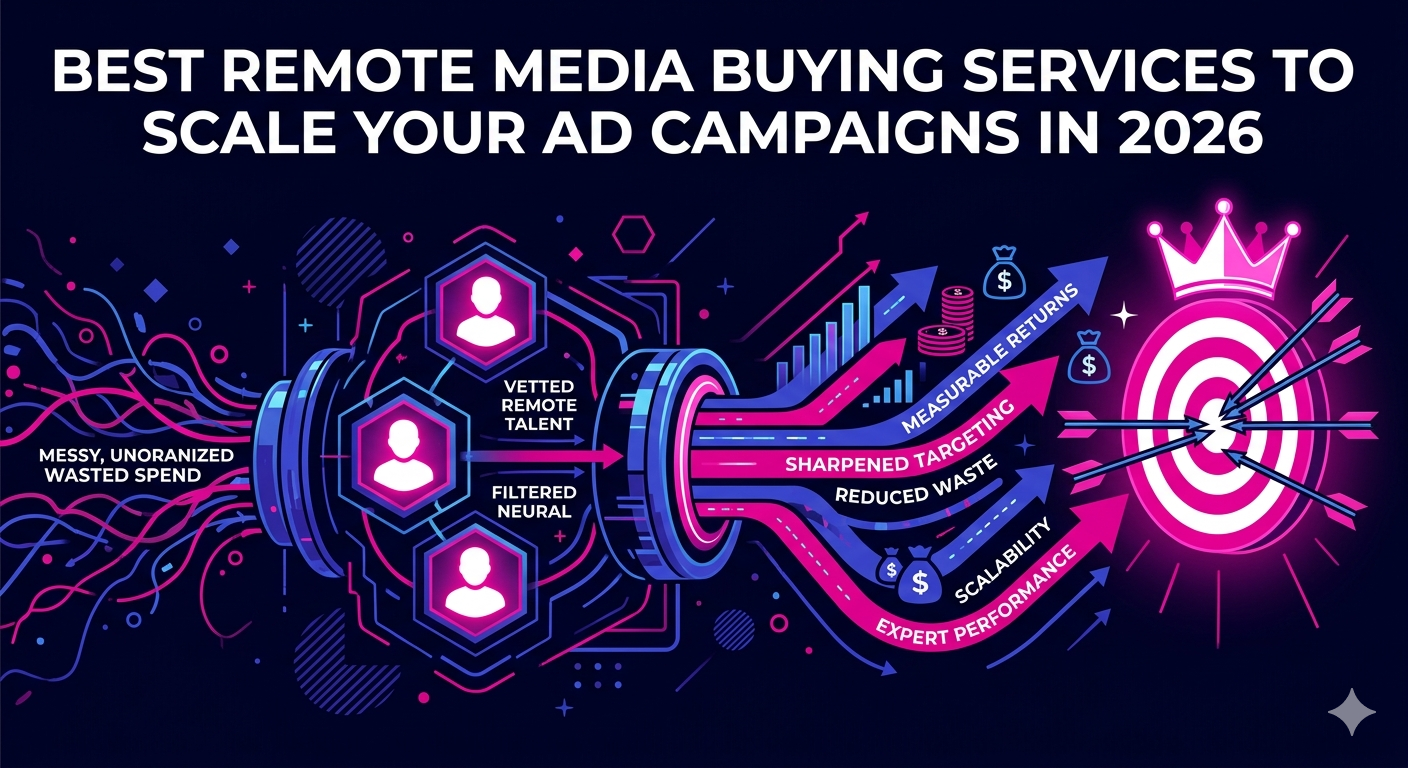
Ad budgets are too valuable to leave in the hands of the wrong team. As more businesses move away from traditional agency models and toward flexible, results-driven talent, the demand for the best remote media buying services has grown significantly. Whether you are running campaigns on Meta, Google, programmatic platforms, or connected TV, the right remote media buying service can sharpen your targeting, reduce wasted spend, and deliver measurable returns. This guide covers what to look for, how to evaluate your options, and where to find top-tier remote media buying talent in 2026.
Why Businesses Are Turning to Remote Media Buying Services
The shift toward remote media buying is not simply a cost-cutting move. It reflects a broader recognition that the best paid media talent is distributed across geographies, and that skilled professionals do not need to sit in an office to deliver excellent results.
Here is what is driving this trend in 2026:
- Access to specialized expertise that may not be available locally
- Lower overhead compared to in-house teams or full-service agencies
- Greater flexibility to scale up or down based on campaign volume
- Faster onboarding timelines when working with pre-vetted remote professionals
- Performance-focused structures that align compensation with outcomes
Businesses of all sizes, from early-stage startups to established brands spending millions per month, are using remote media buying services to stay competitive without overextending their internal teams.
What the Best Remote Media Buying Services Include
Not all media buying services are built the same. When evaluating your options, the best remote media buying services should offer a clear and comprehensive scope of work. Here is what to expect from a high-quality provider.
Multi-Platform Campaign Management
Top remote media buying services cover a broad range of advertising platforms. This includes paid search on Google Ads, paid social on Meta and TikTok, programmatic display and video through DSPs like The Trade Desk or DV360, and increasingly, connected TV and retail media networks. A service that only covers one channel will limit your ability to reach your audience wherever they spend time.
Audience Research and Targeting Strategy
Great media buying starts before a single dollar is spent. The best remote media buying services invest significant time in audience research, building detailed targeting frameworks based on your customer data, competitive landscape, and platform-specific signals. In 2026, this also includes privacy-compliant approaches to audience building given the continued evolution of identity resolution and first-party data strategies.
Creative Testing and Optimization
Ad creative is one of the most powerful levers in paid media performance. Quality remote media buying services go beyond simple campaign management to include structured A/B testing of ad formats, headlines, visuals, and calls to action. They use data from these tests to continuously refine creative and improve performance over time.
Budget Management and Pacing
Effective budget management is a core competency of any serious media buying service. This means distributing spend intelligently across campaigns and channels, adjusting pacing to avoid front-loading or under-delivery, and reallocating budget from underperforming placements to higher-return opportunities in real time.
Transparent Reporting and Analytics
You should never be in the dark about how your ad spend is performing. The best remote media buying services provide clear, regular reporting that translates platform data into business metrics you actually care about, including return on ad spend, cost per acquisition, customer lifetime value contribution, and revenue attribution.
Types of Remote Media Buying Services Available in 2026
Understanding the different service models helps you choose the right fit for your business size and goals.
Freelance Remote Media Buyers
Individual freelancers offer the most flexibility and often the lowest cost. They work well for businesses with focused needs, such as managing a single platform or supporting a specific campaign launch. The trade-off is that you take on the responsibility of sourcing, vetting, and managing the relationship yourself.
Remote Media Buying Agencies
Remote-first agencies employ teams of specialists and offer a broader range of services. They bring more resources to larger or more complex accounts but often come with higher management fees and less direct access to the individual managing your campaigns day to day.
Vetted Remote Talent Platforms
Platforms that specialize in placing pre-screened remote marketing professionals sit in between freelancers and agencies. They do the hard work of sourcing and vetting candidates so you get the quality of an agency hire with the directness of working with an individual. For many businesses in 2026, this is the most efficient model. If you want to explore this approach, you can connect with experienced professionals through The Remote Reps remote media buying services, which places vetted media buyers with businesses ready to grow their paid advertising results.
How to Evaluate and Compare Remote Media Buying Services
With so many options available, having a structured evaluation process saves time and reduces the risk of a costly mis-hire. Here is a practical framework for comparing your options.
Review Proven Results, Not Just Claims
Ask every provider or candidate for documented case studies. These should include the industry, the platforms used, the monthly budget managed, and the specific performance outcomes achieved. Vague references to “improved ROAS” without numbers are a red flag. The best remote media buying services back their claims with data.
Assess Platform Depth and Specialization
A generalist who dabbles in every platform is rarely the best choice for a specific business challenge. If your primary channel is Meta, you want someone with deep Meta Ads experience. If you are investing in programmatic, look for DSP-certified professionals with a track record on the specific platforms you use. Specialization matters in paid media more than most marketing disciplines.
Evaluate Communication and Reporting Standards
Remote services live and die by their communication quality. Ask upfront what reporting cadence to expect, what tools they use for collaboration, and how they handle urgent issues like sudden drops in performance or billing problems. Strong communication habits at the proposal stage tend to carry through to the actual working relationship.
Understand Pricing and Contract Structures
Pricing models vary widely. Common structures include flat monthly retainers, percentage of ad spend, performance-based fees tied to specific KPIs, or a hybrid of these. There is no universally superior model, but you should fully understand what you are paying for, what is included, and what happens if performance targets are not met before signing anything.
Start with a Trial Engagement
Whenever possible, begin with a defined trial period of 30 to 60 days before committing to a longer contract. This lets both parties assess fit, communication, and early performance signals with manageable risk. The best remote media buying services will welcome this approach because they are confident in their ability to demonstrate value quickly.
Red Flags to Watch Out For
Knowing what to avoid is just as important as knowing what to look for. Be cautious of any remote media buying service that:
- Guarantees specific ROAS or ROI figures before reviewing your account history
- Refuses to share granular performance data or provide access to your own ad accounts
- Relies heavily on vanity metrics like impressions and clicks without connecting them to revenue
- Locks you into long contracts with no performance-based exit clauses
- Assigns your account to junior staff without clear senior oversight
- Cannot explain their optimization strategy in plain, specific terms
According to the IAB’s guidance on programmatic media buying best practices, transparency in reporting, inventory quality, and clear performance benchmarks are foundational to any trustworthy media buying engagement, whether remote or in-house.
What to Expect When You Onboard a Remote Media Buying Service
Once you have selected a provider, the onboarding process sets the foundation for a productive working relationship. Here is what a smooth onboarding typically looks like with the best remote media buying services.
- Account access: You grant the service access to your existing ad accounts, analytics platforms, and any relevant CRM or data sources
- Audit and discovery: The media buyer reviews your account history, current campaigns, audience data, and past performance to identify opportunities and issues
- Strategy alignment: Together you agree on campaign objectives, KPIs, budget allocation, and reporting frequency before any new campaigns go live
- Creative briefing: If creative is part of the scope, you align on messaging, formats, and testing priorities
- Launch and monitor: New campaigns launch with close monitoring in the first two weeks to catch any delivery or performance anomalies early
A structured onboarding sets expectations clearly on both sides and gives the media buying service the context they need to hit the ground running.
FAQ Section
What should I look for in the best remote media buying services?
The best remote media buying services combine platform expertise, strong analytical ability, transparent reporting, and proactive communication. Look for providers with documented case studies relevant to your industry, clear pricing structures, and a willingness to start with a trial engagement before a long-term commitment.
How much do the best remote media buying services typically cost in 2026?
Pricing varies by scope and experience level. Freelance remote media buyers typically charge between $2,000 and $7,000 per month depending on experience and budget managed. Remote-first agencies may charge higher retainers. Vetted talent platforms often offer the best value by combining quality screening with direct-hire economics. Always clarify what is included in the fee before signing a contract.
Can remote media buying services manage large ad budgets effectively?
Yes. Many of the best remote media buying services manage budgets ranging from tens of thousands to several million dollars per month. What matters is matching the experience level of the service to the scale of your budget. Always ask about the largest budgets a provider has managed and request references from clients at a similar spending level to your own.
How do the best remote media buying services stay current with platform changes?
Top remote media buying professionals invest continuously in staying current. This includes maintaining platform certifications from Google, Meta, and The Trade Desk, participating in industry communities, attending virtual conferences, and testing new features as they are released. When evaluating a service, ask specifically how they adapt their strategies when major platform algorithm or policy changes occur.
How quickly can a remote media buying service start improving my campaign results?
Most experienced remote media buying services begin identifying quick wins during the audit phase, often within the first two weeks. Significant performance improvements typically become visible within 30 to 60 days, depending on campaign complexity, budget size, and how much data already exists in the account. Businesses with well-documented historical performance data tend to see faster early results.
Are remote media buying services suitable for e-commerce businesses?
Absolutely. E-commerce brands are among the biggest beneficiaries of high-quality remote media buying services. The ability to rapidly test audiences, creative, and offers across Meta, Google Shopping, and programmatic channels is directly tied to revenue growth for online retailers. Many of the best remote media buying services have deep e-commerce specialization and understand conversion tracking, product feed optimization, and dynamic ad formats inside and out.