
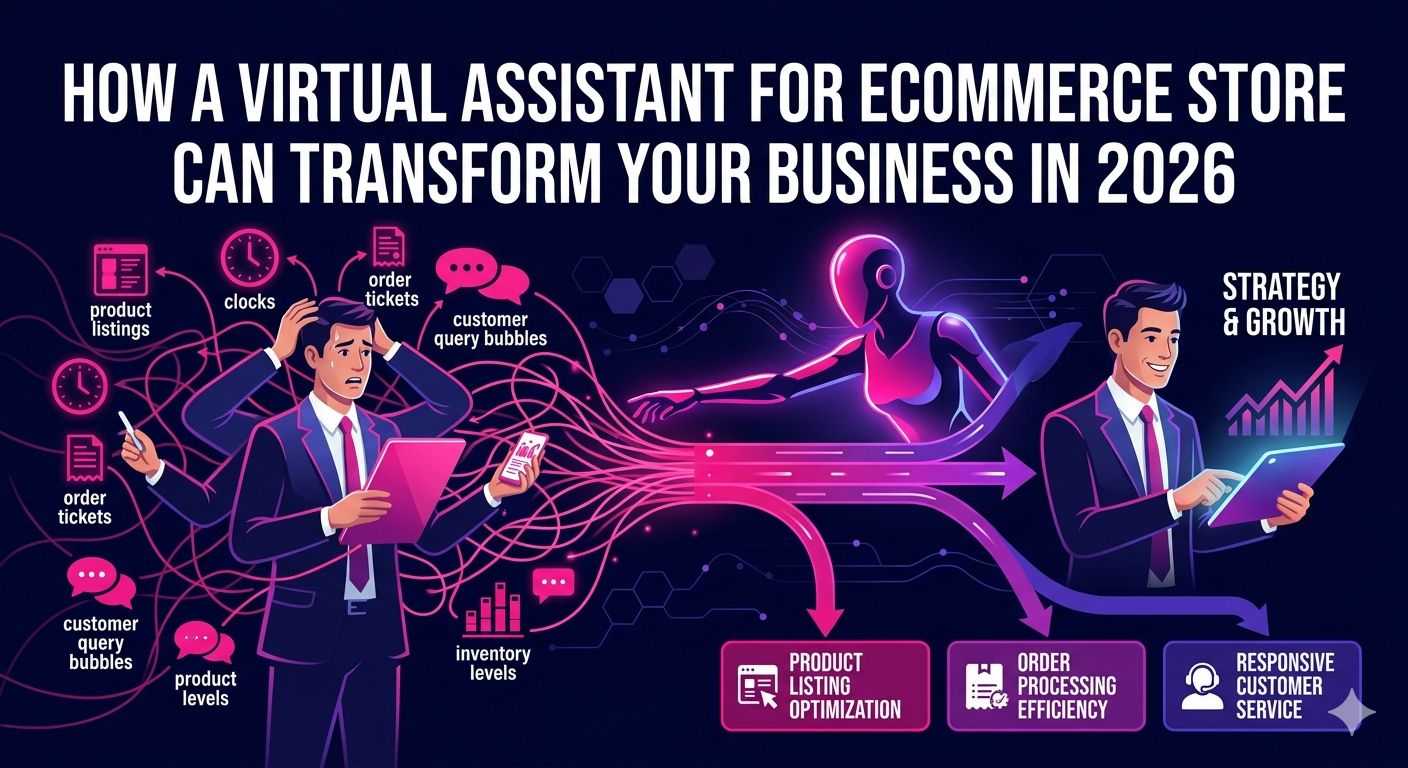
Running an ecommerce store in 2026 is more demanding than ever. Between managing product listings, processing orders, handling customer inquiries, and executing marketing campaigns, store owners are constantly pulled in dozens of directions. That is exactly why hiring a virtual assistant for ecommerce store operations has become one of the smartest investments a growing business can make.
Whether you run a Shopify store, an Amazon shop, or a multi-channel ecommerce brand, a skilled virtual assistant can handle the repetitive, time-consuming tasks that keep you away from strategy and growth. This guide breaks down everything you need to know about ecommerce VAs in 2026, from what they do to how to hire the right one.
What Is a Virtual Assistant for an Ecommerce Store?
A virtual assistant for an ecommerce store is a remote professional who manages day-to-day operational and administrative tasks on your behalf. Unlike a general VA, an ecommerce-focused assistant understands the specific workflows involved in running an online store, including inventory management, order fulfillment coordination, product research, and customer service.
In 2026, businesses of all sizes are embracing remote talent as a cost-effective alternative to in-house hiring. According to Statista’s latest data on virtual assistant adoption, demand for remote ecommerce support roles has grown steadily year over year, driven by the global expansion of online retail and the rising cost of local labor.
Key Tasks a Virtual Assistant for Ecommerce Store Can Handle
One of the biggest advantages of hiring an ecommerce VA is the sheer range of tasks they can take off your plate. Here are the most common responsibilities handled by a dedicated ecommerce virtual assistant:
Product Listing and Catalog Management
- Writing and optimizing product titles and descriptions
- Uploading and organizing product images
- Managing inventory levels across platforms
- Setting up promotions and discount codes
Order Processing and Fulfillment Support
- Monitoring order statuses and flagging issues
- Communicating with suppliers and fulfillment partners
- Processing returns and exchanges
- Updating tracking information for customers
Customer Support and Communication
- Responding to customer emails, chat messages, and reviews
- Resolving complaints and escalating complex cases
- Managing helpdesk platforms like Gorgias, Zendesk, or Freshdesk
- Building FAQ documents and response templates
Market and Competitor Research
- Tracking competitor pricing and promotions
- Identifying trending products and niches
- Compiling performance reports and analytics summaries
Marketing and Social Media Assistance
- Scheduling social media content and posts
- Drafting email newsletters and promotional copy
- Coordinating with influencers or affiliate partners
- Supporting paid ad campaign setup and monitoring
Why Ecommerce Businesses Are Hiring Virtual Assistants in 2026
The ecommerce landscape has shifted dramatically. Margins are tighter, customer expectations are higher, and competition has never been more intense. Hiring a full-time in-house team is expensive and often unnecessary for growing brands that need flexible support.
Here is why more store owners are turning to remote ecommerce assistants this year:
- Cost savings: A skilled VA typically costs 50 to 70 percent less than a local hire when factoring in salary, benefits, and overhead.
- Scalability: You can scale support up or down based on seasonal demand, product launches, or sales peaks.
- Focus on growth: Delegating operational tasks frees founders to focus on strategy, partnerships, and scaling revenue.
- 24/7 coverage: Hiring across time zones means customer inquiries and order issues get addressed around the clock.
- Access to specialists: Many VAs have deep expertise in specific platforms like Shopify, WooCommerce, or Amazon Seller Central.
How to Find the Right Virtual Assistant for Your Ecommerce Store
Not all virtual assistants are created equal. Finding someone who understands ecommerce workflows, communicates well, and can work independently requires a thoughtful hiring process.
Define Your Needs Before You Hire
Before posting a job or reaching out to an agency, create a clear list of tasks you want your VA to handle. Separate high-priority, recurring tasks from one-off projects. This clarity will help you write a better job description and evaluate candidates more accurately.
Look for Ecommerce-Specific Experience
General administrative experience is not enough. Ask candidates about their hands-on experience with platforms like Shopify, Amazon, eBay, Etsy, WooCommerce, or BigCommerce. Request examples of past work, including product listings they have written or customer service issues they have resolved.
Test With a Paid Trial Task
Before committing to a long-term arrangement, assign a paid test task that reflects real work from your store. This gives you a clear picture of the candidate’s communication style, attention to detail, and technical ability.
Work With a Specialized Agency
If you want to skip the lengthy hiring process, working with a specialized remote staffing agency is a smart move. Agencies that focus on ecommerce talent have pre-vetted candidates ready to deploy quickly. You can explore dedicated virtual assistant services for ecommerce stores at TheRemoteReps to find experienced, pre-screened professionals who are ready to hit the ground running.
Ecommerce VA vs. In-House Employee: Which Is Right for You?
The debate between hiring remotely versus locally comes down to three factors: budget, flexibility, and task complexity.
For most small to mid-size ecommerce brands, a remote VA offers the best value. You get skilled support without the overhead costs of office space, equipment, payroll taxes, and employee benefits. In-house hiring makes sense only when tasks require physical presence or highly sensitive data handling that cannot be managed remotely.
For brands doing over seven figures in annual revenue, a hybrid model often works best: a small in-house leadership team supported by remote specialists for marketing, customer service, and operations.
How Much Does an Ecommerce Virtual Assistant Cost in 2026?
Pricing varies based on experience level, location, and scope of work. Here is a general breakdown for 2026:
- Entry-level VA (basic tasks): $8 to $15 per hour
- Mid-level VA (platform-specific experience): $15 to $30 per hour
- Senior ecommerce VA (strategy + execution): $30 to $60 per hour
- Agency-placed VA (vetted, managed): Monthly retainer packages vary by scope
Keep in mind that investing in a higher-quality VA often pays for itself quickly through improved efficiency, fewer errors, and better customer experiences.
Getting the Most From Your Ecommerce Virtual Assistant
Hiring is only the first step. To get real results, you need systems in place to support your VA and set clear expectations from day one.
- Create detailed standard operating procedures (SOPs) for recurring tasks
- Use project management tools like Trello, Asana, or ClickUp to track work
- Schedule regular check-ins, especially during the first 30 days
- Give honest, constructive feedback early and often
- Start with lower-risk tasks before handing over critical responsibilities
A well-onboarded VA can become a long-term asset that understands your brand, your customers, and your processes deeply.
FAQ: Virtual Assistant for Ecommerce Store
What does a virtual assistant for an ecommerce store actually do?
A virtual assistant for an ecommerce store handles a wide range of tasks including product listing management, order processing support, customer service, inventory tracking, competitor research, and marketing assistance. The exact scope depends on the needs of your store and the skills of the VA you hire.
How do I know if I need a virtual assistant for my ecommerce store?
If you are spending more than a few hours each day on repetitive tasks like responding to emails, updating listings, or tracking orders, it is time to consider a virtual assistant for your ecommerce store. Hiring a VA frees your time for higher-value activities like strategy, product development, and partnerships.
Can a virtual assistant for an ecommerce store help with Amazon and Shopify?
Yes. Many ecommerce virtual assistants are trained in specific platforms such as Amazon Seller Central, Shopify, WooCommerce, and Etsy. When hiring, make sure to ask about direct platform experience and request examples of relevant past work to verify their skill level.
Is it safe to give a virtual assistant access to my ecommerce store?
It is generally safe when you use proper access controls. Most platforms allow you to create staff accounts with limited permissions, so your VA can complete their tasks without accessing sensitive financial data. Working through a reputable agency adds an additional layer of accountability and vetting.
How long does it take to onboard a virtual assistant for an ecommerce store?
A typical onboarding process for an ecommerce virtual assistant takes one to three weeks, depending on the complexity of your store and the number of tasks involved. Providing clear SOPs, recorded walkthroughs, and regular check-ins during the first month will speed up the process significantly.
What is the difference between a virtual assistant and an ecommerce marketing expert?
A virtual assistant for an ecommerce store focuses primarily on operational and administrative tasks. An ecommerce marketing expert, on the other hand, specializes in driving traffic and revenue through campaigns, SEO, and paid advertising. Many businesses hire both roles as they scale, with VAs handling operations while marketing specialists focus on growth.
Ready to Scale Your Ecommerce Store With Remote Support?
Hiring a virtual assistant for your ecommerce store is one of the highest-leverage decisions you can make as a store owner in 2026. The right VA saves you time, reduces stress, improves customer satisfaction, and gives you the bandwidth to focus on what actually moves the needle.
TheRemoteReps connects growing ecommerce brands with pre-vetted remote professionals who are ready to deliver results from day one. Whether you need a dedicated ecommerce VA, a customer support specialist, or a full remote team, the right talent is within reach. Explore your options and get started today.