
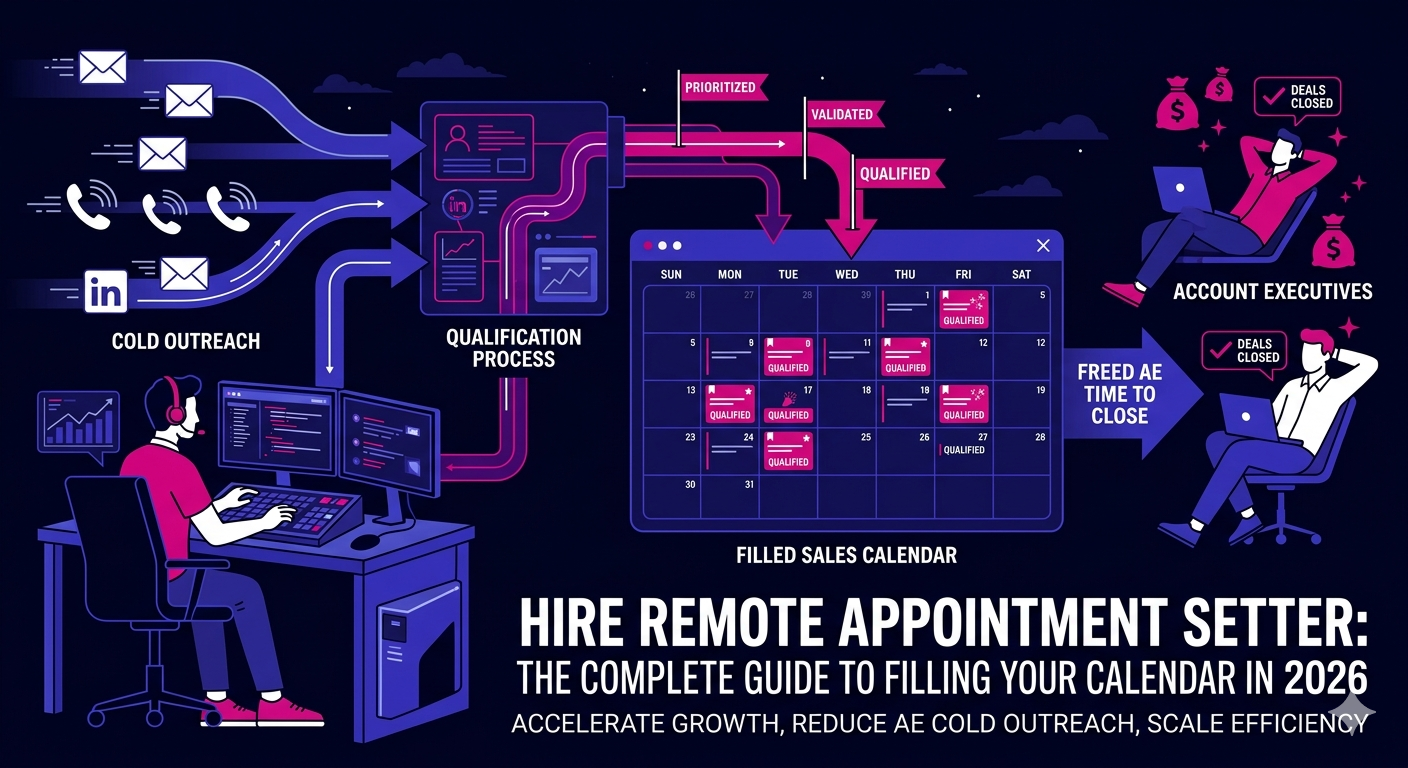
If your closers are spending time on cold outreach instead of closing deals, you have a structural problem. The fix is simple: hire a remote appointment setter to own the top of your funnel and keep your pipeline moving. In 2026, this is one of the most cost-effective growth moves a sales-driven business can make.
This guide walks you through exactly what a remote appointment setter does, what skills to look for, how to onboard one effectively, and how to measure whether they are delivering results worth paying for.
What Is a Remote Appointment Setter?
A remote appointment setter is a sales professional who works outside your physical office and focuses exclusively on contacting prospects, qualifying their interest, and booking meetings directly onto your calendar. They handle the outreach and qualification work so your account executives can focus entirely on closing.
Their core responsibilities include:
- Conducting outbound calls, emails, and LinkedIn outreach to cold or warm prospects
- Qualifying leads against your ideal customer profile before booking
- Scheduling discovery calls, demos, or consultations with your sales team
- Following up with prospects who expressed interest but did not convert initially
- Logging all activity and outcomes in your CRM
- Providing feedback on common objections to refine your messaging
The remote model does not reduce their effectiveness. In fact, many businesses find that remote appointment setters outperform in-office equivalents because they operate in focused, distraction-free environments with access to modern outreach tools designed for distributed teams.
Why Businesses Choose to Hire a Remote Appointment Setter in 2026
Several converging factors have made the remote appointment setter model the preferred choice for growing businesses this year.
Significant Cost Savings
Hiring a full-time, in-house appointment setter in a major market costs between $45,000 and $65,000 per year in base salary, before you factor in payroll taxes, benefits, equipment, and office space. When you hire a remote appointment setter, particularly one based in a lower cost-of-living region, you access the same skill set at a substantially lower total cost. Those savings compound over time and can be reinvested directly into your outreach technology or marketing budget.
Speed to Market
Building an in-house appointment setting function from scratch takes months of recruitment, interviewing, and onboarding. Hiring remotely through a specialist provider compresses that timeline dramatically. Many businesses have a remote appointment setter actively booking meetings within two to three weeks of making the decision to hire.
Specialist Expertise Without Internal Training
Experienced remote appointment setters arrive with established prospecting habits, familiarity with tools like Apollo, Outreach, and HubSpot, and a clear understanding of what it takes to move a cold prospect to a booked meeting. You benefit from that expertise immediately rather than building it internally over months.
Flexibility to Scale
Your pipeline needs fluctuate. A product launch, a new market entry, or a seasonal push may require more outreach capacity temporarily. When you hire a remote appointment setter through a flexible arrangement, scaling up or adjusting scope is straightforward without the rigidity of traditional employment.
What to Look for When You Hire a Remote Appointment Setter
The quality of your hire determines the quality of your pipeline. Prioritize these attributes during your evaluation process.
Proven Outreach Track Record
Ask candidates to share specific metrics from previous roles: calls made per day, email reply rates, and meetings booked per week. Strong appointment setters can quantify their performance. If a candidate cannot speak to their numbers, that is a meaningful signal.
Multi-Channel Proficiency
In 2026, single-channel outreach underperforms. The best remote appointment setters operate confidently across cold calling, email sequences, and LinkedIn simultaneously. Verify that candidates have hands-on experience with all three channels, not just one.
Strong Qualifying Skills
Booking meetings is only valuable if the prospects who show up are genuinely worth your closers’ time. A skilled appointment setter applies your qualification criteria rigorously before booking, protecting your account executives from wasted demos and keeping your show rate high.
Remote Work Readiness
- Reliable internet connection and a professional, quiet workspace
- Experience working in a remote or distributed team environment
- Strong written communication for async updates and CRM logging
- Self-discipline to hit daily activity targets without direct supervision
Coachability
Outbound messaging requires ongoing testing and refinement. A remote appointment setter who responds well to coaching, adjusts their approach based on data, and communicates proactively when something is not working will outperform a stubborn rep with more raw experience over a six-month horizon.
How to Onboard a Remote Appointment Setter for Fast Results
A structured onboarding process is the single biggest factor separating businesses that see strong early results from those that spend the first two months troubleshooting. Follow this phased approach.
Phase One: Foundation (Days 1 to 7)
Dedicate the first week to product knowledge, buyer personas, and messaging framework. Provide written resources your setter can reference independently. Set up all tools, CRM access, and data sources before their start date so no time is wasted on logistics during the first week.
Phase Two: Practice and Calibration (Days 8 to 14)
Have your setter shadow live calls if possible, review your best-performing email sequences, and run through mock call scenarios with your team. Use this phase to ensure they can handle your most common objections confidently and represent your brand accurately.
Phase Three: Live Outreach with Close Monitoring (Weeks 3 and 4)
Begin active outreach with daily check-ins and close performance monitoring. Review call recordings, give sequence feedback, and track early indicators like connect rates and reply rates closely. Use this data to optimize messaging before volume scales up.
How to Measure Whether Your Remote Appointment Setter Is Performing
Define success metrics before your setter starts so performance expectations are clear from day one. The key metrics to track include:
- Daily outreach activity: calls dialed, emails sent, LinkedIn messages sent
- Connect rate on cold calls
- Email open and reply rates
- Meetings booked per week
- Meeting show rate
- Percentage of booked meetings that meet your qualification criteria
Hold weekly one-on-one reviews to discuss performance against these metrics, share objections heard in the field, and refine your outreach approach together. Consistent feedback loops are what turn a good appointment setter into a great one over time.
Common Pitfalls to Avoid
- Skipping a skills test during hiring: Always ask candidates to write a sample cold email or walk through a live cold call scenario before extending an offer.
- Vague expectations at the start: Appointment setters who do not know their daily activity targets or qualification criteria cannot perform consistently. Define both clearly before day one.
- Underinvesting in tooling: A remote appointment setter without a proper sequencing platform and verified prospect data will struggle regardless of their skill level. Budget for the right tools.
- Measuring only meetings booked: Volume is only meaningful if meeting quality is high. Track show rates and qualified meeting rates alongside raw booking numbers.
If you want to skip the hiring process and get a vetted, high-performing appointment setting function running quickly, explore The Remote Reps’ remote SDR and appointment setter services to see how experienced professionals can be matched to your business without the delays of direct recruitment.
According to Salesforce’s State of Sales research on remote appointment setting and outbound productivity, sales teams that separate the prospecting and closing functions consistently report higher quota attainment than those where account executives handle both, making a strong case for hiring a dedicated setter regardless of your team size.
Conclusion: Hire a Remote Appointment Setter and Reclaim Your Closers’ Time
The math is straightforward. Every hour your account executive spends on cold outreach is an hour they are not spending on revenue-generating conversations. When you hire a remote appointment setter, you solve that problem directly, affordably, and at scale.
In 2026, the tools, talent, and systems needed to run a high-performing remote appointment setting function are fully mature. There has never been a better time to make this move.
Ready to hire a remote appointment setter who can start filling your calendar within weeks? Reach out to The Remote Reps today and connect with a vetted professional who fits your industry and pipeline goals.
Frequently Asked Questions About Hiring a Remote Appointment Setter
What does it cost to hire a remote appointment setter in 2026?
The cost to hire a remote appointment setter varies depending on experience level, engagement type, and the region where the setter is based. Remote setters working from lower cost-of-living markets typically cost significantly less than the $45,000 to $65,000 annual baseline for an equivalent in-office hire in the US or UK, while delivering comparable or stronger results.
How quickly can a remote appointment setter start booking meetings?
Most businesses see a remote appointment setter begin booking meetings within three to five weeks of hiring, accounting for onboarding and campaign setup time. With a thorough first two weeks of preparation, some setters begin producing results in their third week of active outreach.
What industries benefit most from hiring a remote appointment setter?
Almost any B2B business with a defined sales process and an average deal value that justifies a sales conversation benefits from hiring a remote appointment setter. Common industries include SaaS, professional services, financial services, logistics, marketing agencies, and consulting firms. The model works wherever there is a need to generate consistent qualified meetings at scale.
How do I keep a remote appointment setter accountable?
Accountability for a remote appointment setter is built on clear daily activity targets, CRM visibility into all outreach logged, weekly one-on-one performance reviews, and regular review of call recordings and email metrics. When expectations are defined clearly from the start and reviewed consistently, accountability becomes a natural part of the working relationship.
Should I hire a remote appointment setter as a full-time employee or on a contract basis?
This depends on your pipeline volume and budget. If you need consistent, high-volume outreach every week, a full-time remote appointment setter typically delivers better results. If your outreach needs fluctuate or you are testing the model for the first time, a contract arrangement gives you flexibility while you determine the right long-term structure for your team.
What tools does a remote appointment setter need to perform well?
A remote appointment setter needs a CRM for logging activity and tracking prospects, a sales engagement platform for managing email and call sequences, a verified contact data source for building prospect lists, and communication tools for staying aligned with your team. Providing a complete tech stack from day one significantly accelerates their ramp time and output quality.