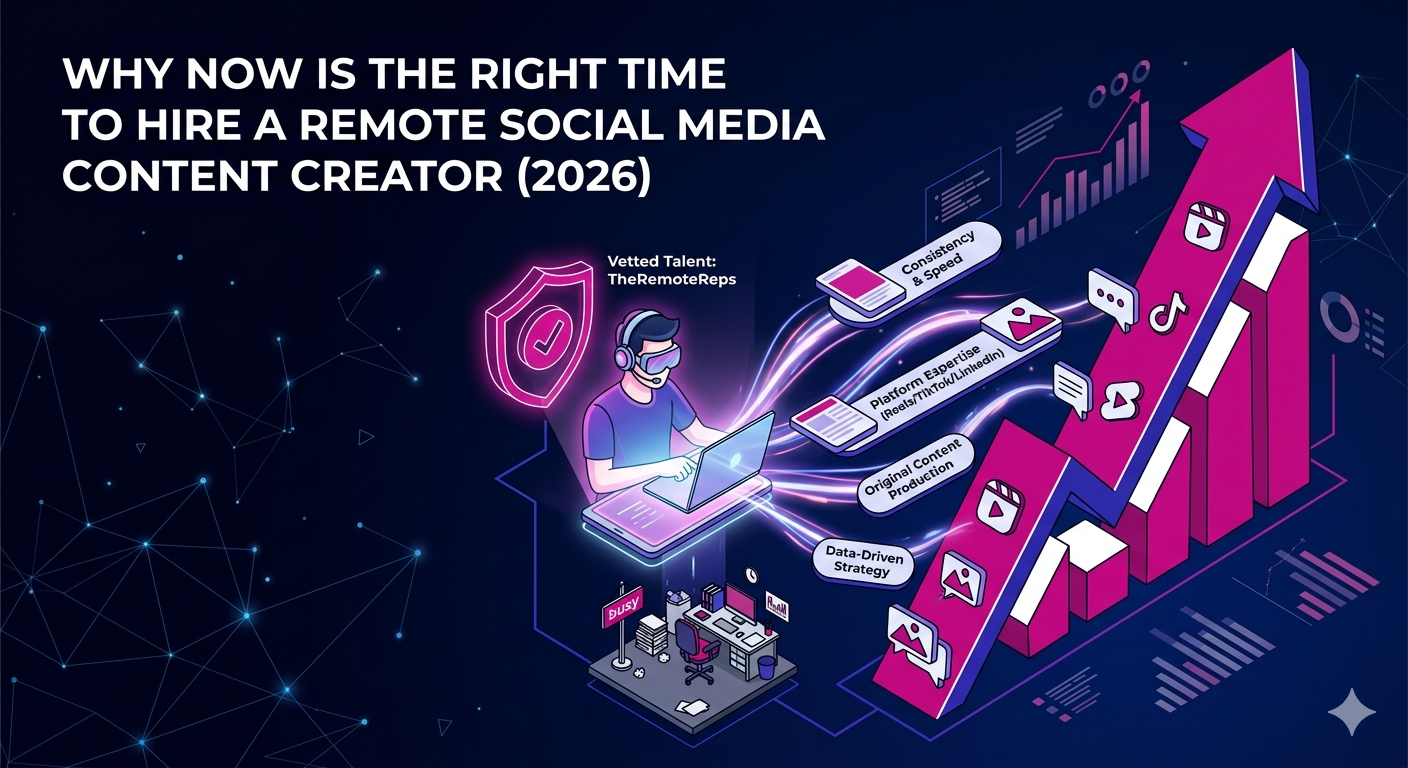
The decision to hire a remote social media content creator is one of the highest-leverage moves a growing business can make in 2026. Social platforms reward consistency, creativity, and speed. Most internal teams simply do not have the bandwidth to deliver all three at once. A dedicated remote content creator fills that gap without the cost and complexity of expanding your in-house headcount.
This guide walks you through exactly what a remote social media content creator does, what skills to prioritize, how to evaluate candidates, and how to set your new hire up for success from day one.
What It Means to Hire a Remote Social Media Content Creator
The role goes well beyond writing captions and hitting publish. When you hire a remote social media content creator, you are bringing on a professional who owns the creative output of your brand across digital channels. Their work directly shapes how your audience perceives your business, how often your content gets shared, and whether your platforms convert visitors into customers.
Day-to-day responsibilities typically include:
- Original content development: Writing, designing, and producing posts tailored to each platform’s format and audience expectations.
- Short-form video production: Creating Reels, TikToks, and YouTube Shorts that align with current trends and brand identity.
- Content calendar management: Planning and scheduling posts in advance to maintain consistent output across all active channels.
- Brand voice consistency: Ensuring every piece of content reflects the company’s tone, values, and visual identity.
- Engagement support: Responding to comments, initiating conversations, and building community around published content.
- Performance tracking: Monitoring which content formats and topics drive the most engagement, reach, and conversions.
The Business Case for Hiring a Remote Social Media Content Creator in 2026
Social media is not a passive marketing channel anymore. Platforms like Instagram, TikTok, LinkedIn, and YouTube actively reward creators who publish high-quality content at high frequency. Brands that treat social as an afterthought are falling behind competitors who treat it as a primary growth lever.
Demand for Content Has Outpaced Internal Capacity
Most marketing teams are already managing campaigns, email programs, paid ads, and website content. Adding daily social media creation to that workload leads to inconsistency, burnout, and underwhelming results. When you hire a remote social media content creator, you give your existing team room to focus on their core functions while ensuring social receives the dedicated attention it needs.
Remote Talent Brings Platform-Native Expertise
Professionals who specialize in social media content creation are immersed in the platforms every single day. They understand the nuances of what performs on LinkedIn versus Instagram versus TikTok. They know how to write hooks, structure short-form video narratives, use trending audio effectively, and adapt content formats before algorithms deprioritize older approaches. This kind of up-to-date platform fluency is hard to replicate with a generalist team member.
Cost Efficiency Without Sacrificing Quality
In-house content hires in major markets come with significant salary expectations, benefits costs, and onboarding investment. Remote hiring unlocks access to highly skilled professionals at competitive rates, especially when sourced through a platform that has already done the vetting. For most businesses, this is one of the clearest return-on-investment cases in the modern hiring landscape.
Core Skills to Look for When You Hire a Remote Social Media Content Creator
Not all content creators deliver equal results. These are the capabilities that separate professionals who move metrics from those who simply fill a calendar:
Storytelling and Copywriting Ability
Every great piece of social content tells a story or makes a point in a way that is memorable. A skilled remote social media content creator writes with clarity, personality, and purpose. They know how to open a post with a hook that stops the scroll and close it with a call to action that generates clicks or responses.
Visual and Video Production Skills
In 2026, static image posts alone are rarely sufficient. Your content creator should be comfortable producing short-form video, designing graphics using tools like Canva or Adobe Express, and editing mobile-first content that looks polished without requiring a full production team.
Multi-Platform Fluency
Content that works on LinkedIn does not automatically translate to Instagram or TikTok. A strong candidate understands the distinct formats, audiences, and algorithm preferences of each platform and tailors content accordingly rather than recycling identical posts across channels.
Analytics Literacy
Creative output should be guided by data. When you hire a remote social media content creator with analytics skills, you get someone who can identify what is working, what is not, and why. This feedback loop is what transforms good content programs into great ones over time.
Self-Management and Reliability
Remote roles require professionals who can manage their own time, meet deadlines without supervision, and communicate proactively when issues arise. Strong organizational skills and consistent follow-through are non-negotiable qualities in a remote content role.
Where Most Businesses Go Wrong When Hiring a Remote Content Creator
Many companies make predictable mistakes in this hiring process that cost them time and money. Avoiding these pitfalls sets you up for a far better outcome:
- Prioritizing follower count over strategy: A candidate who has a personal following is not the same as a professional who can build a brand’s audience. Look for demonstrated brand content experience, not personal influence metrics.
- Skipping a portfolio review: Never hire based on a resume alone. Request real work samples, performance screenshots, and examples of content created for brands in your industry or a comparable niche.
- Failing to clarify expectations upfront: Ambiguity around deliverables, posting frequency, approval workflows, and reporting leads to friction and underperformance. Define the scope clearly before the hire begins.
- Using generic job platforms without vetting: Open freelance marketplaces often surface a high volume of low-quality applicants. Working with a specialized provider that pre-screens candidates saves significant time and reduces hiring risk.
Research highlighted by Buffer’s guide to hiring remote social media content creators and building effective strategies confirms that brands with a documented content strategy and dedicated content professionals consistently outperform those operating without a structured approach. This is a strong argument for investing in the right hire rather than improvising.
When you are ready to find a professional who has already been screened for skills, reliability, and communication ability, browse vetted remote social media content creators at TheRemoteReps and connect with talent that is ready to contribute from the start.
How to Onboard a Remote Social Media Content Creator for Fast Results
The quality of your onboarding directly determines how quickly your new hire starts delivering value. Here is what a strong onboarding process looks like:
Provide a Clear Brand Brief
Share your brand guidelines, tone of voice documentation, visual identity files, and any existing content examples you like. This gives your content creator a foundation to build from rather than guessing what your brand sounds and looks like.
Set Goals and KPIs from Week One
Define what success looks like. Are you focused on follower growth, engagement rate, link clicks, or lead generation from social? Establishing clear metrics upfront ensures your content creator understands what they are optimizing for and can report on meaningful progress.
Establish a Content Review Workflow
Decide how content will be reviewed and approved before publishing. A shared content calendar in a tool like Notion or Trello, with a simple approval process, keeps things moving efficiently without creating bottlenecks.
Schedule Regular Check-Ins
Weekly or biweekly syncs in the first 60 days build alignment quickly and give you early visibility into any adjustments that need to be made. Most remote professionals perform best when expectations are clear and feedback is delivered consistently.
Conclusion: Build a Social Media Presence That Actually Grows
Brands that invest in dedicated content talent are the ones showing up consistently, building genuine audiences, and turning social media into a real business asset. When you hire a remote social media content creator through the right channel, you gain a professional who brings creative skill, platform expertise, and strategic thinking to your brand every single day.
TheRemoteReps specializes in connecting businesses with pre-vetted remote content professionals who are ready to deliver results from their first week. Stop letting your social media potential sit unrealized.
Hire a remote social media content creator through TheRemoteReps and start building the consistent, high-quality presence your brand deserves in 2026.
Frequently Asked Questions
What does it cost to hire a remote social media content creator in 2026?
The cost to hire a remote social media content creator varies based on experience, the number of platforms covered, and the volume of content required each month. In 2026, rates generally range from a few hundred to several thousand dollars per month. Working with a vetted provider like TheRemoteReps ensures you are matched with talent that is appropriately priced for the level of expertise you need, reducing the risk of overpaying for underdelivery or underpaying and receiving poor quality work.
How many platforms can one remote social media content creator manage effectively?
Most experienced professionals can manage two to four platforms well, depending on the content volume and format complexity involved. When you hire a remote social media content creator, it is important to be realistic about your expectations. Spreading a single creator across six or seven platforms without prioritization usually leads to thin, inconsistent output. A focused strategy on the platforms most relevant to your audience produces far stronger results.
What is the difference between a remote social media content creator and a social media manager?
A remote social media content creator is primarily focused on producing creative content including written posts, graphics, and short-form video. A social media manager takes a broader strategic role that includes community management, paid campaign oversight, and performance reporting. Some professionals do both, but when you hire a remote social media content creator specifically, you are prioritizing content output and creative execution. TheRemoteReps can help you identify which role or combination of roles best fits your current needs.
How quickly can a remote social media content creator start producing results?
With a structured onboarding process, most vetted remote social media content creators can begin publishing quality content within the first one to two weeks. Early results in terms of engagement and reach typically become visible within 30 to 60 days, with stronger performance data available after 90 days of consistent output. The key variable is how thoroughly you brief the creator on your brand identity, audience, and goals at the outset.
Is it better to hire a remote social media content creator through an agency or a freelance platform?
Freelance platforms offer a large pool of candidates but require significant time investment to screen, interview, and evaluate applicants without any quality guarantee. When you hire a remote social media content creator through a specialized staffing provider like TheRemoteReps, the vetting has already been done. You receive a shortlist of qualified professionals matched to your requirements, which dramatically reduces hiring time and the risk of a poor placement. For businesses that value both quality and speed, the provider model consistently delivers better outcomes.