Running a small business means wearing many hats. But when it comes to your finances, guessing is not a strategy. Hiring a remote bookkeeper for small business is one of the smartest moves you can make this year. You get expert financial oversight without the overhead of a full-time, in-office hire.
In this guide, we break down exactly what a remote bookkeeper does, how much it costs, and why more small business owners are making the switch to remote financial support in 2026.
What Is a Remote Bookkeeper for Small Business?
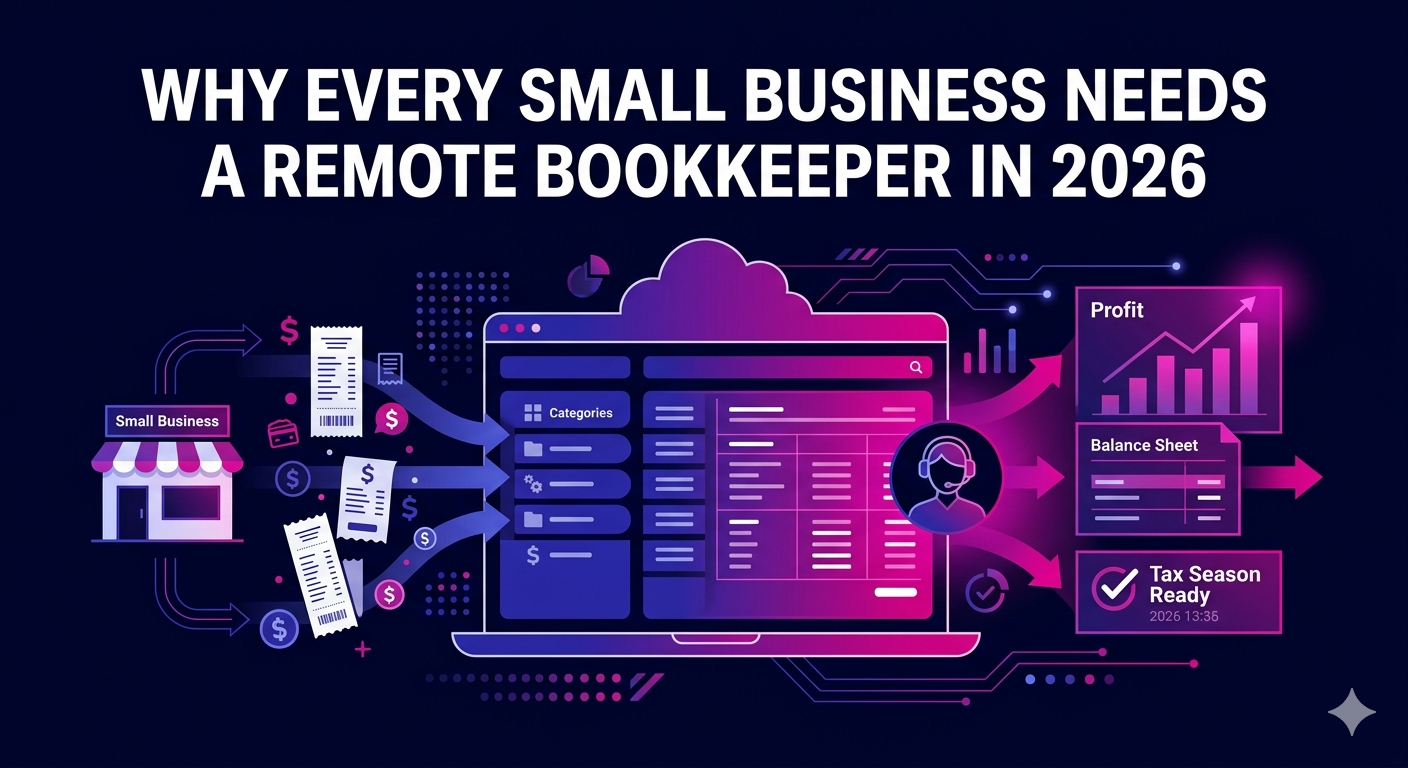
A remote bookkeeper is a trained financial professional who manages your books entirely online. They handle everything from tracking income and expenses to reconciling bank statements and preparing financial reports. They work from their own location using cloud-based accounting software, giving you real-time visibility into your finances without needing an office desk.
For small businesses, this model is ideal. You pay only for the hours or tasks you need. There are no employee benefits, no payroll taxes, and no onboarding costs beyond a short setup period.
What Does a Remote Bookkeeper Actually Do?
- Records daily financial transactions
- Categorizes income and expenses
- Reconciles bank and credit card accounts
- Generates monthly profit and loss statements
- Manages accounts payable and receivable
- Prepares books for tax season
- Tracks cash flow and flags financial irregularities
Top Benefits of Hiring a Remote Bookkeeper for Your Small Business
1. Significant Cost Savings
A full-time, in-house bookkeeper in the United States costs between $45,000 and $65,000 per year on average, plus benefits. A remote bookkeeper for small business typically costs between $300 and $2,000 per month depending on the volume of transactions and scope of services. That is a substantial reduction in financial overhead.
2. Access to Specialized Expertise
Remote bookkeepers often work with multiple industries and bring a broader knowledge base to the table. They are typically well-versed in tools like QuickBooks, Xero, Wave, and FreshBooks. You get a professional who already knows the software and workflows, so there is minimal ramp-up time.
3. Scalability as You Grow
Whether you are processing 50 transactions per month or 500, a remote bookkeeper can scale their services to match your needs. This flexibility makes it easy to adjust your financial support as your business evolves, without going through a new hiring process.
4. Always Ready for Tax Season
One of the biggest pain points for small business owners is scrambling at tax time. A remote bookkeeper keeps your records organized year-round, so your accountant or CPA has everything they need when filings are due. Clean books also mean fewer errors and a lower risk of audits.
5. More Time to Focus on Growth
When you stop manually entering receipts and chasing down invoices, you reclaim hours each week. That time is better spent on sales, marketing, customer relationships, and building your business. A remote bookkeeper handles the back-end so you can focus on the front-end.
How to Choose the Right Remote Bookkeeper for Your Small Business
Not every remote bookkeeper is the right fit. Here is what to look for when hiring:
- Industry experience: Look for someone who has worked with businesses in your sector. A bookkeeper familiar with retail has different expertise than one who specializes in service-based businesses.
- Software proficiency: Confirm they are certified or highly experienced in the accounting platform you use or plan to use.
- Communication style: You need someone responsive and clear. Ask how they deliver reports, how often they check in, and how they handle urgent financial questions.
- References and reviews: Ask for testimonials from other small business clients. A strong track record is the best indicator of reliability.
- Security practices: Financial data is sensitive. Make sure they use secure, encrypted file sharing and follow strong data protection protocols.
Remote Bookkeeping vs. In-House Bookkeeping: A Quick Comparison
Many small business owners wonder whether to hire remotely or bring someone on-site. Here is a straightforward comparison:
- Cost: Remote bookkeepers cost significantly less when you factor in salary, taxes, benefits, and office space.
- Flexibility: Remote professionals are typically available on a part-time or project basis, ideal for businesses that do not need full-time bookkeeping.
- Technology: Both options use digital tools, but remote bookkeepers tend to stay more current with the latest accounting software updates and integrations.
- Oversight: In-house staff are physically present, which some owners prefer. However, remote bookkeepers compensate with regular digital reporting and scheduled check-ins.
For most small businesses, the remote model wins on both cost and convenience.
Cloud-Based Tools That Make Remote Bookkeeping Seamless
The rise of cloud accounting software has made it easier than ever to collaborate with a remote bookkeeper. Platforms like QuickBooks Online, Xero, and Wave allow both you and your bookkeeper to access the same data in real time. You can upload receipts from your phone, and your bookkeeper can categorize and reconcile on their end, all without a single in-person meeting.
Many remote bookkeepers also integrate with tools like Gusto for payroll, Stripe or PayPal for payment reconciliation, and Shopify or WooCommerce for e-commerce transaction tracking.
What Industries Benefit Most from Remote Bookkeeping?
While virtually any small business can benefit, the following industries see the strongest returns from hiring a remote bookkeeper:
- Freelancers and independent contractors
- E-commerce and retail stores
- Real estate agents and property managers
- Healthcare and wellness providers
- Legal and professional services firms
- Restaurants and food service businesses
- Marketing agencies and consultancies
If your business generates revenue and incurs expenses, you need someone keeping accurate records. A remote bookkeeper ensures nothing falls through the cracks.
How to Get Started with a Remote Bookkeeper
The onboarding process is typically straightforward. Most remote bookkeepers will start with an intake call to understand your business, review your existing records, and set up access to your accounting software. From there, they establish a workflow and reporting schedule that fits your needs.
If you are looking for a trusted source of remote talent for your business, explore the range of remote virtual assistants and bookkeeping professionals at The Remote Reps. Their team connects small businesses with vetted remote professionals across multiple roles.
You can also learn more about how the U.S. Small Business Administration recommends managing small business finances, including the importance of accurate bookkeeping for long-term success.
Frequently Asked Questions About Hiring a Remote Bookkeeper for Small Business
What does a remote bookkeeper for small business typically charge?
The cost of a remote bookkeeper for small business varies based on transaction volume and service scope. Most small businesses pay between $300 and $2,000 per month. Some bookkeepers offer hourly rates ranging from $20 to $50 per hour. This is significantly more affordable than hiring a full-time in-house bookkeeper.
Is it safe to share financial data with a remote bookkeeper?
Yes, when you work with a qualified remote bookkeeper for small business, your financial data is protected through encrypted cloud software, secure login credentials, and signed confidentiality agreements. Always vet your bookkeeper carefully and confirm they use industry-standard data security practices.
How is a remote bookkeeper different from an accountant?
A remote bookkeeper for small business handles day-to-day financial record keeping, transaction categorization, and reconciliation. An accountant handles higher-level tasks like tax strategy, auditing, and financial advisory. Many small businesses use both, with the bookkeeper preparing clean records for the accountant to work from.
Can a remote bookkeeper help my small business during tax season?
Absolutely. One of the biggest advantages of hiring a remote bookkeeper for small business is that your records stay organized all year. When tax season arrives, your CPA or tax preparer receives clean, accurate books, reducing errors, saving time, and potentially lowering your tax preparation fees.
What software does a remote bookkeeper for small business typically use?
Most remote bookkeepers for small business are proficient in platforms like QuickBooks Online, Xero, Wave, and FreshBooks. They may also integrate with payroll tools, e-commerce platforms, and payment processors to ensure complete and accurate financial records across all revenue streams.
How do I know if my small business is ready to hire a remote bookkeeper?
If you are spending more than a few hours per week on financial tasks, falling behind on invoicing, missing tax deadlines, or simply unsure where your money is going, it is time to hire a remote bookkeeper for small business. Most businesses benefit from remote bookkeeping support as early as their first year of operation.
Final Thoughts
Hiring a remote bookkeeper for small business is no longer a luxury. It is a practical, cost-effective solution that gives you cleaner records, better financial visibility, and more time to focus on growth. In 2026, with cloud accounting tools more powerful than ever, there is no reason to struggle through bookkeeping alone.
Whether you are a solo freelancer or managing a team of 20, the right remote bookkeeper can transform how you manage money and plan for the future. Take the first step today and find the financial support your business deserves.