
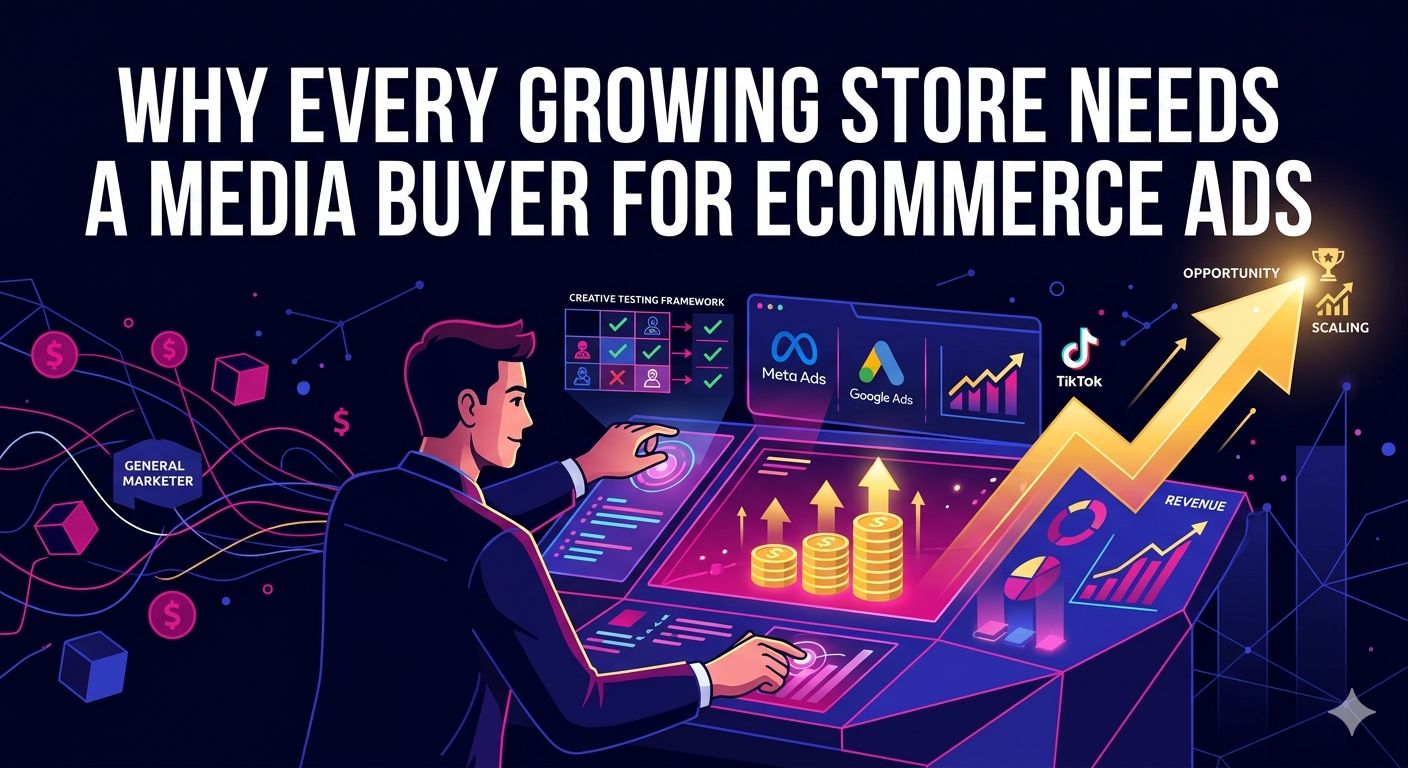
Running paid ads for an ecommerce brand is not the same as running ads for a service business or a B2B company. The buying cycles are shorter, the creative competition is fiercer, and the margin for wasted spend is razor thin. If your campaigns are not performing at the level your business needs, the most impactful change you can make in 2026 is bringing in a dedicated media buyer for ecommerce ads who knows exactly how to turn ad dollars into revenue.
This guide breaks down what an ecommerce media buyer actually does, why their role is so specialized, and how to find and hire the right person without guesswork or overspending.
What Does a Media Buyer for Ecommerce Ads Actually Do?
A media buyer for ecommerce ads is responsible for managing the full paid advertising function of an online store. This goes far beyond setting a daily budget and checking in occasionally. The role involves building scalable campaign structures, developing data-driven audience strategies, overseeing creative performance, and constantly optimizing for the metrics that actually move revenue.
Core Responsibilities of an Ecommerce Media Buyer
- Structuring Meta and Google ad accounts to support both prospecting and retargeting efficiently
- Building audience segments based on customer lifetime value, purchase behavior, and lookalike data
- Developing and executing a systematic creative testing framework to identify winning ad formats
- Managing daily budget pacing and bid strategies to maximize spend efficiency across campaigns
- Setting up accurate conversion tracking, including purchase events, add-to-cart, and checkout abandonment signals
- Analyzing funnel performance and identifying drop-off points that hurt overall ROAS
- Scaling winning campaigns methodically without triggering algorithm resets or performance drops
Each of these tasks requires deep platform knowledge and ecommerce-specific experience. A generalist marketer can handle the basics, but a specialist media buyer for ecommerce ads has the technical depth to push performance well beyond baseline results.
Why Ecommerce Advertising Demands Specialized Expertise
The ecommerce advertising environment in 2026 is more demanding than it has ever been. Competition has increased across every major platform, customer acquisition costs have risen steadily, and the tools available for targeting and tracking have become significantly more complex following privacy changes across iOS, Android, and major browsers.
The Creative-Performance Connection
In ecommerce paid media, creative is not just a visual element. It is the single most powerful lever for performance. An experienced media buyer for ecommerce ads understands how to analyze creative data, identify fatigue signals before performance drops, and work with content teams to develop new angles that keep acquisition costs stable as campaigns scale.
They know the difference between what works in a cold prospecting ad versus a retargeting touchpoint. They understand how to structure video creative for the first three seconds, how to use user-generated content effectively, and when to rotate static versus video formats based on platform behavior.
Attribution Complexity in 2026
Privacy changes have made clean attribution harder for ecommerce brands than at any previous point. A skilled media buyer for ecommerce ads knows how to navigate this complexity. They understand server-side tracking setups, first-party data strategies, and how to triangulate true campaign performance using blended metrics rather than relying solely on platform-reported ROAS.
Without this knowledge, it is easy to make budget decisions based on misleading data and scale campaigns that look profitable on screen but are quietly draining margin in reality.
Key Platforms an Ecommerce Media Buyer Should Know
Not all media buyers for ecommerce ads work across the same channel mix. The platforms your business relies on most should directly inform who you hire. Here is a breakdown of the most relevant platforms for ecommerce advertising in 2026.
Meta Ads (Facebook and Instagram)
Meta remains the dominant channel for direct-to-consumer ecommerce brands. A strong media buyer for ecommerce ads on Meta understands Advantage Plus campaign structures, catalog-based dynamic ads, and how to build full-funnel strategies that work within Meta’s evolving automation ecosystem without losing control of performance.
Google Ads and Performance Max
Google Shopping and Performance Max campaigns are essential for capturing high-intent buyers actively searching for products. An experienced ecommerce media buyer on Google knows how to feed the algorithm the right signals, structure product feed data correctly, and balance automated bidding with manual oversight to prevent budget waste.
TikTok Ads
TikTok has become a major acquisition channel for ecommerce brands targeting younger demographics and impulse-driven product categories. A media buyer for ecommerce ads who understands TikTok’s native content style, spark ads, and shopping integrations can unlock significant reach at competitive CPMs that Meta cannot match in certain niches.
Programmatic and Retargeting Networks
For larger ecommerce brands with substantial traffic, programmatic display and dedicated retargeting platforms offer an additional layer of reach and conversion support. A seasoned media buyer knows when these channels add genuine incremental value and when they are simply duplicating attribution from other touchpoints.
How to Evaluate a Media Buyer for Ecommerce Ads Before You Hire
Finding a media buyer with ecommerce experience is one thing. Finding one who can deliver meaningful results for your specific business is another. Here is what to look for during the evaluation process.
Relevant Ecommerce Case Studies and Results
Ask for specific examples of ecommerce campaigns they have managed. Look for data on ROAS improvement over time, CPA reduction, and how they handled scaling from lower to higher spend levels. Be wary of candidates who can only speak in generalities. Strong media buyers for ecommerce ads can cite real numbers and explain the decisions behind them.
Understanding of the Full Purchase Funnel
Ecommerce advertising does not begin and end at the purchase event. A skilled buyer understands how to target users at every stage, from cold awareness through first purchase and into repeat buying and retention. Ask how they approach funnel segmentation and whether they account for post-purchase upsell or loyalty campaigns in their planning.
Creative Collaboration Experience
The best ecommerce media buyers are not passive budget managers. They are active participants in the creative process. Ask how they provide creative briefs, how they analyze ad performance at the creative level, and how they communicate feedback to design or content teams. Their answer will tell you a lot about how much value they can add beyond pure campaign management.
Where to Find the Right Media Buyer for Ecommerce Ads
Sourcing strong ecommerce media buying talent independently is time-consuming and inconsistent. Freelance platforms are crowded with generalists, and agencies are often expensive and diluted in their focus. A specialist talent platform that pre-vets candidates is the most efficient path to finding someone genuinely qualified.
The Remote Reps connects ecommerce businesses with experienced, pre-screened media buyers who have a proven track record in paid advertising for online stores. You can explore available talent and find the right fit quickly without wading through unqualified applicants. Visit the ecommerce media buyer specialists at The Remote Reps to start the process today.
If you are also looking to strengthen your broader ecommerce marketing operation, The Remote Reps offers access to dedicated ecommerce marketing experts who can support everything from email and SMS to influencer strategy and conversion rate optimization alongside your paid media efforts.
For additional context on the evolving role of paid media in ecommerce growth, Shopify’s enterprise ecommerce marketing resource provides a solid overview of how brands are structuring their paid advertising strategies to stay competitive in 2026.
What to Expect in the First 90 Days
Hiring a media buyer for ecommerce ads is an investment that compounds over time. Here is a realistic picture of what the first three months typically look like.
- Days 1 to 14: Account audit, tracking verification, audience research, and initial campaign restructuring
- Days 15 to 30: Launch of restructured campaigns, establishment of testing frameworks, baseline performance benchmarking
- Days 31 to 60: First round of creative testing complete, initial optimizations applied, early ROAS trends emerging
- Days 61 to 90: Scaling of winning campaigns, deeper audience refinement, full performance reporting with growth projections
Patience during the early phase matters. The learning period is not wasted time. It is the foundation that determines how well your campaigns perform at scale.
Conclusion: Make Every Ad Dollar Work Harder
Ecommerce is an unforgiving environment for average advertising execution. The difference between a store that scales profitably and one that bleeds budget on underperforming campaigns often comes down to one thing: having the right media buyer for ecommerce ads managing the work.
In 2026, that expertise is more accessible than ever through remote talent platforms that make it simple to find, vet, and hire specialists without the cost or complexity of traditional agency relationships. If you are ready to take your paid media performance seriously, start by connecting with a proven ecommerce media buyer through The Remote Reps today.
Frequently Asked Questions About Hiring a Media Buyer for Ecommerce Ads
What makes a media buyer for ecommerce ads different from a general media buyer?
A media buyer for ecommerce ads specializes in the unique demands of online retail advertising, including product catalog management, dynamic retargeting, purchase funnel optimization, and creative testing at scale. General media buyers may lack the platform depth and ecommerce-specific knowledge needed to drive the ROAS and CPA results that online stores require.
How much does a media buyer for ecommerce ads typically charge in 2026?
In 2026, a remote media buyer for ecommerce ads typically charges between $2,000 and $6,000 per month depending on experience level, the number of platforms managed, and monthly ad spend volume. This is significantly more cost-effective than hiring in-house or working with a full-service agency that charges a percentage of managed spend.
Which platforms should a media buyer for ecommerce ads be proficient in?
The most important platforms for a media buyer for ecommerce ads in 2026 are Meta Ads, Google Ads including Performance Max and Shopping, and TikTok Ads. Depending on the brand’s audience and product category, LinkedIn, Pinterest, and programmatic display channels may also be relevant. The specific mix should align with where your target customers are most active.
How long before a media buyer for ecommerce ads delivers measurable results?
Most experienced media buyers for ecommerce ads complete their account audits and initial campaign restructuring within the first two weeks. Meaningful performance data typically emerges within 30 to 45 days as campaigns pass through their learning phases. Significant ROAS improvements and stable scaling are generally achievable by the end of the first 90 days.
Should I hire a media buyer for ecommerce ads in-house or remotely?
For most ecommerce businesses, hiring a remote media buyer for ecommerce ads is the more practical and cost-effective choice. Remote specialists offer the same level of expertise as in-house hires at a lower total cost, without the overhead of benefits, office space, or payroll complexity. Using a vetted talent platform further reduces risk by ensuring candidates have already been screened for skill and reliability.
What information should I prepare before onboarding a media buyer for ecommerce ads?
Before onboarding a media buyer for ecommerce ads, prepare admin access to all ad accounts and analytics platforms, historical campaign performance data, your product catalog and feed details, customer demographic research, and clearly defined KPIs such as target ROAS, CPA, or monthly revenue goals. The more context you provide upfront, the faster your new media buyer can deliver meaningful results.