
If your to-do list is overflowing with marketing tasks you never quite get to, a virtual marketing assistant might be exactly what your business needs. In 2026, more companies than ever are turning to remote marketing support to stay competitive, move faster, and keep costs under control. A skilled virtual marketing assistant handles the work that drives growth, without the overhead of a full-time in-office hire.
This guide covers everything you need to know: what a virtual marketing assistant actually does, what skills to look for, how much they cost, and how to find and onboard one effectively.
What Is a Virtual Marketing Assistant?
A virtual marketing assistant is a remote professional who handles marketing tasks on behalf of your business. They work from their own location using digital tools, communicating with your team asynchronously or in real time depending on your setup.
Unlike a traditional in-office marketing hire, a virtual marketing assistant gives you flexibility. You can bring them on part-time, full-time, or for a specific project. You pay for the work, not the desk space.
How a Virtual Marketing Assistant Differs from a General VA
A general virtual assistant handles administrative tasks like scheduling, inbox management, and data entry. A virtual marketing assistant is specifically focused on marketing execution. They understand channels, campaigns, content, and analytics. The work they do directly supports lead generation, brand awareness, and customer acquisition.
What Tasks Can a Virtual Marketing Assistant Handle?
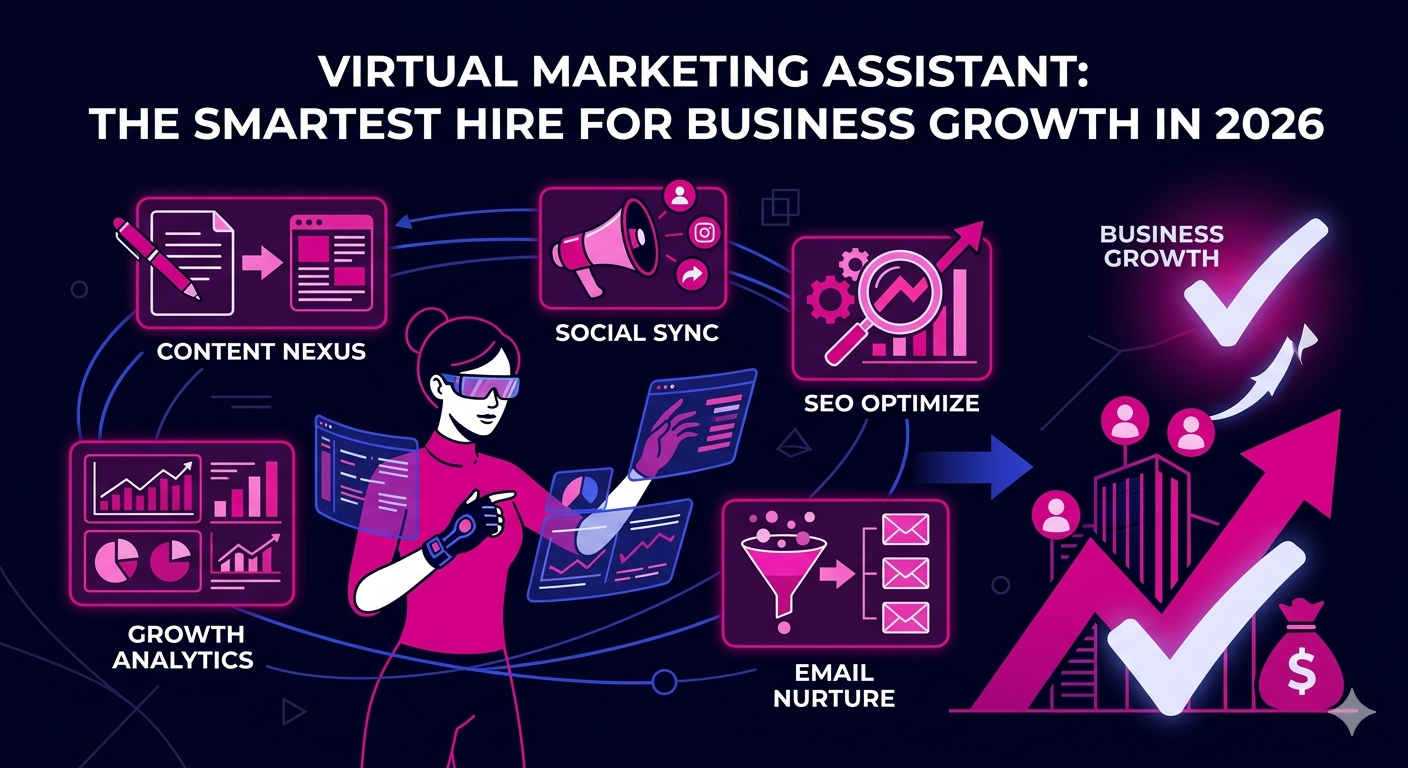
The scope of work a virtual marketing assistant can own is broader than most business owners expect. Here is a breakdown of the most common responsibilities.
Content Creation and Management
- Writing blog posts, website copy, and landing page content
- Creating and scheduling social media posts across multiple platforms
- Drafting email newsletters and automated marketing sequences
- Repurposing existing content into different formats
- Managing a content calendar and ensuring consistent publishing
Social Media and Community Management
- Growing and engaging your audience on LinkedIn, Instagram, Facebook, and X
- Responding to comments, messages, and mentions
- Monitoring brand mentions and competitor activity
- Tracking platform analytics and reporting on growth metrics
SEO and Website Support
- Keyword research and on-page optimization
- Writing SEO-optimized content and meta descriptions
- Uploading and formatting content in your CMS
- Monitoring organic traffic trends and flagging opportunities
Email Marketing and Lead Nurturing
- Building and managing email lists
- Creating segmented campaigns for different audience groups
- Setting up automated workflows in platforms like Klaviyo, Mailchimp, or ActiveCampaign
- Tracking open rates, click-through rates, and conversions
Analytics and Reporting
- Pulling performance data from Google Analytics 4, Meta Ads Manager, or similar tools
- Building weekly or monthly marketing reports
- Identifying trends and surfacing actionable insights
Key Skills to Look for in a Virtual Marketing Assistant
Not every virtual marketing assistant will be the right fit for your business. Knowing what to look for before you start hiring saves significant time and frustration.
Proven Channel Experience
Look for someone with hands-on experience in the specific channels that matter to your business. A virtual marketing assistant who has managed paid social campaigns for e-commerce brands brings very different value than one who specializes in B2B content and LinkedIn. Be specific about your needs so you attract the right candidates.
Strong Writing and Communication Skills
Marketing lives and dies on messaging. Your virtual marketing assistant will be producing content that represents your brand, so strong writing is non-negotiable. Ask for writing samples or give candidates a short paid writing task before committing to a longer engagement.
Data Literacy
The best virtual marketing assistants do not just create and publish. They track what works. Look for comfort with analytics platforms, an understanding of key marketing metrics, and the ability to adjust strategy based on what the data shows.
Tool Proficiency
In 2026, a solid virtual marketing assistant should be familiar with tools like Google Analytics 4, a major social scheduling platform such as Buffer or Hootsuite, an email marketing platform, and a content management system like WordPress or Webflow. Familiarity with project management tools like Notion, Asana, or ClickUp is a practical bonus.
Self-Direction and Accountability
Because your virtual marketing assistant will work remotely, they need to be genuinely self-directed. Look for people who ask smart questions upfront, manage their own time effectively, and report on their work without being chased. References from past clients are the clearest indicator of this quality.
How Much Does a Virtual Marketing Assistant Cost?
Cost is one of the most compelling reasons businesses choose a virtual marketing assistant over a traditional in-office hire. In 2026, pricing generally breaks down as follows.
- Part-time virtual marketing assistant (10 to 20 hours per week): $1,200 to $2,800 per month
- Full-time virtual marketing assistant (40 hours per week): $2,500 to $5,500 per month
- Senior specialist with deep channel expertise: $4,000 to $7,500 per month
Compare this to the total cost of an equivalent in-office marketing hire, which in a major US market typically runs $85,000 to $120,000 per year when salary, benefits, and overhead are included. The savings are significant, especially for small and mid-sized businesses managing tight margins.
Where to Find a Reliable Virtual Marketing Assistant
Finding a virtual marketing assistant is easy. Finding a great one is harder. Here are the approaches that consistently produce the best results.
Specialized Remote Hiring Platforms
Platforms that specifically vet and place remote marketing professionals offer the best combination of quality and speed. Rather than sorting through hundreds of generic applications, you get access to candidates who have already been screened for relevant skills and remote work reliability.
If you are ready to find your next hire, explore The Remote Reps’ virtual marketing assistant services to connect with pre-vetted remote marketing professionals who are ready to contribute from week one.
Referrals from Your Professional Network
A warm referral from someone who has worked with a virtual marketing assistant directly is often the most reliable path to a strong hire. Reach out to founders, operators, and marketing leaders in your network and ask who they have worked with and would recommend without hesitation.
Niche Marketing Communities
Communities built around content marketing, growth, or specific tools often attract experienced practitioners who freelance or take on remote roles. Engaging with contributors whose work you admire can surface candidates you would never find through traditional job boards.
For context on how remote marketing roles are evolving in 2026, Forbes Advisor’s research on remote work trends for virtual marketing professionals provides useful data on how companies are structuring distributed marketing teams today.
How to Onboard a Virtual Marketing Assistant for Fast Results
Hiring the right person is only half the equation. A structured onboarding process dramatically improves how quickly your virtual marketing assistant can start contributing meaningfully.
- Share a brand guide covering your tone, messaging, visual identity, and target audience
- Give access to all relevant tools and platforms on day one
- Walk them through your current marketing setup and what is and is not working
- Set clear 30, 60, and 90-day goals with specific, measurable outcomes
- Establish a weekly check-in rhythm, even if it is just a brief async update
- Create a shared folder with past campaigns, templates, and brand assets
Companies that invest in structured onboarding consistently see faster returns from their virtual marketing assistant than those who hand over login credentials and hope for the best.
FAQ: Virtual Marketing Assistant
What is a virtual marketing assistant and what do they do?
A virtual marketing assistant is a remote professional who manages marketing tasks for your business. This can include content creation, social media management, email marketing, SEO support, analytics reporting, and campaign coordination. They work remotely using digital tools and communicate with your team via email, Slack, or video calls depending on your preferred setup.
How is a virtual marketing assistant different from a freelance marketer?
A virtual marketing assistant typically handles ongoing, day-to-day marketing execution across multiple tasks. A freelance marketer is more often hired for a specific deliverable or project, such as a brand redesign or a paid campaign strategy. A virtual marketing assistant is a more integrated, longer-term role focused on consistent output and support.
How many hours per week does a virtual marketing assistant typically work?
A virtual marketing assistant can work anywhere from 10 hours per week for focused, narrow support up to 40 hours per week as a full-time remote team member. Most small businesses start with 20 hours per week to cover core tasks and scale up as the scope of work grows and the relationship proves its value.
What tools should a virtual marketing assistant already know how to use?
A well-rounded virtual marketing assistant in 2026 should be comfortable with Google Analytics 4, a social media scheduling tool, an email marketing platform like Klaviyo or Mailchimp, a CMS like WordPress, and a project management tool like Notion or Asana. The specific tools needed will depend on which channels and tasks are most important to your business.
How do I measure the performance of a virtual marketing assistant?
Set clear KPIs at the start of the engagement tied to the specific channels and tasks your virtual marketing assistant owns. Common metrics include organic traffic growth, email open and click rates, social media follower growth and engagement, number of content pieces published per month, and lead volume from marketing channels. Review these monthly to assess performance and identify areas for improvement.
Can a virtual marketing assistant help with paid advertising?
Yes, many virtual marketing assistants have experience managing paid social or paid search campaigns. However, if paid advertising is your primary focus, consider looking for a specialist with dedicated PPC or media buying experience rather than a generalist virtual marketing assistant. Specialists tend to produce better results on complex paid media accounts where budget management and optimization require deep platform expertise.
Take the Next Step Toward Smarter Marketing Support
A virtual marketing assistant is one of the most cost-effective investments a growing business can make in 2026. You get consistent, skilled execution across the channels that drive growth, without the overhead of a traditional in-house hire.
The Remote Reps makes it straightforward to find and hire pre-vetted remote marketing professionals who are ready to deliver results from the start. Browse our virtual marketing assistant specialists today and give your business the marketing support it deserves.