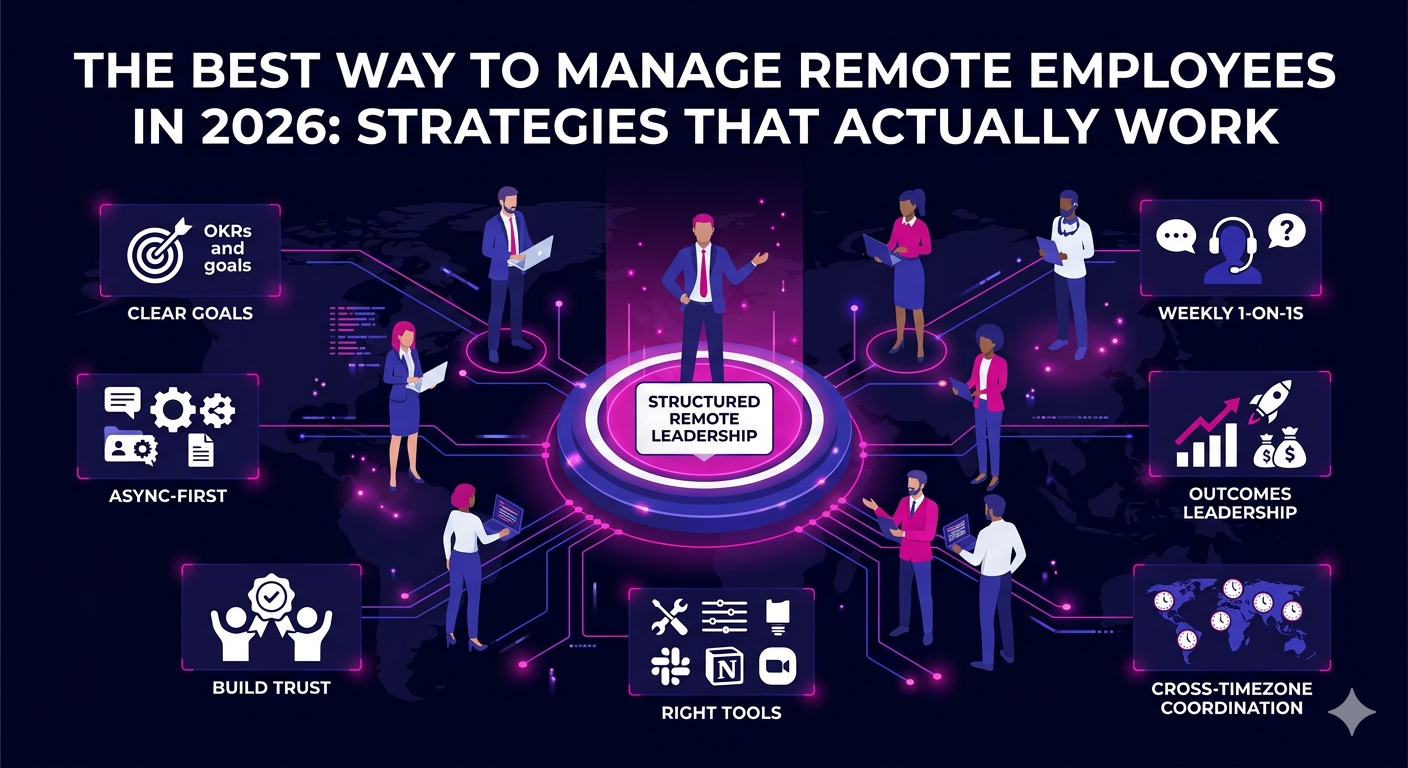
Managing a distributed workforce has become one of the defining leadership challenges of this decade. If you are searching for the best way to manage remote employees, you are not alone. In 2026, remote and hybrid teams make up the majority of the global workforce, and the managers who thrive are those who have replaced outdated office-centric habits with intentional, structured remote leadership practices. This guide breaks down exactly what those practices look like and how you can apply them starting today.
Why Traditional Management Approaches Fall Short for Remote Teams
Many managers try to replicate the in-office experience online and then wonder why productivity and morale suffer. The problem is that remote work operates on fundamentally different dynamics. Visibility, communication, and accountability all work differently when your team is distributed across multiple locations and time zones.
Micromanagement is the most common mistake. When managers cannot see their team, they often compensate by demanding constant updates, scheduling back-to-back meetings, or monitoring activity through surveillance software. This erodes trust and drives away top talent. The best way to manage remote employees starts with shifting from activity-based oversight to outcomes-based leadership.
The Core Principles Behind Effective Remote Employee Management
Before diving into specific tactics, it helps to understand the principles that underpin successful remote team management. These principles apply whether you are leading two people or two hundred.
Clarity Over Assumptions
In an office, a lot of context is transmitted passively through overheard conversations, hallway check-ins, and body language. Remote teams have none of that. Every expectation, goal, and process needs to be documented and communicated explicitly. Ambiguity is the enemy of remote productivity.
Trust as the Foundation
High-performing remote teams are built on trust. This means hiring people with the autonomy and self-discipline to manage their own time, then giving them the space to do exactly that. Managers who practice trust-first leadership see higher retention, better output, and stronger team morale.
Asynchronous-First Communication
Not every question needs a meeting. Not every update needs an immediate response. The best way to manage remote employees involves designing communication systems that respect focus time and reduce interruptions. Asynchronous tools like shared documents, recorded video updates, and project management platforms allow work to move forward without requiring everyone to be online at the same time.
Practical Strategies for Managing Remote Employees Well
With the right principles in place, the following strategies will help you build a remote team that is aligned, engaged, and consistently productive.
Set Clear Goals with Measurable Outcomes
Every remote employee should know exactly what success looks like in their role. Use a goal-setting framework such as OKRs (Objectives and Key Results) or SMART goals to define what each person is responsible for delivering each week, month, and quarter. When goals are clear and measurable, you can evaluate performance without needing to watch what someone is doing minute by minute.
Build a Structured Communication Rhythm
Consistency in communication prevents remote teams from feeling disconnected or out of the loop. A reliable rhythm might look like this:
- Daily async check-ins via a shared Slack channel or project board update
- Weekly one-on-one video calls between manager and each direct report
- Biweekly team meetings to review progress, surface blockers, and align on priorities
- Monthly retrospectives to discuss what is working and what needs adjustment
The key is predictability. When team members know when they will hear from you and when they need to report back, they can structure their own work accordingly.
Use the Right Tools for Remote Collaboration
Tool selection matters. The best way to manage remote employees includes equipping your team with the right infrastructure for communication, project tracking, and knowledge sharing. A solid remote tech stack in 2026 typically includes:
- A messaging platform like Slack or Microsoft Teams for day-to-day communication
- A project management tool like Asana, ClickUp, or Linear for task tracking
- A documentation hub like Notion or Confluence for storing processes and knowledge
- A video conferencing tool like Zoom or Google Meet for synchronous calls
- A time zone management tool for coordinating across global teams
Avoid tool overload. Too many platforms create confusion and reduce adoption. Standardize your stack and train your team on it thoroughly.
Prioritize One-on-One Meetings
Weekly or biweekly one-on-ones are non-negotiable for effective remote management. These sessions are not status updates. They are dedicated time to understand how each team member is doing personally and professionally, what obstacles they are facing, and how you can support them. Regular one-on-ones are one of the most consistently cited factors in remote employee satisfaction and retention.
Create Visibility Without Micromanagement
One concern managers raise when learning the best way to manage remote employees is how to stay informed without crossing into micromanagement. The answer is shared visibility systems rather than individual surveillance. When everyone updates the same project board, contributes to the same weekly summary document, or posts a brief async standup, you stay informed without requiring anyone to justify their every hour.
Invest in Remote Onboarding
New hires who join a remote team without proper onboarding often struggle for months before finding their footing. A structured onboarding process should cover:
- A clear first-week schedule with defined activities and check-ins
- Documentation of all tools, processes, and communication norms
- Introductions to key team members and stakeholders
- A 30-60-90 day plan with milestones and expectations
- A designated onboarding buddy for informal questions
A strong start dramatically increases the likelihood that a new remote hire will become a long-term, high-performing contributor.
Recognize and Celebrate Remote Team Contributions
Recognition is often one of the first things to disappear when teams go remote. Without the spontaneous “great job” moments that happen naturally in an office, remote employees can feel invisible. Build recognition into your management rhythm. A weekly shoutout in your team channel, a note in your one-on-one, or a formal peer recognition system all go a long way toward keeping remote employees engaged and motivated.
Building the Right Remote Team From the Start
Even the best management practices are harder to apply when you are working with the wrong people. The best way to manage remote employees also involves hiring individuals who are genuinely suited to remote work. Look for candidates who demonstrate strong written communication, self-motivation, and experience working independently.
If you are building out your remote team across marketing, sales, operations, or support, working with a specialized staffing platform saves significant time and reduces hiring risk. The Remote Reps connects businesses with pre-vetted remote professionals across a wide range of roles. Whether you need a remote virtual assistant to support day-to-day operations or a specialized marketer, the platform provides candidates who are already prepared for the demands of remote work.
Common Mistakes to Avoid When Managing Remote Employees
Even well-intentioned managers fall into patterns that undermine remote team performance. Here are the most frequent mistakes and how to avoid them:
- Over-scheduling meetings: Protect your team’s deep work time. Not everything requires a call.
- Ignoring time zone differences: Be intentional about when you schedule synchronous communication so no one is consistently disadvantaged.
- Assuming silence means everything is fine: Remote employees often hesitate to raise concerns. Create explicit channels and check-in moments for surfacing issues.
- Neglecting culture: Team culture does not build itself remotely. Plan virtual social time, celebrate milestones, and reinforce shared values consistently.
- Delaying feedback: Remote employees have fewer natural feedback signals. Provide specific, timely feedback rather than saving it for quarterly reviews.
Conclusion: Lead With Intention in 2026
The best way to manage remote employees is not a single tactic or tool. It is a collection of intentional practices centered on clarity, trust, communication, and support. Managers who build these habits into their daily and weekly routines consistently see better performance, lower turnover, and stronger team culture than those who rely on proximity-based management methods.
If you are expanding your remote team and want to start with high-quality talent that is already equipped for distributed work, explore The Remote Reps to find pre-screened remote professionals ready to contribute from day one.
Frequently Asked Questions About Managing Remote Employees
What is the best way to manage remote employees who work in different time zones?
The best way to manage remote employees across time zones is to default to asynchronous communication for most collaboration and reserve synchronous meetings for high-priority discussions. Document decisions clearly so no one is left out due to time differences. Rotate meeting times when real-time calls are necessary so the same people are not always joining at inconvenient hours.
How do I measure productivity when managing remote employees?
Focus on outputs rather than activity. The best way to manage remote employees for productivity is to define clear deliverables and deadlines, then evaluate performance against those benchmarks. Use project management tools to track task completion rates and use one-on-ones to identify any blockers affecting output. Avoid screen monitoring tools, as they tend to damage trust without providing meaningful performance data.
How often should I check in with remote employees?
For most managers, the best way to manage remote employees includes at least one structured one-on-one per week or every two weeks per direct report, combined with daily async updates via a shared tool. Over-checking signals distrust, while under-checking leads to disengagement. Consistency matters more than frequency.
What are the biggest challenges in managing remote employees effectively?
The most common challenges include maintaining team cohesion, preventing communication breakdowns, managing across time zones, and keeping remote employees engaged and motivated over time. The best way to manage remote employees through these challenges is to build deliberate systems for communication, recognition, and connection rather than hoping they emerge organically.
How do I onboard a new remote employee successfully?
Successful remote onboarding requires a structured plan that begins before the employee’s first day. The best way to manage remote employees from the start includes preparing access to all tools, documentation of key processes, a clear first-week schedule, and a designated point of contact for questions. A 30-60-90 day plan with defined milestones helps new hires build confidence and momentum quickly.
Can the best way to manage remote employees differ by industry or role?
Yes, the specific tactics vary by role and context, but the underlying principles remain consistent. A remote sales rep needs different KPIs and check-in formats than a remote developer, but both benefit from clear goals, consistent communication, and trust-based oversight. Adapt the tools and cadence to the role, but keep the core management philosophy the same across your team.