
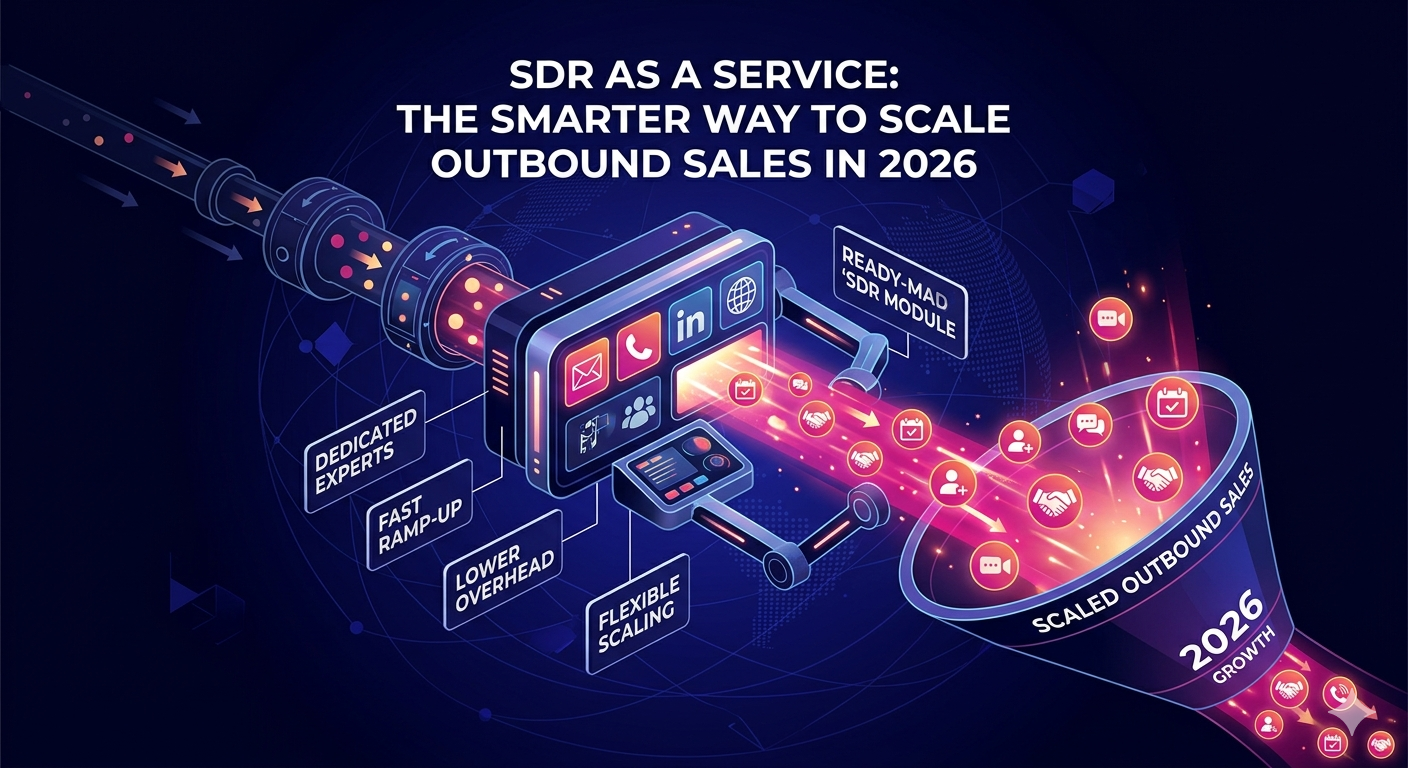
If your pipeline feels thin and your sales team is stretched too far, you are not alone. Many growing companies are turning to SDR as a service to fill the gap without the overhead of building an in-house team from scratch. This model gives you dedicated, trained Sales Development Representatives on demand, and it is changing how businesses approach outbound growth.
In this guide, you will learn exactly what SDR as a service means, why it is gaining traction in 2026, and how to decide if it is the right move for your business.
What Is SDR as a Service?
SDR as a service is an outsourced sales model where a company provides you with experienced Sales Development Representatives who work as an extension of your team. Instead of hiring, onboarding, and managing SDRs internally, you plug into a ready-made system that handles prospecting, outreach, and appointment setting on your behalf.
These SDRs are typically specialists in cold outreach, lead qualification, and top-of-funnel pipeline generation. They use your messaging, target your ideal customer profile, and hand off qualified meetings directly to your closers.
How It Differs from Traditional Hiring
- No lengthy recruitment cycles or onboarding delays
- Lower overhead without benefits, office space, or equipment costs
- Faster ramp-up, often within days rather than months
- Built-in management, training, and performance accountability
- Flexible scaling based on your pipeline goals
Why SDR as a Service Is Growing Fast in 2026
Several market shifts have pushed businesses toward the outsourced SDR model. Sales cycles are getting longer, buyer attention is harder to earn, and the cost of a single in-house SDR hire continues to climb when you factor in salary, commission, tech stack, and ramp time.
At the same time, companies need to move fast. A startup that waits six months to hire and train an SDR team can lose significant ground to competitors who are already running outbound sequences. SDR as a service closes that gap immediately.
Key Drivers Behind the Trend
- Remote-first hiring: The talent pool is global, and businesses are comfortable working with distributed sales teams.
- Tech-enabled outreach: Modern SDR teams use tools like CRMs, sequencing platforms, and intent data to operate at scale.
- Budget pressure: Lean teams need results without ballooning headcount.
- Specialization: Outsourced SDR providers stay current on best practices, removing the burden from your leadership team.
What an SDR as a Service Model Actually Looks Like
Most SDR as a service engagements follow a structured process. Here is a typical workflow you can expect when working with a quality provider:
Step 1: Onboarding and ICP Definition
The provider works with you to define your ideal customer profile, messaging framework, and outreach channels. This usually takes one to two weeks and sets the foundation for all outreach activity.
Step 2: Campaign Build and Launch
Your dedicated SDR team builds targeted prospect lists, writes personalized sequences, and begins outbound activity across email, phone, and LinkedIn. Strong providers will already have tested playbooks that they adapt to your offer.
Step 3: Qualification and Handoff
When a prospect shows genuine interest, the SDR qualifies them against your criteria and books a meeting with your closing team. You receive warm, vetted leads rather than raw contacts.
Step 4: Reporting and Optimization
Weekly reporting tracks open rates, reply rates, meetings booked, and pipeline generated. A good provider continuously tests and refines sequences to improve conversion over time.
If you want to see what a fully managed outbound system looks like in practice, explore The Remote Reps’ dedicated SDR services for a clear picture of how experienced, remote SDRs can drive pipeline for your business.
Who Benefits Most from SDR as a Service?
This model works particularly well for companies in specific growth stages or situations:
- Early-stage startups that need pipeline but cannot justify a full-time SDR hire yet
- Mid-market companies expanding into new verticals or geographies
- Businesses with long sales cycles that need consistent top-of-funnel activity to keep deals flowing
- Teams that lack outbound expertise internally and want to run structured campaigns without guessing
- Organizations testing new markets before committing to permanent headcount
What to Look for in an SDR as a Service Provider
Not all providers are equal. When evaluating an SDR as a service partner, focus on these factors:
Industry Experience
Your provider should understand your market, your buyer personas, and the typical objections you face. Generic SDRs who cannot hold a credible conversation will damage your brand.
Transparent Reporting
You need full visibility into activity, performance, and results. Avoid providers who are vague about metrics or do not offer regular review calls.
Flexibility and Scalability
Your needs will change. Whether you want to scale up for a product launch or reduce activity during a slow quarter, a good provider accommodates without locking you into rigid contracts.
Quality Over Volume
More meetings are not always better. Look for providers who prioritize qualified pipeline over raw meeting counts, and who hold their SDRs accountable to your qualification criteria.
According to Gartner’s sales development research, organizations that align SDR outreach tightly to ideal customer profiles see substantially higher conversion rates from first meeting to closed deal, underscoring why quality matching matters far more than raw volume.
SDR as a Service vs. Building In-House: A Quick Comparison
Cost
An in-house SDR in 2026 typically costs between $60,000 and $90,000 per year in base salary alone, before benefits, tools, and management overhead. An SDR as a service engagement usually runs at a fraction of that, with faster time-to-pipeline and no hidden costs.
Speed
Hiring, onboarding, and ramping an internal SDR takes three to six months on average. With an outsourced model, outreach can begin within weeks of signing.
Risk
If an in-house SDR underperforms or leaves, you lose weeks of productivity and restart the hiring process. With a service model, your provider absorbs that risk and keeps your pipeline moving.
Common Mistakes to Avoid
- Choosing a provider based solely on price rather than fit and track record
- Failing to define a clear ICP before outreach begins, leading to wasted effort
- Expecting results in the first two weeks without allowing time for campaign optimization
- Not involving your closing team in the handoff process, which creates friction for booked prospects
Frequently Asked Questions About SDR as a Service
What exactly does SDR as a service include?
SDR as a service typically includes prospect list building, personalized outreach via email, phone, and LinkedIn, lead qualification, meeting booking, and regular performance reporting. Some providers also offer CRM management and sequence copywriting as part of the engagement.
How quickly can an SDR as a service provider start generating results?
Most SDR as a service engagements begin outreach within one to two weeks after onboarding. Early results such as positive replies and booked meetings usually start appearing within the first three to four weeks, with performance improving as sequences are optimized over subsequent months.
Is SDR as a service suitable for small businesses?
Yes. SDR as a service is particularly valuable for small businesses that need consistent outbound activity but cannot afford to hire and manage a full-time SDR. The model gives small teams access to experienced sales professionals without the full overhead of employment.
How is SDR as a service different from a lead generation service?
A lead generation service typically delivers raw contact lists or inbound leads. SDR as a service goes further by actively engaging those prospects through personalized outreach, qualifying them against your criteria, and booking meetings directly onto your calendar with warm, vetted leads.
How do I measure the ROI of an SDR as a service engagement?
Key metrics for measuring ROI from SDR as a service include the number of qualified meetings booked, pipeline value generated, and the ratio of meetings to closed deals. Most providers offer transparent weekly reporting so you can track these numbers and calculate return against your service investment.
Can SDR as a service work alongside my existing sales team?
Absolutely. SDR as a service is designed to complement your existing team. The outsourced SDRs handle top-of-funnel prospecting and qualification, freeing your internal account executives to focus on closing deals rather than cold outreach.