Programmatic advertising now accounts for the majority of all digital display ad spending globally, and the professionals managing those budgets are increasingly working remotely. If your business runs display, video, or connected TV campaigns, bringing on a remote programmatic media buyer could be one of the highest-leverage decisions you make this year. This guide breaks down exactly what a remote programmatic media buyer does, what separates great candidates from average ones, and how to find and hire the right person for your team in 2026.
What Is a Remote Programmatic Media Buyer?
A remote programmatic media buyer is a paid media specialist who plans, executes, and optimizes automated ad purchases across digital channels, all from a remote location. Unlike traditional media buying, where placements are negotiated manually, programmatic buying uses technology to purchase ad inventory in real time through demand-side platforms, or DSPs.
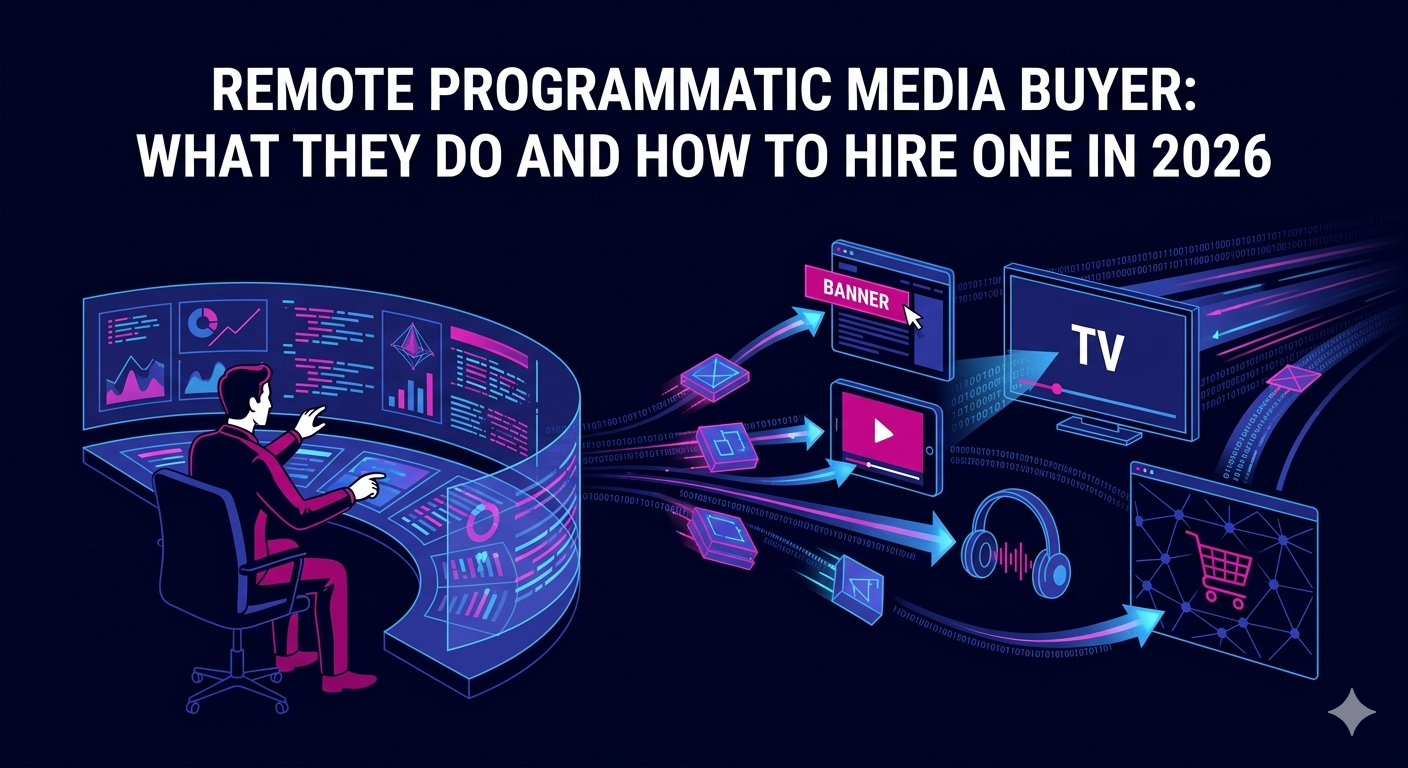
In 2026, programmatic channels include display advertising, video pre-roll, connected TV, digital out-of-home, and audio ads. A skilled remote programmatic media buyer manages campaigns across these channels using platforms such as The Trade Desk, DV360, Amazon DSP, and Xandr, among others.
The remote aspect means this professional operates outside a traditional office environment. They communicate through tools like Slack and Zoom, manage campaign dashboards digitally, and report results asynchronously or in scheduled syncs. For businesses that have embraced distributed teams, this model works exceptionally well.
Why Programmatic Media Buying Matters More in 2026
The programmatic advertising landscape has evolved considerably. Third-party cookie deprecation has accelerated the adoption of contextual targeting and first-party data strategies. Connected TV ad spend continues to climb as streaming audiences grow. Retail media networks have emerged as a major new inventory source for programmatic buyers.
This complexity means the bar for competent programmatic buying has risen. Businesses that rely on self-serve platforms without a dedicated specialist are leaving performance gains on the table. A knowledgeable remote programmatic media buyer stays current with these shifts and adjusts your strategy accordingly, often in real time.
The Scale Advantage of Programmatic
Manual media buying limits your reach to publishers you can negotiate with individually. Programmatic opens access to thousands of premium publishers simultaneously through a single platform. A skilled buyer can target your ideal audience at scale while controlling frequency, managing brand safety, and optimizing toward your specific conversion goals.
Data-Driven Optimization
Programmatic platforms generate enormous amounts of data. A remote programmatic media buyer uses this data to make continuous micro-adjustments to bids, placements, audience segments, and creative rotation. This level of active management consistently produces better results than set-it-and-forget-it campaign structures.
Core Skills Every Remote Programmatic Media Buyer Should Have
When evaluating candidates, look for a combination of technical platform knowledge, analytical ability, and strong remote communication skills. Here is what matters most in 2026.
DSP Platform Proficiency
Your candidate should have hands-on experience with at least one or two major DSPs. The Trade Desk is widely regarded as the industry standard for independent buyers. DV360 is essential for businesses already embedded in the Google ecosystem. Ask candidates to walk you through a campaign they built from scratch on their preferred platform and explain the targeting and optimization decisions they made along the way.
Audience Strategy and Data Management
Effective programmatic buying starts with audience architecture. This means building segments from first-party data, layering third-party data where appropriate, and using lookalike modeling or contextual signals to expand reach without sacrificing relevance. In 2026, proficiency with clean room environments and privacy-compliant data strategies is increasingly valuable given the ongoing evolution of identity resolution.
Brand Safety and Inventory Quality
Open exchanges carry inherent risks. A competent remote programmatic media buyer knows how to use inclusion lists, exclusion lists, and third-party verification tools like DoubleVerify or Integral Ad Science to protect your brand from appearing alongside inappropriate content or in fraudulent placements.
Attribution and Measurement
Measuring the impact of programmatic campaigns has always been challenging, and privacy changes have made it more so. Your buyer should understand multi-touch attribution models, incrementality testing, and how to use media mix modeling or third-party measurement solutions to demonstrate true campaign impact.
Remote Communication and Reporting
A remote programmatic media buyer who cannot communicate their findings clearly is a liability. They should be able to produce weekly performance summaries that are digestible for non-technical stakeholders, flag issues proactively, and explain optimization decisions in plain language. Strong asynchronous communication is a non-negotiable skill for remote roles.
Where to Find a Qualified Remote Programmatic Media Buyer
Sourcing great programmatic talent requires looking in the right places. Here are the most effective channels for finding a remote programmatic media buyer in 2026.
Specialized Remote Talent Platforms
The fastest and most reliable path is working with a platform that pre-vets candidates specifically for digital marketing and media buying roles. Rather than reviewing dozens of unqualified applicants, you get matched with professionals who have already demonstrated relevant skills. If you want expert help finding and placing the right person, explore the vetted talent available through The Remote Reps remote programmatic media buyer placement service.
LinkedIn and Professional Communities
LinkedIn remains a strong sourcing channel for programmatic buyers. Search for candidates with titles like Programmatic Manager, Paid Media Specialist, or DSP Campaign Manager, and filter by remote availability. Trade Desk-certified professionals and those who actively share programmatic insights tend to be more engaged with the discipline.
Agency Alumni Networks
Many of the most skilled programmatic buyers come from agency backgrounds where they managed large, complex campaigns across multiple clients. Agency experience often translates to high output and adaptability, both of which are valuable in a remote environment.
How to Evaluate and Interview Candidates
A strong interview process for a remote programmatic media buyer should include both a technical evaluation and an assessment of remote work readiness. Here is a framework that works well.
Request a Campaign Case Study
Ask candidates to present a programmatic campaign they managed, covering the objective, the DSP used, the targeting approach, the optimization decisions made during the flight, and the final results. Pay attention to how they discuss performance. Strong candidates speak in terms of business outcomes, not just platform metrics.
Give a Practical Scenario Assessment
Present a fictional campaign brief and ask the candidate to outline how they would approach setup, targeting, pacing, and optimization. This reveals their strategic thinking and how they apply platform knowledge to real-world objectives.
Test Their Communication Style
Conduct at least part of the interview process asynchronously. Ask the candidate to respond to a written brief via email or a recorded video. How they communicate in a low-pressure environment is a reliable indicator of how they will communicate with your team day to day.
Key Questions to Ask
- Which DSPs have you worked with and which do you prefer for performance campaigns?
- How have you adapted your targeting strategy since third-party cookies became unreliable?
- How do you approach brand safety in open programmatic environments?
- How do you report on campaign performance to clients or internal stakeholders who are not familiar with programmatic?
- Describe a campaign that missed its targets and what you changed to improve results.
Typical Rates for a Remote Programmatic Media Buyer in 2026
Compensation for remote programmatic media buyers varies based on experience, the complexity of campaigns they manage, and whether they work on a freelance or full-time basis.
- Junior level (1 to 2 years of DSP experience): $2,000 to $3,500 per month
- Mid-level (3 to 5 years, managing $100K or more per month): $4,000 to $7,000 per month
- Senior level (5 or more years, multi-channel strategy): $7,000 to $14,000 per month
Some specialists charge a percentage of managed ad spend, typically between 8 and 15 percent. For businesses running over $100,000 per month in programmatic spend, a flat retainer with clear deliverables is often more predictable and cost-effective.
According to eMarketer’s programmatic advertising research, global programmatic ad spend continues to grow year over year, reinforcing why having a dedicated remote programmatic media buyer is increasingly a competitive necessity rather than a luxury.
Onboarding Your Remote Programmatic Media Buyer
A well-structured onboarding process accelerates the time it takes for your new hire to make an impact. These steps will set both parties up for success.
- Grant access to your DSP accounts, analytics platforms, and any first-party data systems on day one
- Share historical campaign data, including past performance reports and any audience or creative learnings
- Define clear KPIs upfront, such as target CPM, CPA, viewability rates, or ROAS benchmarks
- Schedule a recurring weekly check-in and a more detailed monthly performance review
- Introduce them to any creative, data, or analytics team members they will coordinate with regularly
FAQ Section
What does a remote programmatic media buyer do on a daily basis?
A remote programmatic media buyer monitors active campaign performance, adjusts bids and targeting based on real-time data, manages pacing to ensure budgets are being spent efficiently, reviews inventory quality reports, and coordinates with creative teams on ad asset performance. They also produce regular performance summaries and flag any significant changes in delivery or results.
Which DSPs should a remote programmatic media buyer know in 2026?
In 2026, the most widely used DSPs are The Trade Desk, Google DV360, Amazon DSP, and Xandr. A strong remote programmatic media buyer will have deep experience in at least one of these and working knowledge of others. The right platform depends on your inventory priorities, whether that is open web display, connected TV, or retail media.
How is a remote programmatic media buyer different from a PPC specialist?
A PPC specialist typically manages search and social ad platforms like Google Ads and Meta Ads. A remote programmatic media buyer focuses on automated real-time bidding across display, video, CTV, and audio inventory through DSPs. While both roles involve paid media, the technology, inventory types, and targeting approaches are distinct. Some professionals specialize in both, but the skill sets have meaningful differences.
How do I measure whether my remote programmatic media buyer is performing well?
Start with the KPIs you defined at the outset of the engagement. Common metrics for evaluating a remote programmatic media buyer include viewability rate, click-through rate, cost per acquisition, return on ad spend, and brand safety compliance. Beyond the numbers, consider whether they communicate proactively, identify issues before they escalate, and bring strategic recommendations to your campaigns over time.
Can a remote programmatic media buyer work across multiple time zones?
Yes. Most experienced remote programmatic media buyers are accustomed to working across time zones. The nature of programmatic buying is largely asynchronous since campaigns run continuously and platform algorithms handle real-time bidding automatically. What matters most is that your buyer has a reliable overlap of communication hours with your team and that expectations around response times are clearly established from the start.
Is a remote programmatic media buyer suitable for small and mid-sized businesses?
Absolutely. A remote programmatic media buyer is often the most cost-effective way for small to mid-sized businesses to access programmatic expertise. Rather than hiring a full in-house team or paying agency management fees, you get a dedicated specialist focused entirely on your campaigns. Most remote programmatic buyers can manage accounts with monthly budgets starting from $10,000, making it accessible well before the enterprise level.
Final Thoughts
The demand for skilled programmatic talent is growing faster than the supply of qualified professionals. Businesses that move decisively to hire a remote programmatic media buyer in 2026 will gain a meaningful edge over competitors still relying on generalist marketers or platform auto-optimization alone.
If you are ready to find a vetted, experienced remote programmatic media buyer without wasting weeks on sourcing and screening, the team at The Remote Reps specializes in placing proven remote media buying talent with businesses ready to scale their programmatic advertising. Get in touch today and start building the paid media team your ad spend deserves.