Advertising without strategy is simply spending. In 2026, the businesses extracting the highest return from their paid media budgets are not the ones with the most money. They are the ones with the most skilled professionals allocating that money. Hiring a dedicated remote media buyer gives your business access to the expertise, analytical rigor, and platform knowledge required to place your advertising where it performs, negotiate better rates, optimize spend continuously, and build an audience reach strategy that compounds over time. Whether you run paid social campaigns, programmatic display, video advertising, or a combination of paid channels, a skilled remote media buyer transforms how effectively your budget drives growth.
This guide covers everything you need to know about hiring a remote media buyer in 2026: what the role involves, how it differs from a PPC specialist, what skills and qualities to look for, how much it costs, and how to build a working relationship that maximizes every dollar you invest in paid media.
What Is a Remote Media Buyer?
A remote media buyer is a paid advertising specialist who plans, purchases, manages, and optimizes advertising inventory across one or more media channels from a remote location. Their core responsibility is ensuring that your brand’s paid media budget reaches the right audiences, through the right channels, at the right time, and at the most favorable cost per impression, click, or conversion achievable within your specific market.
Media buying in 2026 encompasses a broad range of channels and buying methods. A remote media buyer may specialize in a specific channel such as programmatic display, paid social, or video advertising, or may manage an integrated multi-channel media plan that spans digital and, in some cases, traditional media placements. The discipline requires a unique combination of strategic thinking, data fluency, negotiation skill, and deep platform knowledge that generalist marketers rarely develop without deliberate specialization.
Remote Media Buyer vs. Remote PPC Expert
These two roles are often confused but are meaningfully different in scope and specialization:
- Remote PPC expert: Specializes in auction-based, direct-response paid advertising platforms such as Google Ads, Meta Ads, and LinkedIn Ads, with a focus on keyword targeting, bid optimization, and conversion-driven campaign management.
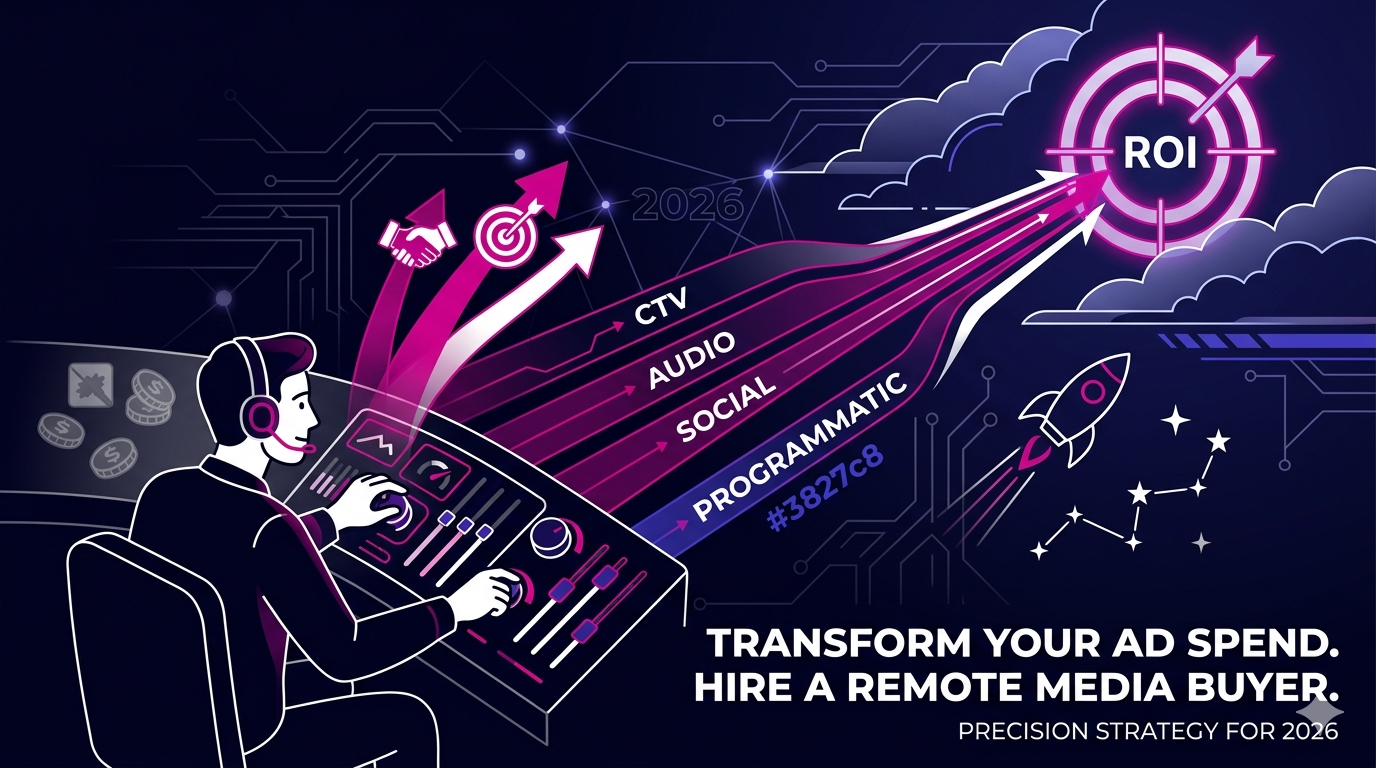
- Remote media buyer: Operates across a broader media landscape including programmatic display networks, direct publisher deals, connected TV (CTV), over-the-top (OTT) video, podcast advertising, audio platforms, and out-of-home digital inventory. Media buying often involves direct negotiation with publishers, placement strategy across the full funnel, and audience-based targeting rather than purely keyword-based approaches.
In many businesses, both roles work together: the remote PPC expert drives bottom-funnel direct response while the remote media buyer builds upper-funnel brand awareness and audience reach across a wider media inventory.
What Does a Remote Media Buyer Do?
The day-to-day scope of a remote media buyer’s work spans strategic planning, campaign execution, performance analysis, and ongoing optimization across the media channels relevant to your business.
Media Planning and Strategy
- Developing media plans that allocate budget across channels based on audience reach goals, competitive landscape, and business objectives
- Identifying the most cost-effective media channels and placements for reaching your specific target audience segments
- Building audience targeting strategies using first-party data, third-party data, lookalike modeling, and intent-based targeting
- Forecasting reach, frequency, impressions, and cost estimates for proposed media plans before launch
- Advising on budget allocation across brand awareness, consideration, and conversion-focused media activities
Media Buying and Negotiation
- Negotiating direct deals with publishers, networks, and platforms to secure favorable CPM rates, added value placements, and favorable campaign terms
- Managing programmatic buying through demand-side platforms (DSPs) such as The Trade Desk, DV360, or Amazon DSP
- Executing paid social placements across Meta, LinkedIn, TikTok, Pinterest, and other relevant social platforms
- Purchasing connected TV and streaming video inventory through programmatic or direct channels
- Managing podcast and audio advertising placements through networks such as Spotify Ad Studio or direct podcast sponsorships
Campaign Management and Optimization
- Monitoring campaign delivery, pacing, and performance against defined KPIs on a daily basis
- Optimizing audience segments, creative placements, bidding strategies, and frequency caps to improve performance continuously
- Managing brand safety measures and ensuring ad placements appear alongside appropriate, brand-aligned content
- A/B testing creative formats, messaging, and audience segments to identify highest-performing combinations
- Delivering weekly and monthly performance reports with clear attribution data and strategic recommendations
Why Hiring a Remote Media Buyer Is a Smart Investment in 2026
Paid media budgets are significant and unforgiving. Inefficient buying wastes money on impressions that never reach the right audience, placements that deliver poor brand safety, and inventory that costs far more than its performance justifies. Here is why a dedicated remote media buyer transforms that equation.
Specialized Expertise That Drives Real Efficiency Gains
Media buying is a specialist discipline that takes years to develop proficiently. A generalist digital marketer who handles media buying as one of many responsibilities rarely develops the negotiation skills, platform depth, and audience strategy knowledge that a dedicated remote media buyer brings. The efficiency gains available from expert media buying, including lower CPMs through better negotiation, higher-quality audience targeting, and fewer wasted impressions, consistently exceed the cost of the specialist hire many times over.
Significant Cost Advantage Over Agency Media Buying
Media buying agencies typically charge management fees ranging from 10 to 20 percent of your total ad spend, plus monthly retainers. On a $50,000 monthly media budget, that represents $5,000 to $10,000 in management fees alone, every month. When you hire a remote media buyer directly through a specialist staffing partner, you pay a flat monthly salary of $2,500 to $5,500 regardless of how much you spend on media, making the economics considerably more favorable as your media budget grows.
Full Transparency Into Your Media Investment
A common frustration with media buying agencies is opacity: unclear reporting on where your money actually went, what it actually cost, and what it actually delivered. A dedicated remote media buyer works exclusively for your business, reports directly to you, and provides complete transparency into every placement, every cost, and every performance metric. You own the data, the relationships, and the institutional knowledge of what works for your brand rather than having that expertise sit with an external agency.
Access to Global Media Buying Talent at Competitive Cost
Skilled remote media buyers exist in markets around the world with deep experience managing programmatic, paid social, and direct publisher campaigns for Western brands. When you hire a remote media buyer through a specialist offshore staffing partner, you access that global talent pool at 40 to 65 percent lower cost than an equivalent local hire in the United States or United Kingdom, making expert media buying financially accessible at earlier stages of business growth.
Faster Campaign Iteration and Market Responsiveness
A dedicated remote media buyer who is focused entirely on your accounts can respond to performance data, market changes, and competitive activity faster than a shared agency team managing dozens of clients simultaneously. When a campaign is underdelivering, when a new audience opportunity emerges, or when a competitor shifts their media strategy, your remote media buyer acts immediately rather than waiting for a weekly check-in or account review cycle.
What to Look for When You Hire a Remote Media Buyer
Media buying expertise spans multiple platforms, buying methodologies, and analytical frameworks. Knowing what to assess before you make a hire ensures you get the specialist your media strategy actually requires.
Essential Platform and Channel Experience
- Hands-on experience with programmatic DSP platforms such as The Trade Desk, Google DV360, or Amazon DSP for display and video inventory
- Proficiency with paid social platforms including Meta Ads Manager, LinkedIn Campaign Manager, TikTok Ads, and Pinterest Ads
- Experience with connected TV and streaming video buying through programmatic or direct channels
- Familiarity with third-party data providers, data management platforms (DMPs), and audience targeting methodologies
- Understanding of brand safety tools and measures including IAS, DoubleVerify, and MOAT for viewability and fraud protection
- Proficiency with ad verification, tracking, and attribution tools integrated with Google Analytics 4 and your CRM
Strategic and Analytical Skills
- Ability to develop and justify a full-funnel media plan with clear rationale for channel mix and budget allocation
- Strong data analysis capability for interpreting reach, frequency, CPM, CPV, CPCV, and ROAS metrics across channels
- Experience with audience segmentation strategy including first-party data activation, lookalike modeling, and retargeting
- Negotiation experience with direct publishers and content networks for favorable media placement terms
- Ability to deliver clear, structured performance reports that translate complex media data into actionable business insights
Documented Campaign Performance Evidence
Ask every candidate for specific case studies demonstrating the media buying campaigns they have planned and managed. What was the brief? What channels did they use? What were the CPM and ROAS outcomes relative to benchmarks? How did they improve performance over the campaign lifecycle? Candidates who can speak specifically about their strategic decisions and the results they produced are consistently more reliable than those who describe their experience in general terms.
How Much Does a Remote Media Buyer Cost in 2026?
Monthly investment levels for a dedicated remote media buyer placed through a quality offshore staffing partner in 2026 typically include:
- Entry to mid-level remote media buyer: $1,800 to $3,200 per month for candidates with 2 to 4 years of programmatic and paid social buying experience with solid platform proficiency
- Experienced remote media buyer: $3,200 to $5,000 per month for candidates with 4 to 7 years of multi-channel buying experience, documented campaign performance improvements, and direct publisher negotiation experience
- Senior remote media buying strategist: $5,000 to $7,500 per month for highly experienced specialists with enterprise media planning capability, large budget management experience, and the ability to own full-funnel paid media strategy across complex, multi-channel businesses
At every tier, these rates offer compelling value relative to agency management fees that scale with your media spend and in-house U.S. media buyer salaries that range from $75,000 to $120,000 per year before benefits and overhead.
When you are ready to hire a remote media buyer who can transform the efficiency and reach of your paid advertising investment, explore The Remote Reps’ dedicated remote media buyer placement service and connect with pre-vetted media buying specialists ready to manage your campaigns from day one. You can also complement your media buying function with a remote PPC expert for direct-response search and social campaign management, or a remote digital marketer to coordinate your paid media strategy with your broader marketing function.
How to Set Your Remote Media Buyer Up for Success
A well-structured onboarding experience is essential for any media buying engagement because the quality of early strategic decisions has a direct and lasting impact on campaign performance and budget efficiency.
Week One: Brand, Audience, and Current Media Audit
Provide your remote media buyer with a comprehensive brief covering your brand positioning, target audience profiles, business objectives for paid media, current and historical media spend data, and any past campaign performance reports you have available. Grant them access to all relevant ad platforms, analytics dashboards, and data management tools. Ask them to conduct an audit of your current media activity before making any changes, documenting what is performing, what is underperforming, and what opportunities the current plan is not capturing.
Week Two and Three: Media Plan Development and Approval
Based on the audit findings and your business objectives, your remote media buyer should develop a proposed media plan for your review. This plan should include channel mix rationale, audience targeting strategy, budget allocation across channels and campaign objectives, expected reach and frequency estimates, and defined KPIs for each channel and campaign type. Review and approve the plan collaboratively before any new spend is committed, and clarify any questions about strategic decisions before launch.
Month Two Onward: Execution, Optimization, and Compounding Performance
With the approved plan in market, establish a weekly reporting cadence where your remote media buyer presents delivery data, performance against KPIs, optimization actions taken, and planned adjustments for the coming week. Use these sessions to provide feedback on strategic priorities, share any business context that should inform targeting decisions, and align on budget pacing as the month progresses. The compounding performance improvements that come from consistent optimization, creative testing, and audience refinement are the long-term payoff of a well-managed remote media buyer engagement.
According to IAB Europe’s programmatic advertising guide on remote media buyer best practices and campaign performance, campaigns managed by dedicated specialist media buyers with a focus on audience quality, brand safety verification, and systematic creative testing consistently outperform campaigns managed by generalist resources on key metrics including viewability rate, cost per quality impression, and verified conversion attribution.
Complementary Roles That Work Best Alongside Your Remote Media Buyer
Paid media performs best within an integrated marketing ecosystem. Consider building the following complementary remote roles around your media buyer:
- Remote PPC experts to manage performance-driven direct-response campaigns on Google and Meta alongside your broader media buying strategy
- Remote digital marketers to align your paid media activity with organic content, email campaigns, and broader marketing strategy
- Remote social media managers to build the organic audience foundation that improves paid social targeting and performance
- Remote lead generation specialists to manage and nurture the leads and traffic your media buying campaigns generate into the sales pipeline
- Remote e-commerce marketing experts to optimize the landing pages and purchase funnels that your media buyer’s campaigns drive traffic toward
Conclusion: Hire a Remote Media Buyer and Get Significantly More From Your Paid Media Investment in 2026
Every dollar of your advertising budget deserves the most strategic, data-driven placement available. In 2026, that level of strategic media buying requires a dedicated specialist, not a generalist marketer handling it as one of many responsibilities and not an agency that treats your account as a revenue line rather than a genuine growth partnership. A skilled remote media buyer brings the expertise, the platform access, the negotiation capability, and the analytical discipline to make your paid media budget work harder, reach further, and deliver a return that justifies and grows your investment over time.
The Remote Reps places pre-vetted remote media buyers for businesses across every industry, channel mix, and media budget scale. Our candidates are assessed for real platform expertise, real campaign performance evidence, and the analytical and strategic discipline that expert media buying demands.
Read what our clients say about the paid media results they have achieved through The Remote Reps, or visit theremotereps.com to start your remote media buyer search today.
FAQ: Remote Media Buyer
What is a remote media buyer and how is the role different from a PPC expert?
A remote media buyer plans and purchases advertising inventory across a broad range of paid media channels including programmatic display, connected TV, streaming video, audio platforms, podcast advertising, direct publisher deals, and paid social. They operate across the full media landscape with a focus on reach, brand awareness, audience targeting strategy, and cost-efficient inventory acquisition. A PPC expert specializes specifically in auction-based, direct-response platforms such as Google Ads and Meta Ads, with a focus on keyword targeting, bid optimization, and conversion-driven campaign management. In a comprehensive paid media strategy, a remote media buyer handles upper and mid-funnel reach while a PPC expert drives lower-funnel direct response, and the two roles work in coordination to maximize full-funnel performance.
How much does a remote media buyer cost compared to using a media buying agency?
A dedicated remote media buyer placed through a specialist staffing partner in 2026 typically costs between $1,800 and $7,500 per month depending on experience level and channel specialization, totaling $21,600 to $90,000 per year. A media buying agency typically charges 10 to 20 percent of your total ad spend in management fees plus a monthly retainer. On a $50,000 monthly media budget, agency fees alone range from $5,000 to $10,000 per month, or $60,000 to $120,000 per year. A dedicated remote media buyer delivers comparable or superior management quality at a flat, predictable cost that becomes more economically favorable the larger your media budget grows.
What channels can a remote media buyer manage?
In 2026, an experienced remote media buyer can manage placements across programmatic display and video through platforms such as The Trade Desk, Google DV360, and Amazon DSP; paid social advertising on Meta, LinkedIn, TikTok, Pinterest, and Snapchat; connected TV and streaming video advertising through CTV networks and programmatic video exchanges; audio and podcast advertising through Spotify Ad Studio, Audacy, or direct podcast sponsorships; digital out-of-home (DOOH) advertising through programmatic DOOH platforms; and native advertising through networks such as Taboola or Outbrain. When you hire a remote media buyer, confirm that their specific channel experience aligns with the media mix most relevant to your audience and business objectives.
How do I ensure my remote media buyer is spending my ad budget responsibly?
Responsible ad budget management from a remote media buyer is demonstrated through comprehensive weekly and monthly reporting that shows exactly where your budget was allocated, what CPMs and CPVs were achieved against benchmarks, what viewability and brand safety metrics were recorded, and what optimizations were made based on performance data. You should also have direct access to your DSP and ad platform accounts at all times to verify that actual spend matches reported figures. Require your remote media buyer to present a forward-looking pacing plan at the start of each month so you can approve budget allocation before it is committed. Any remote media buyer who is resistant to this level of transparency should be treated with significant caution.
How long does it take to see results from a remote media buyer?
Media buying results vary significantly by channel and campaign objective. Brand awareness campaigns running programmatic display or connected TV typically show measurable reach and frequency results within 2 to 3 weeks of launch. Performance-focused paid social campaigns managed by a remote media buyer usually show conversion trends within 4 to 6 weeks as audience testing and creative optimization produce statistically meaningful data. Full media plan optimization, where the buyer has tested multiple audience segments, creative formats, and channel combinations and refined the mix based on performance evidence, typically takes 60 to 90 days to reach a consistently high-performing steady state.
Can a remote media buyer manage both direct response and brand awareness campaigns?
Yes. The best remote media buyers are comfortable managing both direct response and brand awareness objectives within an integrated media plan, allocating budget across channels and funnel stages based on your specific business goals and measurement framework. Brand awareness work is typically executed through programmatic display, connected TV, video pre-roll, and audio placements optimized for reach and frequency. Direct response work is typically executed through paid social, retargeting campaigns, and performance-focused programmatic placements optimized for click-through rate and conversion. A skilled remote media buyer understands how to balance these objectives within a unified media plan and how to measure and report on each type of campaign with the appropriate KPIs for its specific funnel stage and objective.