
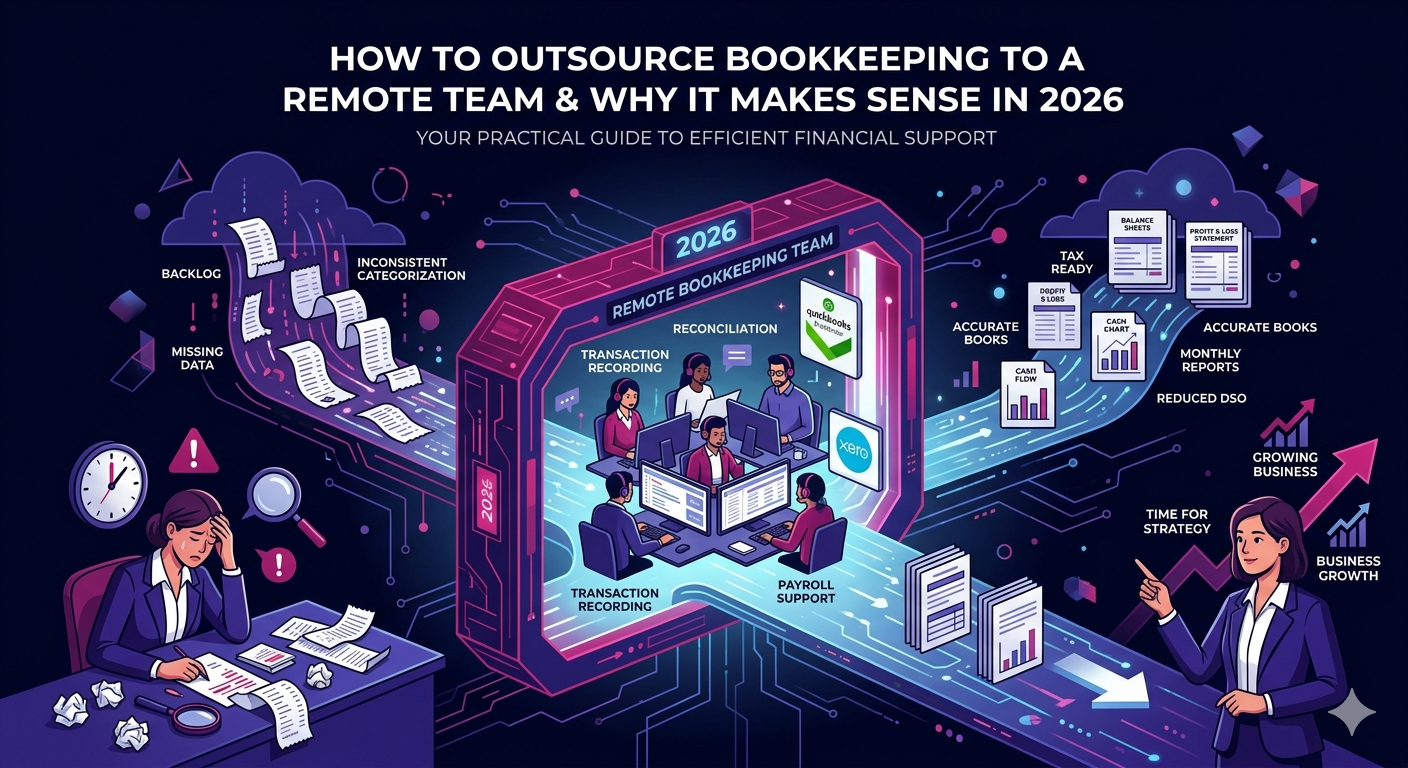
Managing your books in-house sounds simple until it is not. Between missed entries, inconsistent categorization, and the sheer time it takes to stay on top of finances, many business owners find themselves falling behind. The solution more companies are turning to in 2026 is to outsource bookkeeping to a remote team. It is a practical, cost-effective approach that gives you expert financial support without the overhead of a full-time hire.
This guide walks you through everything you need to know, from what remote bookkeeping teams actually do, to how much it costs, and how to transition smoothly without disrupting your operations.
What It Means to Outsource Bookkeeping to a Remote Team
When you outsource bookkeeping to a remote team, you are delegating your financial record-keeping tasks to a group of trained professionals who work offsite. These teams use cloud-based accounting software to access, update, and manage your books in real time. You retain full visibility into your finances while handing off the day-to-day work to specialists.
This is different from hiring a single freelance bookkeeper. A remote bookkeeping team typically includes multiple professionals covering different functions, such as transaction recording, reconciliation, invoicing, payroll support, and financial reporting. The result is broader coverage, built-in redundancy, and a more consistent output.
Core Services Included When You Outsource Bookkeeping to a Remote Team
Remote bookkeeping teams handle a wide range of financial tasks. Here is what most engagements include:
Day-to-Day Transaction Management
- Recording income and expense transactions daily or weekly
- Categorizing transactions according to your chart of accounts
- Processing vendor bills and client invoices
- Tracking and reconciling petty cash and expense reports
Bank and Account Reconciliation
- Reconciling bank accounts, credit cards, and payment processor accounts monthly
- Identifying and resolving discrepancies before they compound
- Ensuring all transactions are matched and accounted for accurately
Reporting and Financial Visibility
- Generating monthly profit and loss statements
- Producing balance sheets and cash flow summaries
- Preparing clean, organized books for your accountant or CPA at tax time
- Flagging unusual variances or cash flow concerns as they arise
Why More Businesses Are Choosing to Outsource Bookkeeping to a Remote Team in 2026
Significant Cost Reduction
Hiring a full-time bookkeeper in the United States costs between $45,000 and $65,000 per year in salary alone, before factoring in benefits, payroll taxes, and workspace costs. When you outsource bookkeeping to a remote team, you typically pay a monthly retainer ranging from $400 to $2,500 depending on transaction volume and service scope. For most small and mid-sized businesses, the savings are immediate and substantial.
Access to a Broader Skill Set
A single in-house bookkeeper has a fixed skill set. A remote bookkeeping team brings together professionals with experience across industries, accounting software platforms, and financial reporting requirements. If your business grows or your needs change, the team scales with you without requiring a new hire.
Consistency and Accountability
When one person handles your books internally, their absence creates gaps. Vacation, illness, or turnover can leave your finances unmanaged for days or weeks. Remote bookkeeping teams operate with backup coverage built in. Your books get updated on schedule regardless of what is happening on their end.
Year-Round Tax Readiness
One of the strongest arguments to outsource bookkeeping to a remote team is what it does for tax season. Clean, consistent books maintained throughout the year mean your CPA or tax preparer walks into a tidy set of records. That translates to lower preparation fees, fewer errors, and reduced audit risk.
Time Back for Business Growth
Every hour you or a team member spends on bookkeeping is an hour not spent on sales, client delivery, or strategy. Outsourcing this function gives you and your team that time back, allowing you to focus on the work that actually drives revenue.
How to Successfully Outsource Bookkeeping to a Remote Team
Making the transition smoothly requires some preparation. Here is a practical framework to follow:
Step 1: Audit Your Current Bookkeeping State
Before handing anything off, review where your books currently stand. Identify any backlogs, inconsistencies, or missing records. Starting the outsourcing relationship with a clean baseline makes onboarding faster and sets clear expectations for the remote team.
Step 2: Define the Scope of Work
Be specific about what you need. Document the tasks, frequency, software tools, and reporting expectations upfront. The more clearly you define the scope, the easier it is to evaluate candidates and hold the remote team accountable to consistent output.
Step 3: Choose the Right Software Stack
Cloud accounting software is the backbone of any remote bookkeeping arrangement. Platforms like QuickBooks Online, Xero, and Wave allow both you and your remote team to access the same data in real time. Confirm that your remote team is proficient in whichever platform you use before the engagement begins.
Step 4: Establish Communication Routines
Set a regular cadence for check-ins and reporting. Weekly updates on outstanding items, monthly reviews of financial statements, and a clear escalation path for urgent questions all help maintain alignment without micromanagement. Tools like Slack, Microsoft Teams, or even scheduled email summaries work well for staying connected.
Step 5: Protect Your Financial Data
Before granting access to any systems, put data security protocols in place. Require signed confidentiality agreements, use role-based access controls so the team only sees what they need, and confirm the platforms they use are encrypted and compliant with relevant data protection standards.
What to Look for in a Remote Bookkeeping Team
Not every remote bookkeeping service delivers the same quality. Evaluate potential providers on these criteria:
- Industry experience: Look for a team that has worked with businesses in your sector and understands your revenue model and expense structure.
- Software certifications: QuickBooks ProAdvisor certification or Xero Partner status are strong indicators of technical proficiency.
- Client references: Ask for testimonials or case studies from businesses of similar size and complexity to yours.
- Response time standards: Confirm how quickly the team responds to questions and how urgent issues are handled.
- Transparent pricing: Avoid providers with vague pricing structures. Look for clear monthly retainer packages with defined deliverables.
If you are looking for a trusted partner to help you outsource bookkeeping to a remote team, explore the remote financial professionals and virtual assistants available through The Remote Reps. Their network includes vetted bookkeeping specialists ready to support businesses across industries.
For broader best practices on outsourcing financial functions, the SCORE resource guide on outsourcing small business bookkeeping offers additional expert guidance on how to structure and manage these engagements effectively.
Frequently Asked Questions About Outsourcing Bookkeeping to a Remote Team
How much does it cost to outsource bookkeeping to a remote team?
The cost to outsource bookkeeping to a remote team in 2026 typically ranges from $400 to $2,500 per month, depending on transaction volume, the number of accounts, and the scope of services required. This is significantly less expensive than hiring a full-time in-house bookkeeper when you account for salary, taxes, and benefits.
Is it secure to outsource bookkeeping to a remote team?
Yes, when the right precautions are in place. When you outsource bookkeeping to a remote team, use cloud platforms with strong encryption, require confidentiality agreements, and apply role-based access controls that limit what each team member can view. Reputable remote bookkeeping teams already follow these protocols as standard practice.
What software do remote bookkeeping teams typically use?
Most businesses that outsource bookkeeping to a remote team use cloud-based platforms such as QuickBooks Online, Xero, Wave, or FreshBooks. These tools allow real-time collaboration between your business and the remote team without requiring any physical file transfers or in-person access to your systems.
How long does it take to transition when you outsource bookkeeping to a remote team?
Most transitions are completed within two to four weeks. The timeline depends on the current state of your books, the complexity of your accounts, and how quickly you can provide system access and process documentation. A remote team with prior onboarding experience can accelerate this significantly.
Can I outsource bookkeeping to a remote team if my books are currently behind?
Absolutely. Many businesses that choose to outsource bookkeeping to a remote team start with a catch-up bookkeeping project to bring records current before establishing an ongoing monthly routine. Remote bookkeeping providers handle backlog work regularly and can typically clear outstanding entries within a few weeks.
Will I lose visibility into my finances when I outsource bookkeeping to a remote team?
No. When you outsource bookkeeping to a remote team using cloud accounting software, you retain full access to your financial data at all times. You can log in, pull reports, and review your accounts whenever you need to. Regular reporting from your remote team also ensures you stay informed without having to manage the day-to-day details yourself.
Conclusion
The decision to outsource bookkeeping to a remote team is one of the most practical moves a growing business can make in 2026. You gain expert financial management, reduce overhead, and free up the time and mental bandwidth that accurate bookkeeping demands.
Whether you are a sole trader managing a handful of accounts or a mid-sized company with complex financial operations, the right remote bookkeeping team will bring consistency, accuracy, and clarity to your finances. Stop letting bookkeeping slow you down and start building the financial foundation your business needs to grow.