
One of the most common concerns business owners raise when building a distributed team is whether they can actually trust the numbers. How do you know if your remote employees are producing real results when you cannot see them working? The answer lies in learning how to measure remote worker productivity the right way, through outcomes, data, and structured accountability rather than surveillance or guesswork.
In 2026, the tools and frameworks for measuring remote productivity have matured significantly. This guide walks you through the most effective methods, metrics, and systems to track performance, drive results, and build a remote team that operates with full accountability.
Why Measuring Remote Worker Productivity Is Different from In-Office Measurement
In a traditional office setting, there is a tendency to equate visibility with productivity. If someone is at their desk, they must be working. But presence is not performance, and this misunderstanding is what causes many businesses to apply the wrong measurement frameworks to remote teams.
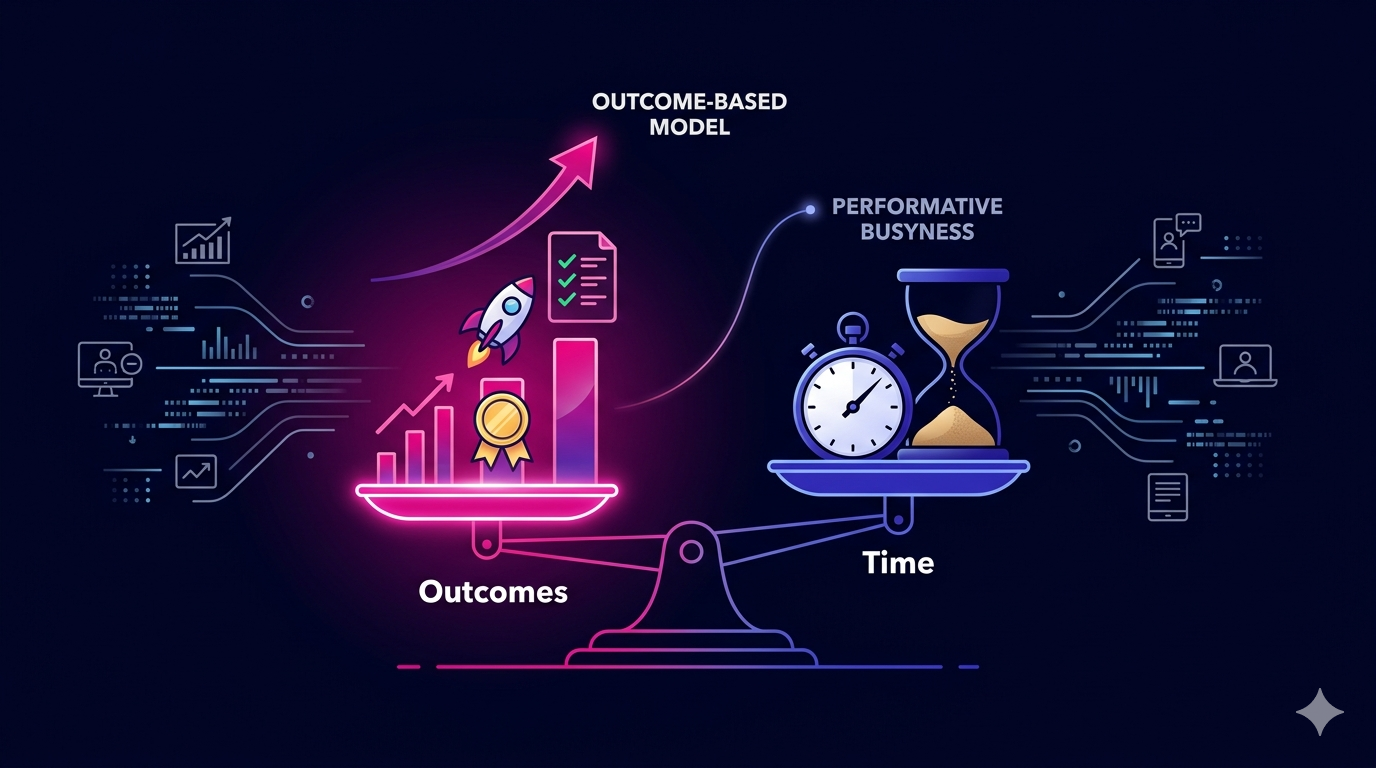
When you measure remote worker productivity effectively, you shift the focus entirely to output and outcomes. It does not matter when someone logs on or how many hours they spend at their computer. What matters is whether they are delivering the right results against the targets you have set.
This output-based model is not only more accurate. It is also more motivating for remote employees because it rewards actual contribution rather than performative busyness.
Step 1: Define Clear Performance Expectations Before You Measure Anything
You cannot measure remote worker productivity without first establishing what success looks like for each role. This is the foundation that everything else is built on.
Set Role-Specific KPIs
Every remote team member needs a small set of clearly defined key performance indicators that are directly tied to their core responsibilities. Generic targets like “work hard” or “be responsive” are not measurable. Effective KPIs are specific, quantifiable, and tied to a timeframe.
Examples of role-specific KPIs for common remote functions include:
- Sales development representatives: Number of qualified leads generated per week, outreach volume, meetings booked
- Customer support specialists: Average response time, first contact resolution rate, customer satisfaction score
- Digital marketers: Traffic growth, lead conversion rates, campaign performance against benchmarks
- Virtual assistants: Task completion rate, accuracy, turnaround time on assigned work
- Content and SEO specialists: Published output per week, keyword ranking improvements, organic traffic trends
Use the OKR Framework for Alignment
Objectives and Key Results (OKRs) are one of the most effective frameworks for measuring remote worker productivity at both the individual and team level. Each objective represents a meaningful goal. Each key result is a measurable milestone that tells you whether the objective is being achieved. Setting OKRs quarterly gives remote teams a clear north star and makes performance conversations far more productive.
Step 2: Use the Right Tools to Track Remote Worker Output
Technology plays a central role in how to measure remote worker productivity without micromanaging. The goal is visibility into results, not surveillance of activity.
Project Management Platforms
Tools like ClickUp, Asana, and Notion allow managers to track task completion, project progress, and workload distribution in real time. When tasks are assigned with due dates, clear deliverables, and priority levels, you gain accurate visibility into who is delivering and who is falling behind without needing to watch anyone’s screen.
Time Tracking for Hourly or Retainer Roles
For roles billed by the hour or where time allocation matters, tools like Toggl Track or Hubstaff provide straightforward time logging. These platforms generate reports that show how hours are distributed across projects and clients, making it easy to evaluate efficiency without invasive monitoring.
CRM and Sales Analytics Tools
For remote sales teams, CRM platforms like HubSpot or Salesforce provide detailed visibility into pipeline activity, outreach volume, deal progression, and closed revenue. When your remote sales reps are logging their activity consistently, you have all the data you need to measure productivity accurately.
Communication and Responsiveness Metrics
While response speed should not be the primary productivity measure, it is one useful signal. Consistent delays in responding to team messages or client communications can indicate workload issues or disengagement. Tools like Slack analytics provide basic insights into communication patterns across your team.
Step 3: Build a Rhythm of Regular Performance Check-Ins
Measuring remote worker productivity is not a set-it-and-forget-it exercise. It requires a consistent cadence of structured conversations that keep performance visible and give both managers and employees the opportunity to course-correct quickly.
Weekly One-on-Ones
Weekly check-ins between managers and remote team members are the single most important rhythm for maintaining productivity visibility. These calls should cover progress against current KPIs, any blockers the employee is facing, and priorities for the coming week. Keep them focused and efficient, typically 20 to 30 minutes is sufficient.
Monthly Performance Reviews
Monthly reviews provide a structured opportunity to assess performance against KPIs over a longer timeframe. These sessions should include a review of key metrics, recognition of wins, and a clear plan for addressing any gaps. Documenting these reviews creates a record that informs annual performance decisions.
Quarterly OKR Reviews
If you are using the OKR framework, quarterly reviews give you the opportunity to score each key result, reflect on what drove performance during the period, and set new objectives for the next quarter. This cadence keeps remote teams aligned with business goals and gives individuals a clear sense of how their work contributes to the bigger picture.
Step 4: Measure Quality, Not Just Volume
A common mistake when learning how to measure remote worker productivity is focusing too heavily on output volume at the expense of quality. A remote content writer who publishes ten blog posts a month is not necessarily more productive than one who publishes six if the former’s work requires heavy editing and the latter’s publishes cleanly every time.
Incorporate Quality Metrics into Every Role
- For support roles: customer satisfaction scores and error rates
- For sales roles: lead quality scores and close rates rather than just volume
- For creative and content roles: revision rates and client approval timelines
- For administrative roles: accuracy of work and completeness of deliverables
Quality metrics give you a complete picture of productivity rather than a misleading count of activity.
Step 5: Avoid Productivity Measurement Mistakes That Damage Team Culture
How you measure remote worker productivity matters as much as what you measure. Poorly designed measurement systems erode trust, create anxiety, and drive top performers away.
Mistakes to Avoid
- Using invasive monitoring software: Screenshots, keystroke logging, and webcam monitoring send a clear message that you do not trust your team. This approach destroys morale and drives talent to employers who treat them as professionals.
- Measuring hours instead of outcomes: Hours worked is a poor proxy for productivity. A focused two-hour work session can outperform a distracted eight-hour one.
- Setting KPIs without employee input: When team members have no say in how they are measured, they are less likely to buy into the metrics and more likely to game them.
- Ignoring qualitative signals: Numbers do not capture everything. Engagement, communication quality, and proactivity are all productivity signals that matter.
According to research compiled by Harvard Business Review on measuring remote worker performance through goals rather than monitoring, organizations that focus on goal-setting and outcome measurement consistently outperform those that rely on activity-based surveillance when it comes to both productivity and retention.
How The Remote Reps Builds Accountable Remote Teams
At The Remote Reps, every professional we place comes with clear role accountability built in from day one. Whether you are scaling your sales function with dedicated remote sales development representatives or bringing in specialized support across marketing and operations, our team helps you structure the KPIs and performance frameworks you need to measure productivity accurately and fairly.
The right measurement system is not just about accountability. It is about giving your remote team the clarity and feedback they need to perform at their best, which ultimately drives better results for your business.
Frequently Asked Questions: How to Measure Remote Worker Productivity
What is the best way to measure remote worker productivity?
The best way to measure remote worker productivity is through an output-based framework that includes clearly defined KPIs, regular performance check-ins, and project management tools that track task completion and deliverable quality. Avoid activity-based metrics like hours logged in favor of results-driven measures tied directly to business goals.
What tools help measure remote worker productivity accurately?
To measure remote worker productivity accurately, use a combination of project management platforms (ClickUp, Asana), time tracking tools (Toggl, Hubstaff) for hourly roles, CRM systems (HubSpot, Salesforce) for sales teams, and communication tools that provide activity insights. The right stack depends on the roles and functions within your remote team.
How often should you review metrics when measuring remote worker productivity?
When measuring remote worker productivity, a three-tier review cadence works well. Weekly one-on-ones provide real-time visibility into progress and blockers. Monthly reviews assess KPI performance over a full work cycle. Quarterly OKR reviews align individual contributions with broader business objectives and allow for recalibration of targets.
Can you measure remote worker productivity without micromanaging?
Yes. The most effective approach to measuring remote worker productivity relies on output and outcomes rather than monitoring activity. When KPIs are clearly defined, project management tools are in use, and regular check-ins are structured, managers gain full visibility into performance without needing to watch employees work in real time.
What KPIs are most useful for measuring remote worker productivity?
The most useful KPIs for measuring remote worker productivity are role-specific. Sales roles benefit from metrics like qualified leads generated, meetings booked, and pipeline value. Support roles should track response times and satisfaction scores. Creative roles should measure output volume and revision rates. Administrative roles benefit from task completion rates and accuracy scores.
How does measuring remote worker productivity improve business outcomes?
When you measure remote worker productivity systematically, you gain the data needed to identify top performers, address performance gaps early, and make informed decisions about team structure and investment. Businesses that build strong productivity measurement frameworks consistently see higher output, lower turnover, and stronger alignment between individual contributions and overall business goals.