Your sales pipeline will only ever be as strong as the people filling it. In 2026, the most efficient way to keep that pipeline full is to hire a Sales Development Representative who works remotely. But if you have never done it before, figuring out how to hire a remote SDR can feel overwhelming. What skills should you look for? How do you vet candidates you will never meet in person? And how do you set them up to succeed from day one?
This guide answers all of those questions. By the end, you will have a clear, repeatable process for finding, evaluating, and onboarding a remote SDR who delivers consistent results for your business.
Why Hiring a Remote SDR Makes Strategic Sense in 2026
Before diving into the how, it is worth understanding the why. Remote SDRs have become a mainstream sales strategy, not just a cost-cutting measure. Here is why more growth-focused businesses are going this route:
- Access to a global talent pool: You are no longer limited to candidates in your city. Remote hiring opens up a much wider range of experienced SDRs.
- Lower overhead costs: No desk, no equipment budget, no office snacks. Remote SDRs bring significant cost advantages without sacrificing performance.
- Around-the-clock prospecting: With remote staff in different time zones, your outreach can run during hours when your local team is offline.
- Scalability: Adding one remote SDR is far simpler than expanding a local office. You can scale up or down based on pipeline demand.
- Performance transparency: SDR work is highly measurable. Activity metrics and pipeline data make it easy to evaluate remote performance objectively.
What Does a Remote SDR Actually Do?
A Sales Development Representative is responsible for the top of the sales funnel. Their job is to identify potential customers, initiate contact, qualify interest, and book meetings for your account executives or closers. A remote SDR handles all of this without being in the office.
Day-to-day tasks typically include:
- Prospecting new leads using tools like LinkedIn Sales Navigator, Apollo, or ZoomInfo
- Sending personalized cold emails and follow-up sequences
- Making outbound calls to prospects
- Qualifying inbound leads based on your ideal customer profile
- Logging activity and updating CRM records accurately
- Booking discovery calls or demos for your sales closers
- Collaborating with marketing on messaging and target account lists
Step-by-Step: How to Hire a Remote SDR
Step 1 – Define the Role Before You Post It
Vague job descriptions attract vague candidates. Before writing your listing, get specific about what success looks like in the role. Ask yourself:
- How many outbound activities do you expect per day?
- What is your target market and average deal size?
- Which tools will this person use?
- What does a qualified lead look like for your business?
- What is the quota for booked meetings per week or month?
Clear answers to these questions will sharpen your job description and attract candidates who understand the expectations from the start.
Step 2 – Identify the Core Skills You Need
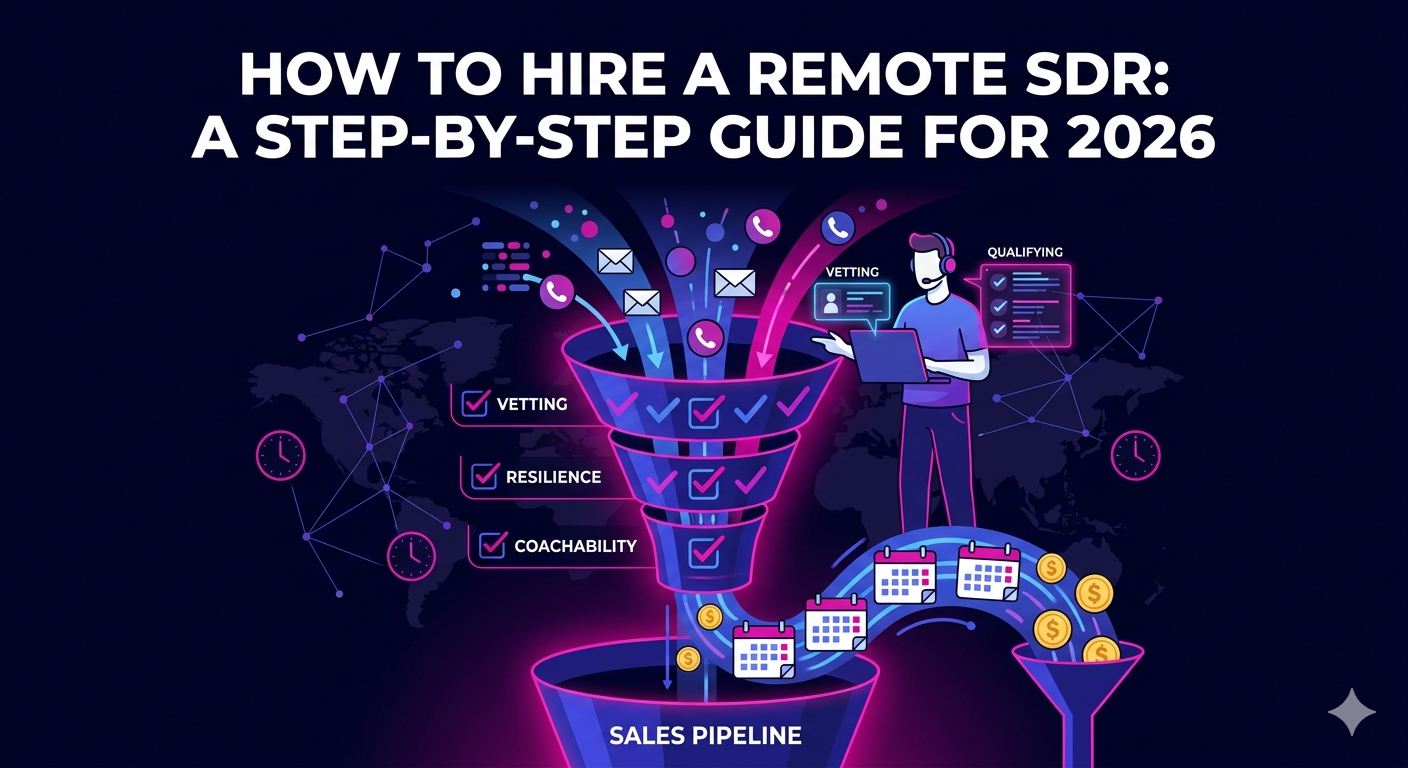
When learning how to hire a remote SDR, skill assessment is where most companies make mistakes. They overweight charisma and underweight discipline. For a remote role, discipline matters even more because there is no manager watching over their shoulder.
Look for candidates with:
- Proven outbound experience: Cold email, cold calling, or LinkedIn outreach with documented results
- CRM proficiency: Salesforce, HubSpot, or Pipedrive experience is a strong plus
- Written communication skills: Email is often the primary prospecting channel. The ability to write concisely and persuasively matters enormously.
- Coachability: The best SDRs are always refining their approach based on feedback and data
- Self-management: Remote SDRs need to hit daily activity goals without external supervision
- Resilience: Rejection is constant in SDR work. Look for candidates who treat it as data, not as defeat.
Step 3 – Write a Strong Job Posting
Your job posting is your first sales pitch to potential SDRs. Make it clear, honest, and compelling. Include specifics about your product, your target market, the tools they will use, and what career growth looks like. Top SDRs are often evaluating multiple opportunities at once, so your posting needs to stand out.
Always specify that the role is fully remote and list the time zone requirements if any overlap is needed for team meetings or training calls.
Step 4 – Screen for Remote Work Readiness
Not every talented salesperson is cut out for remote work. During the screening stage, look for signals that indicate this candidate can thrive without an office environment:
- Previous remote work experience in a sales or outreach role
- A dedicated workspace at home with reliable internet
- Comfort with asynchronous communication tools like Slack or Loom
- A track record of hitting targets independently
Step 5 – Use a Skills-Based Interview Process
The most reliable way to predict SDR performance is to test actual skills, not just ask about them. Include these elements in your interview process:
- Cold call roleplay: Give the candidate a brief on your product and have them cold call you on the spot. This reveals confidence, listening skills, and ability to handle objections.
- Email writing test: Ask them to write a cold email to a fictional prospect using your product. Evaluate clarity, personalization, and call-to-action quality.
- Objection handling: Present two or three common objections and assess how they respond without preparation.
These exercises give you direct insight into what this person will actually do once they are representing your brand.
Step 6 – Check References Carefully
When hiring remotely, reference checks carry extra weight. Go beyond confirming employment dates. Ask former managers specific questions like: Did this person hit their quota consistently? How did they respond to coaching? Would you hire them again? What was their daily activity level like?
Concrete answers to these questions are far more valuable than generic praise.
Step 7 – Build a Structured Onboarding Program
The final step in how to hire a remote SDR is also the most overlooked. Onboarding sets the tone for everything that follows. A well-structured program covers:
- Product and market training in the first week
- CRM and tool setup and training by day three
- Shadowing existing sales calls in week one
- A ramp period with gradually increasing activity targets over the first 30 to 60 days
- Weekly one-on-one check-ins with direct feedback on performance
Remote SDRs who receive strong onboarding reach full productivity faster and stay longer. It is one of the best investments you can make after completing the hire.
Where to Find Top Remote SDR Talent
Knowing how to hire a remote SDR is only useful if you can find qualified candidates. The fastest way to access pre-vetted SDR talent is through a specialist staffing platform that focuses on remote sales professionals.
If you want to skip the trial-and-error of sourcing candidates yourself, browse the remote SDR specialists at The Remote Reps to connect with experienced sales development professionals who are ready to start building your pipeline.
You can also review expert guidance on hiring a remote SDR and building high-performance sales development teams from one of the most respected resources in the B2B sales industry.
Conclusion: Build Your Remote Sales Pipeline With the Right SDR
Understanding how to hire a remote SDR is one of the most valuable skills a sales leader or founder can develop in 2026. The demand for qualified pipeline is not going away, and the businesses that figure out how to source, evaluate, and retain great remote SDRs will consistently outpace those that rely on outdated hiring models.
Follow the steps in this guide, prioritize skills-based evaluation, and invest properly in onboarding. Your remote SDR will become one of the highest-ROI hires you ever make.
Ready to get started? Find your next remote SDR through The Remote Reps and start filling your pipeline today.
Frequently Asked Questions About How to Hire a Remote SDR
How long does it take to hire a remote SDR?
The timeline for how to hire a remote SDR depends on your sourcing method. Using a specialist staffing platform can reduce time-to-hire to as little as one to two weeks. Posting and sourcing independently typically takes three to six weeks when you factor in screening, interviews, and reference checks.
What is a reasonable quota when you hire a remote SDR?
Quotas vary by industry and deal complexity, but a typical remote SDR in 2026 is expected to book eight to fifteen qualified meetings per month after their ramp period. When deciding how to hire a remote SDR, be transparent about your quota expectations during the interview process to ensure alignment from day one.
How do you manage a remote SDR’s daily activity?
Managing a remote SDR effectively comes down to clear KPIs and consistent visibility. Use your CRM to track daily activity metrics like calls made, emails sent, and meetings booked. Schedule brief daily or weekly check-ins to review progress, remove blockers, and provide coaching. The key to knowing how to hire a remote SDR who performs is setting up accountability systems before they start.
Should I hire a remote SDR with industry experience?
Industry experience is helpful but not always essential when you hire a remote SDR. Strong outbound skills, coachability, and resilience often matter more than vertical-specific knowledge, especially if your onboarding program includes thorough product and market training. That said, if your sales cycle is highly technical or complex, relevant industry experience can shorten the ramp period significantly.
What tools does a remote SDR need to work effectively?
When planning how to hire a remote SDR, make sure you have the right infrastructure ready. At minimum, a remote SDR needs access to a CRM, a prospecting tool such as Apollo or LinkedIn Sales Navigator, an email sequencing platform, a calling solution, and a video conferencing tool. Providing these before their first day removes friction and helps them hit the ground running.
How is a remote SDR different from a remote sales rep?
A remote SDR focuses exclusively on the top of the funnel: prospecting, qualifying, and booking meetings. A remote sales rep or account executive takes those meetings and works to close the deal. When figuring out how to hire a remote SDR, it is important to clearly separate these two functions so candidates understand the scope of the role and you attract the right profile for each position.