
Legal support costs are rising fast, and law firms of every size are feeling the pressure. If you are looking for ways to manage your caseload without blowing your budget, learning how to hire a remote paralegal affordably could be the most important decision you make this year. Remote paralegals offer the same skills as in-house staff at a fraction of the overhead, and the talent pool has never been stronger.
This guide walks you through everything you need to know, from understanding what remote paralegals do, to finding the right candidate, to onboarding them for maximum impact.
What Is a Remote Paralegal and Why Do Law Firms Use Them?
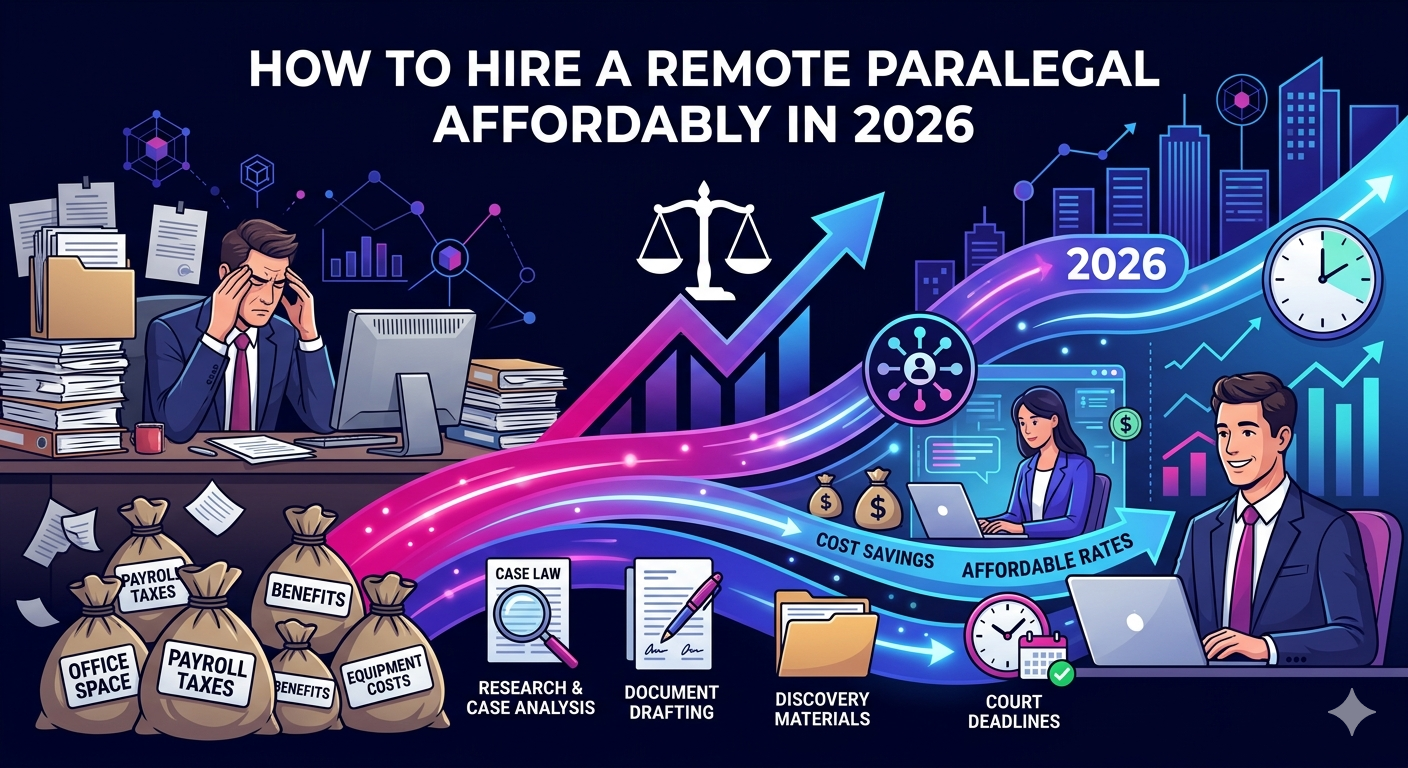
A remote paralegal performs the same core functions as an in-office paralegal but works from a remote location. Their responsibilities typically include:
- Drafting legal documents, briefs, and contracts
- Conducting legal research and case management
- Managing client communications and scheduling
- Organizing discovery materials and evidence files
- Filing court documents and tracking deadlines
Law firms, solo practitioners, and corporate legal departments are increasingly shifting to remote legal support because it reduces real estate costs, eliminates employer payroll taxes on contractors, and opens access to experienced talent nationwide or globally.
The Real Cost of Hiring a Remote Paralegal Affordably
One of the biggest myths is that affordable means low quality. In reality, cost savings come from removing overhead, not from cutting corners on skills. Here is a breakdown of what affects pricing in 2026:
In-House vs. Remote Paralegal Costs
- In-house paralegal (US): Average salary of $58,000 to $72,000 per year, plus benefits, office space, and equipment
- Freelance remote paralegal: Typically $25 to $55 per hour depending on specialization
- Managed remote paralegal service: Flat monthly retainers starting around $1,500 to $3,000, often the most cost-effective for consistent workloads
When you factor in benefits, taxes, and office costs, a full-time in-house hire can cost 1.25x to 1.4x their base salary. Remote options eliminate most of that burden.
Factors That Influence Pricing
- Practice area specialization (litigation, real estate, immigration, corporate)
- Years of experience and certifications
- Full-time vs. part-time vs. project-based engagement
- Platform or agency fees if using a managed service
Where to Find Qualified Remote Paralegals
Knowing where to look is half the battle. Here are the most reliable channels in 2026:
Specialized Legal Staffing Platforms
Platforms dedicated to legal professionals vet candidates for relevant credentials and experience before listing them. This significantly cuts your screening time and reduces the risk of a bad hire. If you want access to pre-screened candidates without the headaches of open job boards, a specialized service is your best bet.
The Remote Reps connects law firms with experienced remote paralegals who are vetted, trained, and ready to integrate into your workflow. Whether you need a specialist in litigation support or a generalist for day-to-day legal tasks, their roster covers it.
General Freelance Marketplaces
Sites like Upwork and LinkedIn ProFinder list thousands of independent paralegals. The trade-off is that you will spend more time vetting credentials and testing skills on your own. This works well for one-off projects but can be risky for ongoing, sensitive legal work.
Bar Association Referral Networks
Many state bar associations maintain directories of certified legal professionals open to contract work. These candidates are often highly credentialed, though the selection may be limited compared to national platforms.
How to Vet and Interview Remote Paralegal Candidates
Hiring remotely requires a tighter screening process than in-person interviews because you lose the advantage of in-person observation. Here is a proven framework:
Step 1: Define Your Scope Before You Post
Outline the exact tasks you need covered, the software your firm uses (Clio, MyCase, iManage, etc.), the expected hours per week, and the turnaround expectations for key deliverables. A vague job description attracts mismatched applicants.
Step 2: Screen for Practice Area Experience
A paralegal with five years of real estate experience may need a steep learning curve to handle personal injury litigation. Match the candidate’s background to your specific practice area to reduce onboarding friction.
Step 3: Run a Practical Skills Test
Give shortlisted candidates a sample task such as drafting a demand letter, summarizing a case file, or preparing a contract redline. Pay a small fee for their time. This reveals communication style, attention to detail, and actual skill level far better than interview questions alone.
Step 4: Check References Thoroughly
Speak with at least two prior legal supervisors. Ask specifically about reliability, confidentiality practices, and how they handled high-pressure deadlines. Remote work demands self-discipline that references can speak to better than any resume.
Step 5: Review Confidentiality and Data Security
Before signing any agreement, confirm the candidate understands and will comply with client confidentiality rules, attorney-client privilege requirements, and your firm’s cybersecurity policies. A signed NDA and data handling agreement are non-negotiable. You can also review general guidance on paralegal standards and ethics from the American Bar Association to ensure your vetting process aligns with professional requirements.
Onboarding Your Remote Paralegal for Success
A smooth onboarding process pays dividends in productivity and retention. Here is what to prioritize:
Set Up Communication and Collaboration Tools
Establish a clear communication rhythm from day one. Most remote legal teams use a combination of Slack or Microsoft Teams for daily communication, Zoom for weekly check-ins, and a case management platform for task tracking. Avoid relying solely on email, which creates bottlenecks.
Create a Standard Operating Procedures Document
Document your preferred formats for briefs, how you want client communications handled, filing conventions, and escalation protocols. Remote workers cannot ask a colleague a quick question, so clear written processes reduce errors significantly.
Schedule Regular Performance Reviews
Monthly check-ins during the first quarter help you catch workflow issues early. Track output metrics such as documents completed per week, turnaround time, and error rates. Use these reviews to give constructive feedback and refine task assignments.
Common Mistakes to Avoid When Hiring Remote Legal Support
- Hiring for cost alone: The cheapest option rarely delivers the quality legal work demands. Balance affordability with verified credentials.
- Skipping the practical test: Resumes can be polished. A skills test reveals real capability.
- No written agreement: Always use a clear contract covering scope, pay rate, confidentiality, and termination terms.
- Overlooking time zone alignment: If your cases require real-time collaboration, choose a candidate whose working hours overlap meaningfully with yours.
- Failing to integrate them into the team: Remote workers who feel isolated disengage quickly. Include them in team meetings and keep communication open.
Is a Remote Paralegal Right for Your Practice?
Remote paralegals are an excellent fit for solo attorneys, small and mid-size firms, and corporate legal teams managing variable workloads. They are particularly valuable for overflow support during peak filing seasons, long-term document review projects, and specialized research tasks that do not require physical presence.
If you are not yet using remote legal support, you may also want to explore complementary roles such as remote legal assistants and virtual assistants to build a fully remote support team that scales with your caseload.
Conclusion: Start Saving Without Sacrificing Quality
Knowing how to hire a remote paralegal affordably is no longer a niche skill for budget-conscious solos. It is a core operational strategy for any modern law practice. The right remote paralegal can handle the heavy lifting on research, drafting, and case management so you can focus on what you do best: serving your clients.
Ready to find a vetted, experienced remote paralegal at a price that fits your budget? Explore the full range of remote paralegal services at The Remote Reps and get matched with a qualified professional today.
Frequently Asked Questions
How do I hire a remote paralegal affordably without compromising on quality?
The best way to hire a remote paralegal affordably without compromising quality is to use a specialized legal staffing platform that pre-vets candidates. This removes the burden of screening credentials yourself and connects you with professionals who have proven track records. Always request a practical skills test and check references before committing to any hire.
What qualifications should I look for when hiring a remote paralegal affordably?
When hiring a remote paralegal affordably, prioritize candidates with an ABA-approved paralegal certificate or associate degree in paralegal studies, experience in your specific practice area, proficiency with your case management software, and a clean background check. Strong written communication skills are especially important for remote roles since most interactions happen in writing.
How much does it cost to hire a remote paralegal affordably in 2026?
Costs vary based on experience and engagement type. Freelance remote paralegals typically charge $25 to $55 per hour. Managed remote paralegal services through staffing firms often offer monthly retainers starting around $1,500 to $3,000, which can be more economical for ongoing work. Either option is significantly more affordable than a full-time in-house hire when you account for salary, benefits, and overhead.
Is it safe to share confidential legal documents with a remote paralegal?
Yes, provided you take the right precautions. Require candidates to sign a non-disclosure agreement and a data handling policy before sharing any sensitive files. Use encrypted file-sharing tools and a secure case management platform. Confirm the paralegal understands attorney-client privilege obligations and has experience working within confidentiality frameworks. Reputable platforms like The Remote Reps screen candidates with these standards in mind.
How long does it take to onboard a remote paralegal after hiring?
Most remote paralegals reach full productivity within two to four weeks when given a clear onboarding process. Providing a written procedures guide, setting up communication tools on day one, and scheduling daily check-ins during the first two weeks significantly accelerates the timeline. Firms that skip structured onboarding often experience a longer ramp-up period and higher early turnover.
Can a small law firm benefit from hiring a remote paralegal affordably?
Absolutely. Small law firms and solo practitioners often benefit the most from remote paralegal support because it gives them enterprise-level legal assistance without the cost of a full-time hire. Remote paralegals allow small practices to handle higher caseloads, meet tighter deadlines, and compete more effectively, all while keeping overhead lean.