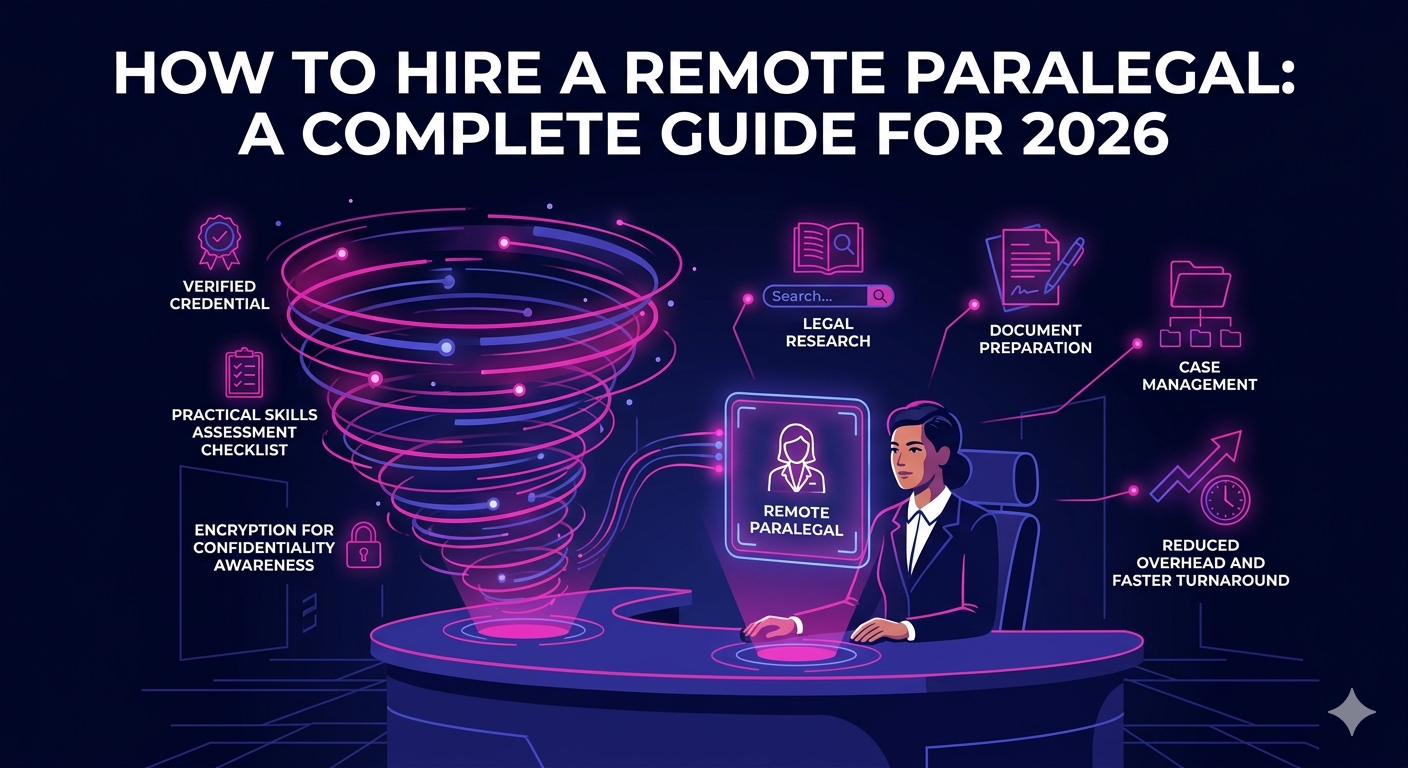
For law firms, solo practitioners, and legal departments navigating the demands of modern practice, knowing how to hire a remote paralegal has become one of the most valuable operational skills of 2026. The legal industry has embraced remote work more broadly than most would have predicted five years ago, and the results speak for themselves: firms that leverage remote paralegals consistently report lower overhead, faster turnaround on legal research and document preparation, and greater scheduling flexibility across time zones.
But hiring the wrong paralegal, whether in-person or remote, carries real professional and financial risk. This guide gives you a structured, expert-level approach to finding, evaluating, and onboarding the right remote paralegal for your practice.
Why More Legal Practices Are Choosing to Hire Remote Paralegals
The shift toward remote paralegal talent is not just a cost-cutting measure. In 2026, it reflects a broader recognition that skilled legal professionals can deliver high-quality work regardless of physical location, provided the right systems and communication standards are in place.
Here is what legal practices gain when they hire a remote paralegal through the right process:
- Significant reduction in overhead costs compared to full-time in-office staff
- Access to a wider talent pool, including specialists in niche practice areas like immigration, intellectual property, or family law
- Scalable support that can flex with caseload demands without the commitment of a permanent hire
- Faster document turnaround when working with paralegals across different time zones
- Reduced administrative burden on attorneys, allowing them to focus on billable work
Step 1: Define the Scope Before You Begin Your Search
The most common reason remote paralegal hires fail is that the scope of work was never clearly defined. Before you post a listing or speak to a single candidate, document the following in detail:
Tasks and Responsibilities
Be specific about what your remote paralegal will handle on a daily, weekly, and monthly basis. Common paralegal responsibilities include legal research, drafting pleadings and contracts, managing case files, coordinating with clients, preparing discovery documents, and filing court paperwork. The more precisely you define these tasks upfront, the more targeted your search and evaluation process will be.
Practice Area Expertise
Paralegal work is not one-size-fits-all. A paralegal experienced in corporate transactions will have a very different skill set from one who specializes in personal injury litigation or estate planning. Clarifying your practice area requirements before you begin hiring will save significant time in the screening process.
Tools and Systems
Identify the legal practice management software, document platforms, and communication tools your remote paralegal will need to use. In 2026, platforms like Clio, MyCase, PracticePanther, and NetDocuments are widely used. Candidates already proficient in your systems will reach full productivity far faster than those who require platform training from scratch.
Step 2: Know Where to Find a Qualified Remote Paralegal
Not all sourcing channels are equally effective when it comes to legal talent. In 2026, the three most reliable options for hiring a remote paralegal are:
Specialized Remote Legal Staffing Agencies
Working with a staffing agency that focuses on remote legal professionals is the most efficient and lowest-risk path for most law firms. These agencies pre-screen candidates for legal knowledge, communication skills, and relevant experience, presenting you with a curated shortlist rather than requiring you to sort through hundreds of unfiltered applications.
For law firms and legal departments ready to hire a remote paralegal who is vetted, experienced, and ready to contribute from day one, the remote paralegal specialists at The Remote Reps are matched to your specific practice area and workflow requirements. The platform also offers remote legal assistants and legal secretaries for firms that need broader administrative legal support alongside paralegal services.
Legal-Specific Job Boards
Platforms like LawCrossing, Indeed’s legal category, and the National Federation of Paralegal Associations (NFPA) job board attract candidates with documented legal backgrounds. These are useful for building a pipeline of applicants, though the screening burden falls entirely on you.
Professional Networks and Referrals
Referrals from trusted colleagues within your legal network remain one of the highest-quality sources for paralegal talent. A candidate who comes recommended by a respected attorney carries a built-in layer of credibility. LinkedIn is also a strong sourcing tool for experienced paralegals in 2026, particularly when your job post clearly outlines the practice area and key requirements.
Step 3: Screen Candidates with a Legal-Specific Evaluation Process
Hiring a remote paralegal requires a more structured evaluation than hiring a general remote worker. Legal work involves confidential client information, court deadlines, and professional standards that leave little margin for error. Use the following screening framework:
Verify Credentials and Certifications
While paralegal certification is not legally required in most jurisdictions in the United States, credentials from recognized bodies such as the National Association of Legal Assistants (NALA) or the NFPA signal a candidate’s commitment to professional standards. Always verify claimed certifications directly with the issuing organization.
Conduct a Practical Skills Assessment
Assign a paid test task that reflects the actual work your paralegal will perform. This might include drafting a motion from a brief, summarizing a deposition transcript, or conducting targeted legal research on a relevant issue. The quality of this submission will tell you more about a candidate’s capabilities than any interview answer.
Assess Confidentiality Awareness
Ask candidates directly about how they handle confidential client information in a remote work environment. Look for specific answers that demonstrate awareness of attorney-client privilege, secure document handling practices, and the use of encrypted communication and file-sharing tools. Vague answers to these questions are a red flag.
Check Professional References
Contact at least two professional references, ideally supervising attorneys or senior paralegals. Ask specifically about the candidate’s accuracy, ability to meet deadlines, responsiveness, and judgment when handling sensitive matters independently.
Step 4: Key Qualities to Look for in a Remote Paralegal
Technical skills matter, but the most effective remote paralegals also bring a set of professional attributes that are particularly important when working outside a traditional office setting:
- Self-directed work style: Remote paralegals must manage their own time and priorities without daily supervision from an attorney. Look for evidence of independent work habits in their history.
- Exceptional written communication: Nearly all remote communication is written. Drafting skill, clarity, and professional tone in emails and documents are non-negotiable.
- Attention to detail: Legal work requires precision. A single missed date or incorrect citation can have serious consequences. Test for this specifically during the skills assessment.
- Proactive communication: The best remote paralegals flag issues before they become problems and update supervising attorneys without being asked.
- Tech proficiency: Comfort with legal software, video conferencing, secure file sharing, and cloud-based document management is essential in 2026.
Step 5: Structure Your Onboarding for Remote Legal Success
Even the most qualified remote paralegal needs a structured start. A strong onboarding process significantly reduces the time it takes to reach full productivity and prevents early errors that could affect client matters. Include the following in your first 30 days:
- A written overview of your firm’s practices, filing procedures, and style standards
- Access to all necessary software platforms with appropriate permission levels
- A review of active case files they will be working on, with context from the supervising attorney
- Clear guidelines on communication expectations, including response time standards and preferred tools
- A defined escalation process for questions or issues that require attorney judgment
For authoritative guidance on paralegal professional standards and best practices when hiring remote legal staff, the National Association of Legal Assistants is a trusted resource for firms learning how to hire a remote paralegal who meets recognized professional benchmarks.
Frequently Asked Questions About How to Hire a Remote Paralegal
What is the best way to hire a remote paralegal for a small law firm?
The best way to hire a remote paralegal for a small law firm is to work with a specialized remote legal staffing agency that pre-screens candidates for your practice area. Start by clearly defining the tasks, tools, and hours required, then evaluate candidates through a practical legal skills assessment before checking professional references. A structured onboarding process ensures a smooth transition into your workflow.
How much does it cost to hire a remote paralegal in 2026?
The cost to hire a remote paralegal in 2026 varies by experience level, specialization, and engagement model. Freelance remote paralegals typically charge between $25 and $65 per hour, while dedicated full-time remote paralegals sourced through a staffing agency may cost between $35,000 and $65,000 annually depending on their background and practice area expertise. These figures are generally well below the total cost of an in-office hire when benefits and overhead are included.
Do I need to verify certifications when I hire a remote paralegal?
Yes. When you hire a remote paralegal, you should always verify any claimed certifications directly with the issuing organization, such as NALA or the NFPA. While paralegal certification is not legally required in most U.S. jurisdictions, verified credentials provide meaningful assurance of a candidate’s legal knowledge and professional commitment. Certification also signals that the paralegal is subject to continuing education requirements and ethical standards.
What tasks can a remote paralegal handle for my firm?
A qualified remote paralegal can handle a wide range of legal support tasks including legal research, drafting motions and contracts, managing discovery, preparing client correspondence, organizing case files, coordinating court filings, and summarizing depositions or transcripts. The specific tasks your remote paralegal handles will depend on their practice area expertise and the scope of work you define during the hiring process.
How do I protect client confidentiality when I hire a remote paralegal?
Protecting client confidentiality when you hire a remote paralegal requires clear policies and the right tools. Require the use of encrypted email and file-sharing platforms, ensure the paralegal signs a confidentiality and data security agreement, and restrict access to client files on a need-to-know basis. During the hiring process, ask candidates directly about their remote security practices to assess their awareness and commitment to professional confidentiality standards.
How long does it take to onboard a remote paralegal?
When you hire a remote paralegal through a reputable agency that provides pre-vetted candidates, the onboarding period typically runs two to four weeks before full independent productivity is reached. The timeline depends on the complexity of your practice area, the depth of your onboarding documentation, and the paralegal’s prior experience with similar legal workflows and software platforms.
Ready to Hire a Remote Paralegal Who Delivers Results?
The legal professionals who understand how to hire a remote paralegal strategically are giving their firms a measurable competitive advantage in 2026. Lower costs, faster turnaround, and access to specialized talent are no longer exclusive to large firms with significant recruiting budgets. Any practice that follows a structured, deliberate hiring process can build a high-performing remote legal team.
Define your needs clearly, use a trusted sourcing channel, evaluate candidates with legal-specific assessments, and invest in proper onboarding. The right remote paralegal is not just a cost reduction. They are a genuine extension of your legal team who frees you to focus on the work that matters most.