
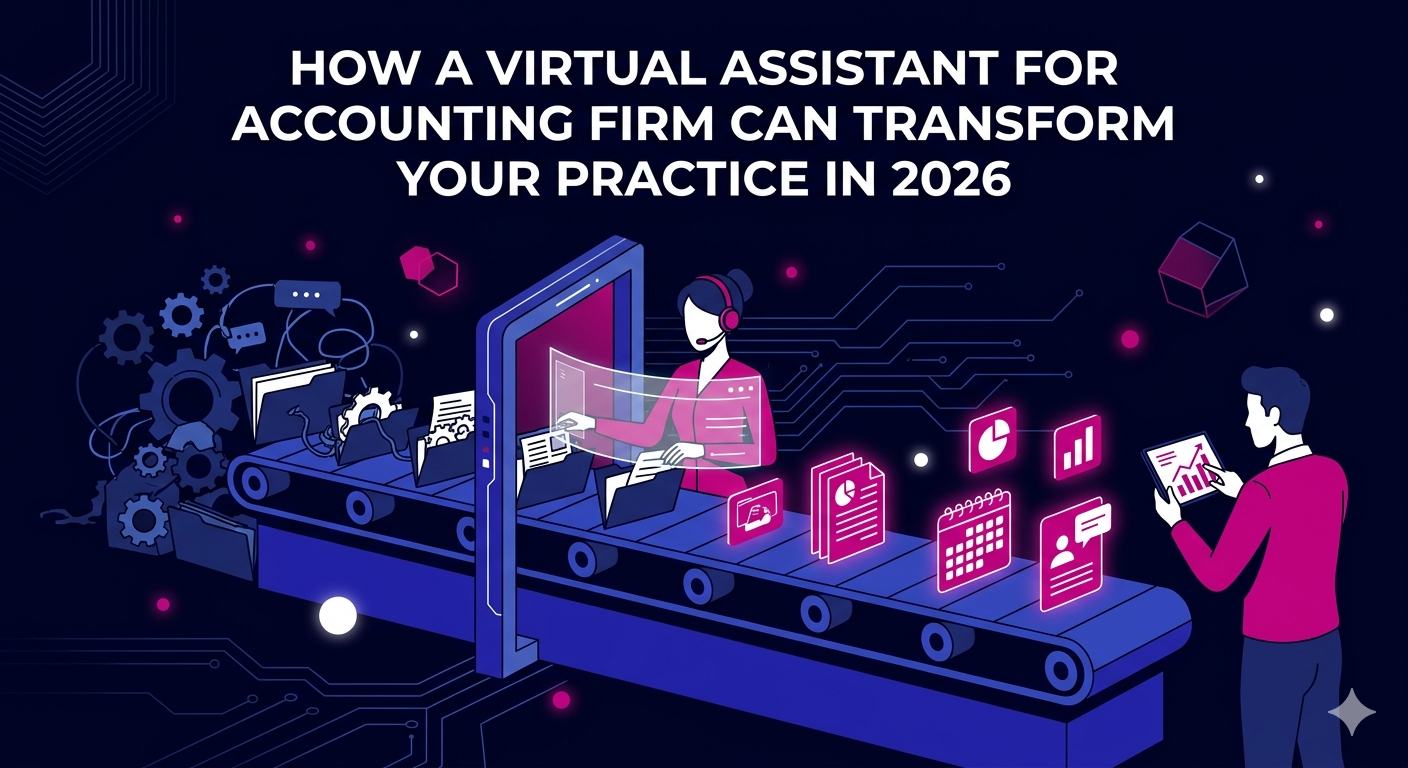
Accounting firms are under more pressure than ever to deliver fast, accurate results while keeping operational costs in check. If your team is drowning in administrative work, it may be time to bring in a virtual assistant for accounting firm operations. These skilled remote professionals take on the time-consuming tasks that pull your accountants away from billable work, helping your firm run leaner and smarter.
In this guide, we cover everything you need to know about hiring a virtual assistant for your accounting firm, from what tasks they handle to how much they cost and what to look for when hiring in 2026.
What Is a Virtual Assistant for an Accounting Firm?
A virtual assistant for an accounting firm is a remote professional who provides administrative, operational, and sometimes technical support to help the firm run more efficiently. Unlike an in-house employee, a virtual assistant works offsite, typically on a contract or part-time basis, reducing overhead while maintaining a high level of output.
These professionals are not just general admin helpers. Many virtual assistants who specialize in accounting environments are familiar with industry software, compliance deadlines, and the fast-paced nature of tax season. They bring structure to your back-office so your licensed accountants can focus on client-facing, high-value work.
Key Tasks a Virtual Assistant Handles for Accounting Firms
One of the most common questions firm owners ask is: what exactly will a virtual assistant do for my accounting practice? The answer depends on your firm’s needs, but most accounting virtual assistants can manage a wide range of responsibilities.
Administrative and Scheduling Support
- Managing calendars and scheduling client appointments
- Answering and routing phone calls and emails
- Preparing and formatting client-facing documents and proposals
- Handling intake forms and onboarding paperwork for new clients
- Organizing and maintaining digital filing systems
Client Communication and Follow-Up
- Sending deadline reminders to clients for document submission
- Following up on outstanding invoices and payments
- Coordinating with clients on missing information
- Managing client portals and document upload requests
Data Entry and Software Support
- Entering data into accounting platforms like QuickBooks, Xero, or Karbon
- Updating client records and tracking spreadsheets
- Generating basic reports under accountant supervision
- Processing expense reports and organizing receipts
Marketing and Online Presence
- Managing social media profiles and scheduling posts
- Drafting newsletters and email campaigns
- Updating website content and blog posts
- Responding to online reviews and inquiries
Why Accounting Firms Are Turning to Virtual Assistants in 2026
The demand for virtual assistants in professional services has grown significantly over the past few years. Several factors are driving this trend in the accounting sector specifically.
Rising Labor Costs
Hiring a full-time administrative employee in the United States now costs between $45,000 and $65,000 annually when you include salary, benefits, and payroll taxes. A virtual assistant for an accounting firm typically costs between $10 and $35 per hour depending on their skill set and location. For most small to mid-sized firms, this translates to savings of tens of thousands of dollars per year.
Talent Shortages in the Accounting Industry
The accounting profession is facing a well-documented talent shortage. With fewer graduates entering the field and an aging workforce, firms are struggling to find qualified staff. Virtual assistants fill the gap by handling support tasks, freeing your licensed team members to focus on work that requires their credentials and expertise.
Flexibility During Tax Season
One of the greatest advantages of a virtual assistant for an accounting firm is the ability to scale support during peak periods. Instead of hiring seasonal employees and going through a full onboarding process, you can increase hours with your virtual assistant as workload demands grow, then scale back after the season ends.
Improved Turnaround Times and Client Satisfaction
When administrative bottlenecks are cleared, client communications are faster and deliverables go out sooner. Clients notice when their calls get returned quickly and their documents are organized correctly. A virtual assistant helps your firm deliver a better client experience without adding headcount.
How to Choose the Right Virtual Assistant for Your Accounting Firm
Not every virtual assistant is a good fit for a professional services environment. Here is what to evaluate when making your hire:
Relevant Industry Experience
Look for a virtual assistant who has worked with accounting firms, CPA practices, bookkeeping businesses, or financial services companies before. Familiarity with industry terminology, compliance sensitivities, and client expectations makes a significant difference in how quickly they can add value.
Software Proficiency
Your virtual assistant should be comfortable using the tools your firm already relies on. Common platforms in accounting environments include QuickBooks Online, Xero, Karbon, TaxDome, Canopy, Microsoft 365, and Google Workspace. Ask candidates to demonstrate their proficiency before hiring.
Communication and Reliability
Virtual assistants work remotely, so clear and consistent communication is critical. Look for someone who responds promptly, provides regular updates, and proactively flags issues before they become problems. Check references from past clients in professional services industries.
Data Security Awareness
Accounting firms handle sensitive financial and personal information. Your virtual assistant must understand and follow data protection best practices, including the use of secure file-sharing tools, strong passwords, two-factor authentication, and confidentiality agreements.
What to Expect When Onboarding a Virtual Assistant at Your Accounting Firm
A smooth onboarding process sets the foundation for a productive working relationship. Here is a simple framework to follow:
- Week one: Share access to necessary tools, provide a firm overview, and walk through standard operating procedures for key tasks.
- Week two: Assign a mix of simple and moderately complex tasks to assess accuracy and communication style.
- Week three and beyond: Gradually expand responsibilities as trust and familiarity build. Set up weekly check-ins to review priorities and address questions.
The more clearly you document your processes upfront, the faster your virtual assistant will reach full productivity.
The Cost of Hiring a Virtual Assistant for Your Accounting Firm
Costs vary widely based on experience, geographic location, and the scope of work involved. Here is a general breakdown for 2026:
- Entry-level virtual assistant: $10 to $18 per hour, suitable for basic admin tasks and data entry
- Mid-level virtual assistant: $18 to $28 per hour, with experience in accounting software and client communication
- Specialized accounting VA: $28 to $45 per hour, with deep knowledge of accounting workflows and compliance environments
Many accounting firms find that even a part-time virtual assistant working 20 hours per week delivers a strong return on investment within the first 90 days.
If you are ready to hire a skilled remote professional for your practice, explore the virtual assistant services at The Remote Reps. Their team connects accounting firms with vetted, experienced virtual assistants who understand the demands of professional services environments.
You can also review guidance from the AICPA on leveraging virtual support in your accounting firm for additional professional insight on integrating remote talent into your practice.
Frequently Asked Questions About Virtual Assistants for Accounting Firms
What does a virtual assistant for an accounting firm typically do on a daily basis?
A virtual assistant for an accounting firm typically handles scheduling, client communication, document management, data entry, invoice follow-ups, and administrative support. The exact tasks depend on your firm’s needs, but the goal is always to free up your licensed staff for higher-value, billable work.
Is it safe to use a virtual assistant for an accounting firm given the sensitivity of financial data?
Yes, provided you take the right precautions. When hiring a virtual assistant for an accounting firm, require a signed confidentiality agreement, use secure file-sharing platforms, and limit data access to only what is necessary for each task. Many experienced accounting virtual assistants already follow these protocols as standard practice.
How much does a virtual assistant for an accounting firm cost in 2026?
Rates for a virtual assistant for an accounting firm typically range from $10 to $45 per hour in 2026, depending on experience level and the complexity of tasks involved. Part-time arrangements are common and allow firms to manage costs while still benefiting from consistent professional support.
Can a virtual assistant for an accounting firm help during tax season?
Absolutely. A virtual assistant for an accounting firm is especially valuable during tax season. They can handle client document collection, deadline reminders, inbox management, appointment scheduling, and data entry, reducing the pressure on your licensed staff during the busiest time of year.
What qualifications should I look for in a virtual assistant for my accounting firm?
When hiring a virtual assistant for an accounting firm, prioritize candidates with prior experience in professional services or financial environments, proficiency in accounting and practice management software, strong written communication skills, and a clear understanding of confidentiality requirements. Industry-specific experience shortens the learning curve significantly.
How quickly can a virtual assistant for an accounting firm become productive?
Most virtual assistants for accounting firms reach a solid working rhythm within two to four weeks, assuming you provide clear documentation of your processes and expectations. Experienced candidates who already know tools like QuickBooks or TaxDome often become productive even faster.
Conclusion
The right virtual assistant for an accounting firm does more than answer emails and schedule meetings. They become a strategic part of your operations, helping your team stay organized, your clients stay informed, and your firm stay competitive in an increasingly demanding market.
In 2026, firms that invest in remote support are moving faster and spending less than those relying solely on in-house staff. If you want to reduce overhead, improve service delivery, and give your accountants more time to do what they do best, hiring a virtual assistant is one of the most effective steps you can take.