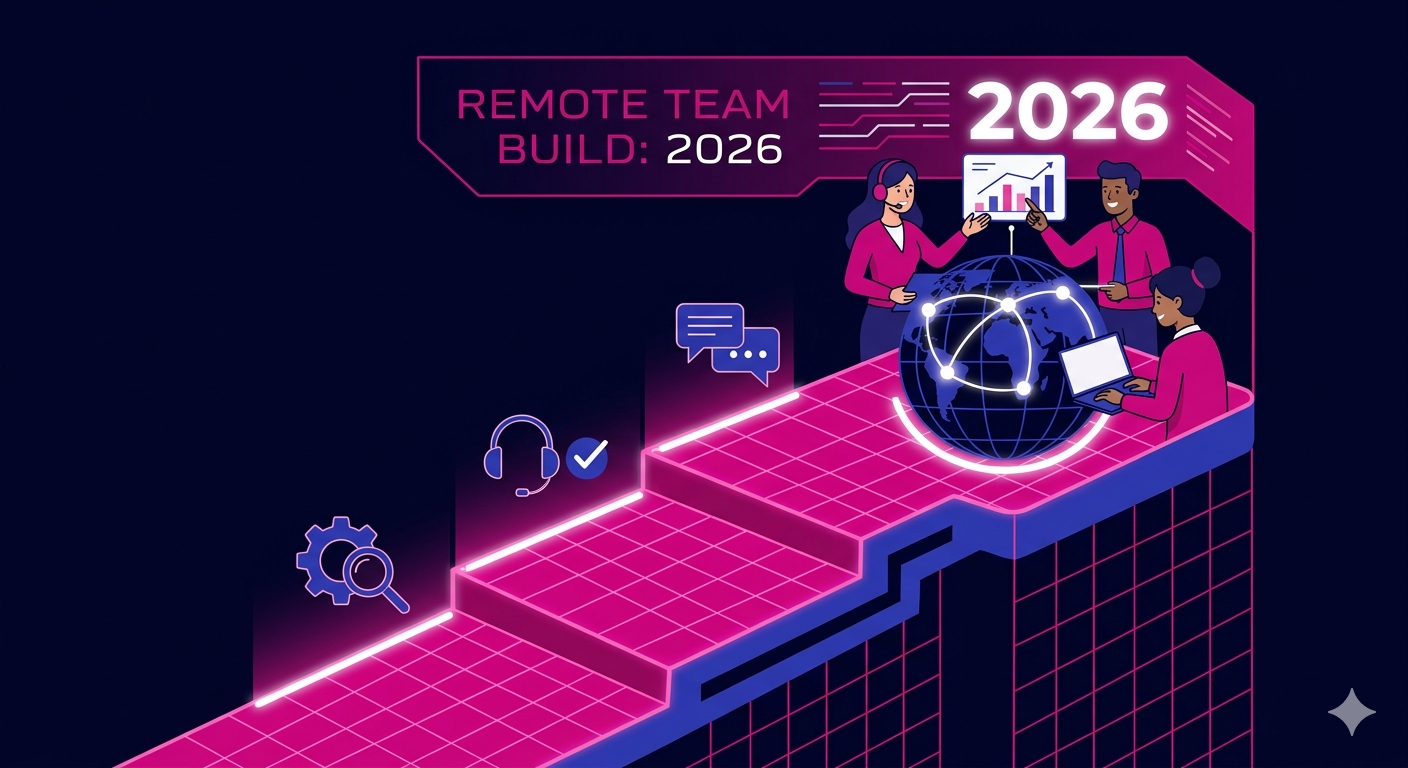
More businesses are ditching the traditional office model than ever before. Whether you are a solo founder ready to grow or a small business owner looking to scale without the overhead, knowing how to build a remote team from scratch is one of the most valuable skills you can develop in 2026. The right remote team gives you access to global talent, lower costs, and a workforce that can operate around the clock.
This guide walks you through every stage of the process, from defining your needs to onboarding your first hire, so you can build a remote team that actually delivers results.
Why Building a Remote Team from Scratch Makes Sense in 2026
The remote work revolution is no longer a trend. It is the new standard. Businesses that learn how to build a remote team from scratch are gaining a measurable competitive edge over those still relying solely on local, in-office hiring.
Here is why the model works so well right now:
- Access to a global talent pool without geographic limitations
- Significantly lower salary and overhead costs compared to in-house teams
- Greater flexibility to scale up or down based on business needs
- Higher productivity reported by remote workers across multiple industries
- Ability to operate across time zones for near-continuous output
For small and mid-sized businesses in particular, building a remote team is one of the smartest ways to grow without taking on unsustainable fixed costs.
Step 1: Define Your Business Needs Before You Hire
The first step in figuring out how to build a remote team from scratch is getting crystal clear on what your business actually needs. Many founders make the mistake of hiring based on gut instinct rather than strategic gaps.
Audit Your Current Workload
Before posting a single job listing, spend time mapping out where your team is stretched thin or where tasks are falling through the cracks. Common areas that small businesses outsource first include:
- Sales development and lead generation
- Digital marketing and content creation
- Customer support and account management
- Administrative and executive assistance
- Legal and compliance support
Prioritize by Impact
Once you have your list, rank each role by the revenue impact it would have. Hire for the highest-leverage positions first. For most growing businesses, that means bringing in sales or marketing talent before expanding into operational roles.
Step 2: Build a Clear Remote Hiring Process
Knowing how to build a remote team from scratch requires a hiring process that is structured, efficient, and designed for asynchronous communication. Unlike in-person hiring, you are evaluating candidates primarily through written communication, video calls, and work samples.
Write Detailed Job Descriptions
Remote job descriptions need to be more specific than traditional postings. Be explicit about:
- The specific deliverables and KPIs for the role
- Required tools and software experience
- Communication expectations and working hours
- Time zone requirements or flexibility
- The type of contract (full-time, part-time, or project-based)
Use Skills-Based Assessments
Rather than relying solely on resumes, use short skills assessments or paid test projects to evaluate real-world capabilities. This is especially important when hiring remotely because you cannot observe candidates in person before making a decision.
Conduct Structured Video Interviews
Use a consistent set of questions across all candidates to allow for fair comparison. Evaluate not just skills but communication clarity, self-direction, and the ability to work independently, all of which are critical traits for remote team members.
Step 3: Choose the Right Tools to Support Your Remote Team
Building a remote team from scratch without the right infrastructure in place is a recipe for chaos. Technology is the backbone of every successful distributed team.
Essential Remote Work Tools in 2026
- Project management: Asana, ClickUp, or Notion for tracking tasks and deadlines
- Communication: Slack or Microsoft Teams for real-time messaging
- Video conferencing: Zoom or Google Meet for team calls and one-on-ones
- Document collaboration: Google Workspace or Notion for shared files and SOPs
- Time tracking: Toggl or Hubstaff to monitor output and accountability
- CRM and sales tools: HubSpot or Salesforce if building a remote sales team
Set up your tech stack before your first hire joins. Nothing damages onboarding faster than a new team member who cannot access the tools they need on day one.
Step 4: Create a Structured Onboarding Experience
One of the biggest mistakes businesses make when learning how to build a remote team from scratch is underinvesting in onboarding. A well-structured onboarding process reduces ramp time, sets expectations clearly, and dramatically improves retention.
Build a Remote Onboarding Checklist
- Send a welcome message and introduction to the team before day one
- Provide access to all tools, platforms, and shared documents
- Share a written overview of company culture, processes, and goals
- Assign a buddy or point of contact for the first 30 days
- Schedule regular check-ins during the first 60 to 90 days
Document Your Processes as Standard Operating Procedures
Remote teams thrive on clarity. Create written SOPs for every repeatable task so new team members can get up to speed without needing constant hand-holding. This also protects your business from knowledge loss if someone leaves.
Step 5: Set Clear Expectations and Performance Metrics
Managing a remote team effectively means shifting from measuring hours worked to measuring output and outcomes. When you build a remote team from scratch, you have the opportunity to establish a results-focused culture from day one.
Define KPIs for Every Role
Every member of your remote team should know exactly what success looks like in their role. Whether that is a certain number of qualified leads generated per week, a response time target for customer support, or a content publishing schedule, clear metrics keep everyone aligned and accountable.
Schedule Regular One-on-Ones and Team Check-Ins
Consistent communication is what holds a remote team together. Weekly one-on-ones give you visibility into progress and blockers. Monthly team meetings reinforce culture and alignment around broader goals.
Step 6: Partner with a Remote Staffing Expert
If building your own hiring pipeline from scratch feels overwhelming, partnering with a remote staffing specialist is one of the fastest ways to get your team operational. The right partner handles sourcing, vetting, and matching so you can focus on running your business.
At The Remote Reps, we specialize in helping businesses build high-performing remote teams across sales, marketing, operations, legal support, and more. Whether you need a team of remote sales development representatives to fill your pipeline or executive assistants to streamline your operations, we connect you with pre-vetted professionals ready to contribute from day one.
According to research published by SHRM on remote work best practices, organizations that invest in structured remote hiring and onboarding processes see significantly lower turnover and higher team performance compared to those that treat remote hiring as an afterthought.
Common Mistakes to Avoid When Building a Remote Team
Even with the best intentions, there are pitfalls that can derail your remote team-building efforts. Here are the most common ones to watch out for:
- Hiring too fast: Rushing to fill seats leads to poor cultural and skills fits. Take the time to vet candidates thoroughly.
- Poor communication norms: Without clear expectations around response times and meeting cadences, remote teams fragment quickly.
- Skipping onboarding: Assuming remote hires will figure things out on their own leads to slow ramp times and frustration.
- Micromanaging: Remote work requires trust. If you hire well and set clear KPIs, you can manage by output rather than surveillance.
- Neglecting team culture: Remote teams need intentional culture-building through virtual team events, recognition programs, and transparent leadership.
Building a Remote Team That Scales with Your Business
The ultimate goal of learning how to build a remote team from scratch is not just to fill a few roles. It is to create a scalable, resilient workforce that grows with your business. As you add team members, document what works, refine your hiring process, and continuously invest in your team’s development.
Small businesses that build strong remote teams in 2026 are positioning themselves to compete with much larger organizations. The talent is out there. The tools exist. All that is left is having the right strategy and the right partner to make it happen.
Frequently Asked Questions: How to Build a Remote Team from Scratch
How long does it take to build a remote team from scratch?
The timeline for building a remote team from scratch depends on how many roles you need to fill and how well-defined your hiring process is. With a clear job description and an efficient screening process, you can have your first remote hire contributing within two to four weeks. Partnering with a remote staffing provider can reduce that timeline even further.
What roles should I hire first when building a remote team from scratch?
When learning how to build a remote team from scratch, prioritize roles that directly generate revenue or remove your biggest operational bottlenecks. For most small businesses, that means starting with sales development, lead generation, or customer support before expanding into administrative and marketing roles.
How do I manage performance when building a remote team from scratch?
Managing a remote team you built from scratch requires shifting from hour-based oversight to output-based accountability. Define clear KPIs for every role, use project management tools to track progress, and hold regular one-on-one check-ins. Remote teams perform best when expectations are documented and feedback is consistent.
How much does it cost to build a remote team from scratch?
The cost of building a remote team from scratch varies based on the roles, experience levels, and locations of your hires. In general, remote teams cost significantly less than equivalent in-house teams because you eliminate expenses like office space, benefits, and local salary premiums. Many businesses save between 40 and 60 percent compared to traditional hiring models.
What tools do I need to build a remote team from scratch?
To build a remote team from scratch successfully, you need tools for project management, communication, video conferencing, document collaboration, and performance tracking. Widely used options in 2026 include ClickUp, Slack, Zoom, Google Workspace, and Hubstaff. Setting up your tech stack before your first hire joins is essential for a smooth onboarding experience.
Can I build a remote team from scratch without prior remote management experience?
Yes. Many business owners successfully build a remote team from scratch with no prior experience managing distributed workers. The key is to start with clear processes, invest in good communication tools, and set explicit expectations around deliverables and availability. Working with a remote staffing partner can also accelerate your learning curve significantly.