The way companies build teams has fundamentally shifted. In 2026, distributed workforces are no longer a trend but a standard operating model for competitive businesses. The challenge is no longer whether to hire remotely but where to do it. Choosing among the best remote hiring platforms can mean the difference between finding a high-performing team member in two weeks and spending three months screening unqualified candidates.
This guide covers everything you need to know: what separates the top platforms from the rest, which use cases each type serves best, and how to avoid the most common hiring mistakes that cost companies time and money.
Why the Right Remote Hiring Platform Matters More Than Ever
Remote hiring is not simply posting a job description online and waiting. The best remote hiring platforms provide infrastructure for sourcing, vetting, communicating with, and onboarding talent from anywhere in the world. Without the right platform, companies face mismatched candidates, slow screening cycles, poor communication, and high early turnover.
In 2026, three major forces are making platform selection even more critical:
- Global talent competition: Top remote candidates have multiple offers on the table. Platforms that move fast and communicate clearly win.
- Specialization demand: Generalist platforms are losing ground to specialized networks that deliver pre-vetted talent in specific roles like sales, marketing, or legal support.
- Compliance complexity: Cross-border hiring involves payroll, tax, and labor law considerations that the best platforms now help manage end to end.
Types of Remote Hiring Platforms Available in 2026
Not all remote hiring platforms work the same way. Understanding the different categories helps you match the right tool to your specific hiring need.
General Job Boards and Remote Marketplaces
Platforms like LinkedIn, Indeed, and We Work Remotely serve as broad marketplaces where companies post openings and candidates apply. They offer high volume but require significant internal screening effort. These platforms work best for companies with dedicated HR teams that can manage inbound application flow.
Freelance and Contract Platforms
Upwork, Toptal, and similar platforms are built for project-based or contract work. They include built-in payment processing, time tracking, and dispute resolution. These are useful for short-term needs but less suited for placing full-time remote employees who need to integrate deeply with your team.
Employer of Record and Compliance Platforms
Platforms like Deel and Remote handle the legal and compliance side of hiring internationally. They act as the legal employer in a given country, managing payroll, benefits, and local labor law on your behalf. These are valuable when hiring in a new country for the first time.
Specialized Remote Staffing Firms
Specialized remote staffing firms focus on specific role categories, such as sales, marketing, legal support, or customer service. They pre-vet candidates for role-specific skills before presenting them to clients. This category consistently delivers the highest quality-to-time ratio because candidates are already screened for the competencies that matter most.
If your priority is hiring remote sales or revenue talent specifically, a dedicated staffing partner offers a fundamentally different experience than a general job board. Explore the remote hiring solutions at The Remote Reps, a platform built specifically for placing high-quality remote sales, marketing, and support professionals with growing companies.
Key Features That Define the Best Remote Hiring Platforms
When evaluating your options, these are the features that consistently separate top-tier remote hiring platforms from mediocre ones.
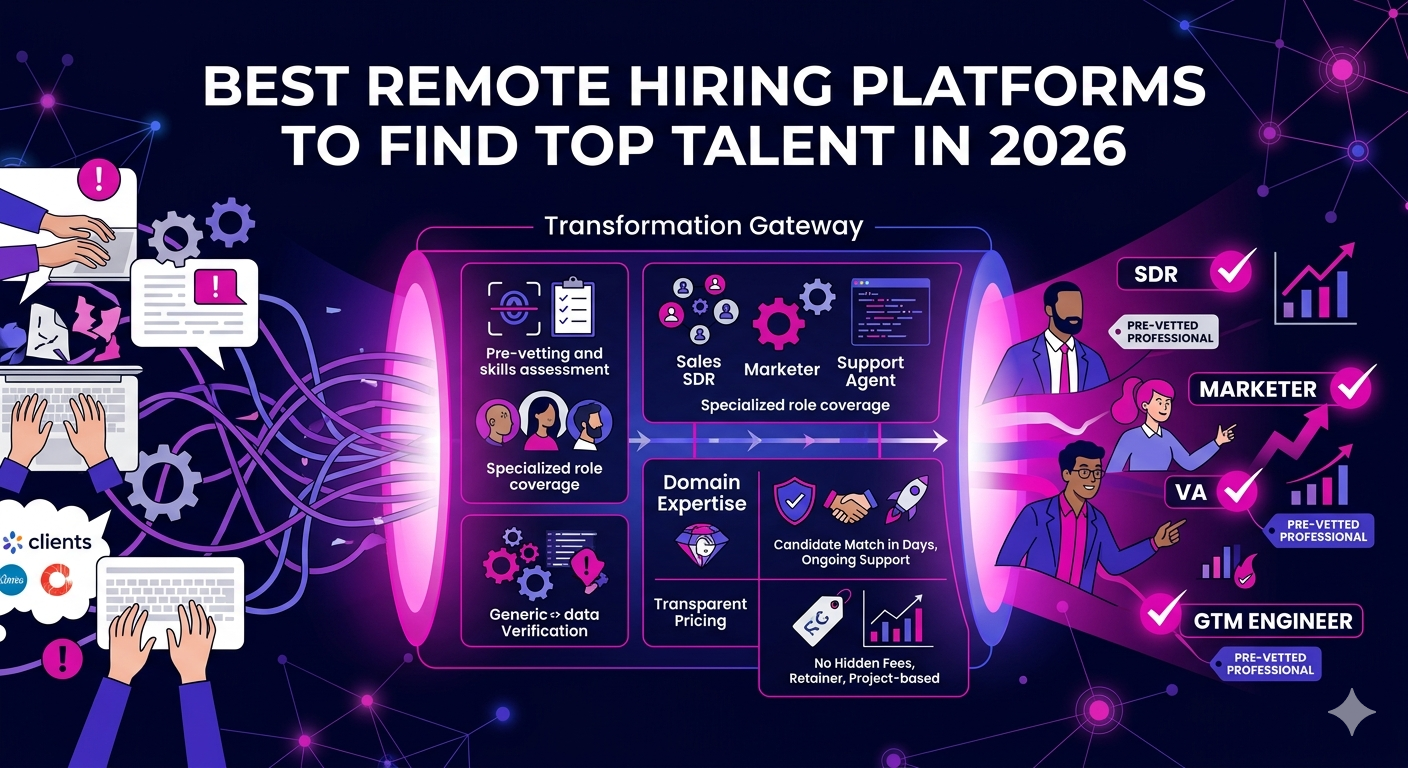
Pre-Vetting and Skills Assessment
The best platforms do not just collect resumes. They run candidates through structured screening that tests communication quality, role-relevant skills, and cultural fit before you ever see a profile. This saves hiring managers hours of early-stage screening and improves the overall quality of interviews.
Speed to Hire
Time to hire is one of the most important metrics in remote recruitment. Top platforms have active talent pools, not just passive databases, which means you are presented with candidates who are ready to start within days, not months.
Transparent Pricing
Pricing models vary widely across remote hiring platforms. Some charge a flat monthly fee, others take a percentage of the candidate’s salary, and some operate on a per-hire basis. The best platforms are upfront about total cost and do not bury fees in the contract.
Ongoing Support After Placement
Hiring does not end at the offer letter. The strongest remote hiring platforms provide post-placement support including replacement guarantees, onboarding assistance, and regular check-ins to ensure the hire is performing as expected.
Specialization by Role or Function
Platforms that specialize in a function know the nuances of those roles deeply. A platform that focuses on remote sales reps understands outbound KPIs, CRM workflows, and pipeline metrics. A platform specializing in legal support understands the difference between a paralegal and a legal secretary. That domain knowledge leads to better matches and faster ramp times.
How to Choose the Best Remote Hiring Platform for Your Business
With dozens of platforms available, narrowing down your options requires a structured evaluation process. Here is a practical framework to guide your decision.
Step 1: Define the Role Clearly
Before approaching any platform, document exactly what you need. Define the function, the required skills, the expected output, and the tools the candidate must know. Vague job descriptions produce poor matches regardless of how good the platform is.
Step 2: Match Platform Type to Hiring Need
If you need a full-time remote SDR who integrates with your sales stack, a freelance marketplace is the wrong fit. If you need a one-time project completed, a staffing firm is probably overkill. Match the platform category to the nature and duration of the engagement.
Step 3: Check Reviews and Case Studies
Look for testimonials and case studies in your industry. A platform that has placed remote marketing managers for SaaS companies will have a very different track record than one focused on e-commerce support roles. Industry-specific experience matters.
Step 4: Evaluate Communication and Responsiveness
How a platform communicates during the sales process tells you a lot about how they will communicate once you are a client. Slow response times and vague answers before the contract are a reliable signal of what comes after.
Step 5: Ask About Replacement Guarantees
Even the best placements do not always work out. The top remote hiring platforms stand behind their matches with a clear replacement policy. Confirm what the guarantee period is and what triggers it before committing.
Common Mistakes When Using Remote Hiring Platforms
Many businesses have access to excellent remote hiring platforms but still get poor results because of avoidable process failures. These are the most common mistakes.
- Skipping the platform’s pre-screening process: If the platform offers pre-vetting, use it. Bypassing it to move faster usually creates more delays downstream.
- Hiring without a structured onboarding plan: Remote hires need deliberate onboarding. Without it, even strong candidates underperform in the first 90 days.
- Choosing price over fit: The cheapest platform rarely delivers the best candidates. Total cost of a bad hire, including lost time and replacement costs, always exceeds the savings from a cheaper platform.
- Not setting clear KPIs upfront: Define success metrics before the hire starts, not after. This protects both sides and creates accountability from day one.
- Using one platform for every role: Different functions require different hiring approaches. A platform that excels at placing developers may not understand sales talent at all.
The ROI of Using a Specialized Remote Hiring Platform
The financial case for using the right remote hiring platform is straightforward. Companies that use specialized platforms report significantly shorter time-to-hire, lower turnover in the first year, and stronger early-stage performance from new hires compared to those who rely on general job boards.
When you factor in the cost of a bad hire, which research consistently places at 30 percent or more of annual salary, the platform fee for a high-quality specialized provider is a fraction of the downside risk. Investing in the right platform upfront is not a cost. It is risk mitigation.
For a broader view of how remote work hiring trends are evolving globally, SHRM’s talent acquisition resources on remote hiring platforms and best practices offer useful benchmarks and strategic guidance for HR and recruiting teams.
Conclusion: Find the Platform That Fits Your Hiring Goals
The best remote hiring platforms in 2026 are not one-size-fits-all solutions. They are purpose-built tools that align with specific role types, company sizes, and hiring timelines. Whether you need a full-time remote sales professional, a legal support specialist, or a digital marketer who can hit the ground running, the right platform makes the entire process faster, more reliable, and more cost-effective.
Take the time to define your needs, evaluate platforms by specialization rather than just reach, and choose a partner that offers real support beyond the placement. Your next great hire is out there. The right platform helps you find them faster.
Ready to hire remote talent built for results? Browse current remote job openings at The Remote Reps and connect with pre-vetted professionals ready to join your team.
Frequently Asked Questions About the Best Remote Hiring Platforms
What are the best remote hiring platforms for small businesses in 2026?
For small businesses, the best remote hiring platforms are typically specialized staffing firms or curated talent networks rather than large general job boards. Smaller companies benefit most from platforms that pre-vet candidates, reducing the screening burden on lean internal teams. Platforms that focus on specific functions such as sales, marketing, or administrative support are especially valuable because they deliver role-ready candidates without requiring deep internal recruiting expertise.
How do the best remote hiring platforms screen candidates?
The best remote hiring platforms use a multi-step screening process that goes beyond resume review. This typically includes structured interviews, skills assessments, written communication tests, and reference checks. Some specialized platforms also test candidates on the specific tools and workflows relevant to the role, such as CRM proficiency for sales hires or SEO tool knowledge for marketing candidates. This pre-vetting is what separates top-tier platforms from simple job boards.
Are the best remote hiring platforms worth the cost compared to hiring directly?
Yes, in most cases the best remote hiring platforms deliver strong ROI when compared to direct hiring. The platform fee is offset by reduced time-to-hire, lower screening costs, and significantly lower risk of a bad hire. Research consistently shows that replacing a poor hire costs 30 percent or more of annual salary. A specialized remote hiring platform that delivers qualified, pre-vetted candidates dramatically reduces that risk and compresses the time it takes to get a new hire productive.
Can the best remote hiring platforms help with compliance for international hires?
Many of the best remote hiring platforms now include compliance support for international placements. Some act as employer of record services, managing payroll, benefits, and local labor law on your behalf. Others partner with third-party compliance tools. If you are hiring across borders for the first time, it is important to confirm what compliance infrastructure the platform provides or recommends before signing a contract.
How quickly can the best remote hiring platforms deliver candidates?
Speed varies by platform type and role complexity. Specialized remote hiring platforms with active talent pools can typically present qualified candidates within three to seven business days. General job boards depend on inbound application volume, which can take weeks to generate quality options. For roles with urgent timelines, a specialized staffing firm with a curated talent network almost always delivers faster than a broad marketplace approach.
What types of roles can I hire through the best remote hiring platforms?
The best remote hiring platforms cover a wide range of functions. General platforms handle almost any role category. Specialized platforms focus on areas like sales development, digital marketing, customer support, legal assistance, e-commerce, and administrative support. Choosing a platform that specializes in your specific hiring category will consistently produce better candidate quality and faster placements than relying on a generalist platform for every role.