
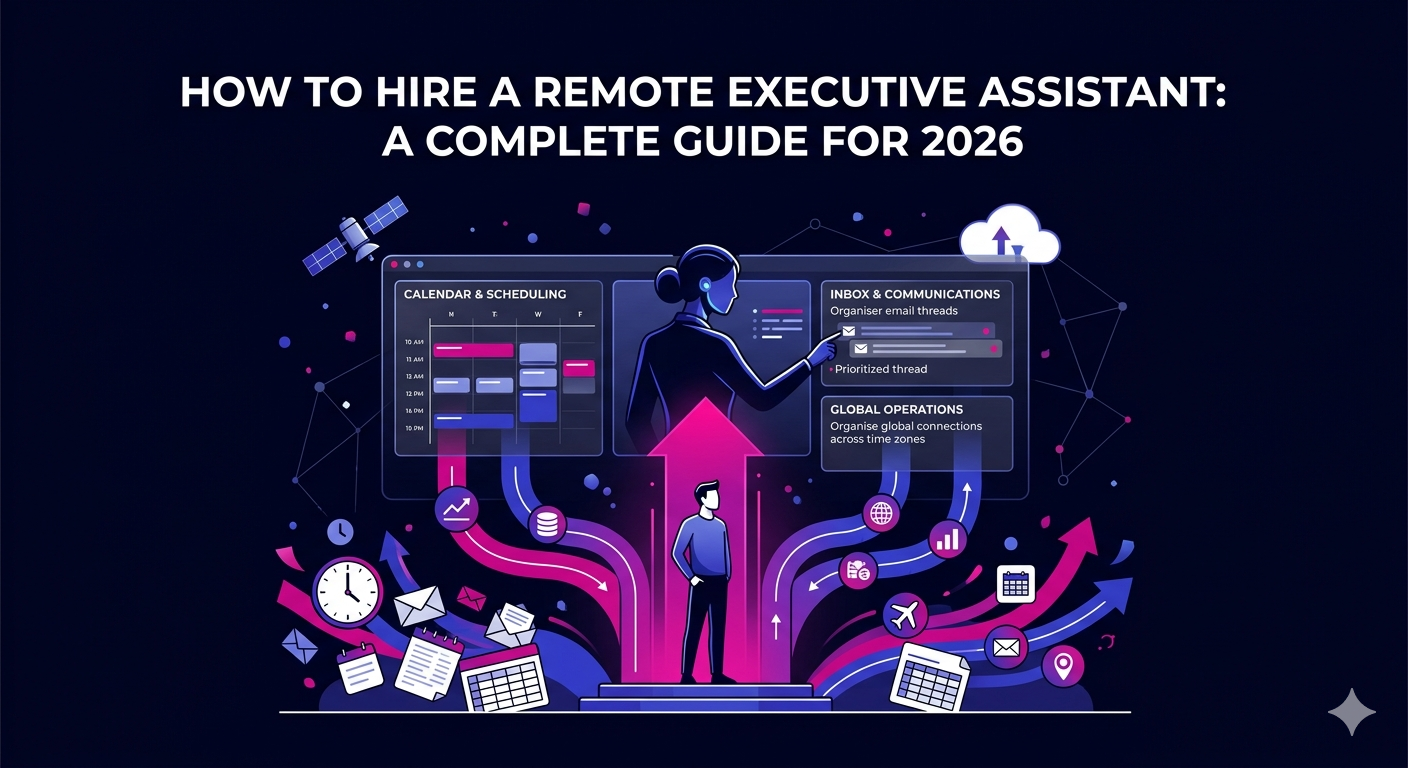
If your calendar is running you instead of the other way around, it is time to take action. Knowing how to hire a remote executive assistant is one of the most valuable skills a founder, executive, or business leader can develop in 2026. The right hire gives you back hours every week, brings order to your communications, and allows you to lead from a place of clarity rather than constant overwhelm. This guide walks you through every step of the process, from defining your needs to making a confident hire.
Why More Leaders Are Choosing to Hire Remote Executive Assistants
The shift toward remote work has made executive assistant support more accessible and more affordable than ever before. In 2026, businesses of all sizes are turning to remote EAs because they offer senior-level support without the cost and complexity of a full-time in-office hire.
Remote executive assistants bring the same skill set as their in-office counterparts, including calendar management, inbox handling, travel coordination, and stakeholder communications, but with added flexibility. You can engage them on a part-time basis, scale up as your workload grows, and access talent from a global pool rather than being limited to your local market.
The Business Case for Hiring a Remote Executive Assistant
- Executives who delegate admin tasks reclaim an average of two to four hours per day
- Remote EAs typically cost less than full-time in-office assistants when factoring in benefits, office space, and equipment
- Access to a wider talent pool means better skill matching for your specific needs
- Flexible arrangements allow you to right-size support based on your current workload
- Remote EAs are often available across time zones, supporting global operations
Step 1: Define What You Need Before You Hire
The most common mistake executives make when learning how to hire a remote executive assistant is jumping straight to job boards without first defining the role clearly. Before you post a job or contact a placement service, spend time identifying exactly what you need.
Questions to Ask Yourself Before Hiring a Remote EA
- What specific tasks are consuming the most of my time each week?
- Do I need support with calendar and scheduling, inbox management, research, or all three?
- How many hours per week do I realistically need covered?
- What tools does my team use, and does my EA need to be proficient in them?
- Do I need someone who can work specific hours, or is async support sufficient?
- Will this EA be communicating directly with clients, investors, or board members?
Answering these questions first helps you write a more targeted job description, evaluate candidates more accurately, and avoid the frustration of hiring someone who is not the right fit for your actual workflow.
Step 2: Know What Skills to Look for in a Remote Executive Assistant
Not all virtual assistants are equipped to operate at an executive level. When you hire a remote executive assistant, you are looking for a specific combination of professional skills, communication ability, and independent judgment.
Core Skills Every Remote Executive Assistant Should Have
- Advanced calendar and schedule management across multiple time zones
- Inbox management and professional email communication
- Strong written and verbal communication skills
- Proficiency in tools like Google Workspace, Microsoft Office, Slack, and Zoom
- Experience with scheduling tools such as Calendly or Cal.com
- Discretion and confidentiality with sensitive business information
- Proactive problem-solving and the ability to anticipate needs
- Attention to detail in all communications and logistics
Bonus Skills That Add Strategic Value
- Experience supporting C-suite executives or startup founders
- Familiarity with project management tools like Asana, Notion, or Monday.com
- Light research and reporting capabilities
- Travel planning and expense management experience
- Ability to manage vendor relationships and coordinate with external teams
Step 3: Decide Where to Find Remote Executive Assistant Talent
Once you know what you are looking for, the next step in hiring a remote executive assistant is deciding where to source candidates. You have several options, each with different tradeoffs in terms of cost, speed, and quality assurance.
Option 1: Use a Specialized Remote Staffing Service
Working with a vetted remote staffing service is the fastest and most reliable route for most executives. These providers pre-screen candidates, match you based on your specific requirements, and often provide ongoing account support. You skip the time-consuming process of sourcing and filtering applicants yourself and get access to proven talent quickly.
If you want to hire a remote executive assistant without the guesswork, a specialist service is worth the investment. You can explore our remote executive assistant hiring service to get matched with a vetted EA who fits your working style and business needs.
Option 2: Post on Remote Job Boards
Platforms like Remote.co, We Work Remotely, and LinkedIn are popular options for sourcing remote EA candidates directly. This approach gives you more control over the hiring process but requires significantly more time for screening, interviewing, and assessing candidates. It works best when you have a dedicated HR resource or previous hiring experience for this type of role.
Option 3: Ask Your Network
Referrals from trusted colleagues or fellow founders can surface strong candidates quickly. If someone in your professional network has worked with a remote EA they trust, a warm introduction is one of the most reliable ways to find talent. However, availability is not guaranteed, and scope expectations from a previous role may not map cleanly to yours.
Step 4: Evaluate Candidates Effectively
Knowing how to hire a remote executive assistant also means knowing how to assess candidates beyond a polished resume. The interview process should give you a clear picture of how a candidate communicates, handles ambiguity, and operates independently.
What to Cover in Your Remote EA Interview
- Ask about their experience supporting executives and the types of tasks they have owned
- Present a real scheduling scenario and ask how they would handle it
- Assess their written communication through a brief email drafting exercise
- Ask how they prioritize competing requests under pressure
- Discuss the tools they use and their comfort level with your specific stack
- Test their attention to detail with a short practical task relevant to your workflow
According to SHRM’s guidance on how to hire a virtual or remote executive assistant effectively, structured interviews with task-based assessments are consistently more predictive of on-the-job performance than unstructured conversations alone. Build that structure into your process before you start meeting candidates.
Step 5: Onboard Your Remote Executive Assistant for Success
A strong hire can still underperform without a thoughtful onboarding process. Once you have completed your hire, set your new remote EA up for success from their first week.
Onboarding Essentials for a Remote Executive Assistant
- Create a preferences document covering your working hours, communication style, and scheduling rules
- Grant access to the tools and accounts they need from day one
- Walk them through your calendar structure and explain your priorities
- Start with a defined set of tasks before expanding their responsibilities
- Schedule brief daily check-ins for the first two weeks to address questions quickly
- Provide clear examples of past work or templates they can reference
The faster your EA understands your preferences and your workflow, the sooner they start adding real value. Most experienced remote EAs are fully productive within two to three weeks when onboarding is structured well.
Common Mistakes to Avoid When Hiring a Remote Executive Assistant
Even well-intentioned executives make avoidable mistakes when hiring remote EA support for the first time. Watch out for these common pitfalls.
- Hiring before defining the role, which leads to mismatched expectations on both sides
- Prioritizing the lowest cost over quality, which often results in a costly rehire process
- Skipping practical assessments in favor of interviews alone
- Failing to communicate preferences clearly during onboarding
- Not building in a structured feedback loop for the first 30 to 60 days
Frequently Asked Questions About How to Hire a Remote Executive Assistant
How long does it take to hire a remote executive assistant?
When you know how to hire a remote executive assistant through a specialist staffing service, the process can take as little as a few business days. Going direct through job boards typically takes two to four weeks when you factor in sourcing, screening, and interviewing. Define your requirements clearly in advance to shorten the timeline regardless of which route you choose.
What is the difference between a virtual assistant and a remote executive assistant?
When deciding how to hire a remote executive assistant versus a general VA, the key distinction is skill level and scope. A virtual assistant typically handles routine tasks like data entry, scheduling, and basic admin. A remote executive assistant operates at a higher level, managing sensitive communications, exercising independent judgment, and often interfacing directly with clients, investors, and senior stakeholders on your behalf.
How much does it cost to hire a remote executive assistant?
The cost to hire a remote executive assistant depends on their experience, location, and the number of hours you need. Remote EAs are generally more cost-effective than full-time in-office hires when you factor out benefits, office expenses, and equipment. Part-time or fractional arrangements are a common starting point for executives who want to test the relationship before committing to a full-time engagement.
What tools should a remote executive assistant be proficient in?
When you hire a remote executive assistant, look for proficiency in the tools your team already uses. At a minimum, most remote EAs should be comfortable with Google Calendar or Outlook, a video conferencing platform like Zoom or Google Meet, and a communication tool like Slack or email. Familiarity with scheduling automation tools like Calendly and project management platforms like Asana or Notion is a strong additional asset.
How do I manage a remote executive assistant effectively after hiring?
Managing a remote executive assistant well starts with clear communication during onboarding and consistent feedback in the early weeks. Set expectations in writing, share a preferences document, and schedule brief regular check-ins until the relationship is well established. As trust builds, most remote EAs operate with significant autonomy, which is exactly what makes the arrangement so valuable for busy executives.
Can I hire a remote executive assistant on a part-time basis?
Yes, and for many executives this is the ideal starting point. Knowing how to hire a remote executive assistant on a flexible or part-time basis means you can access high-quality support without the overhead of a full-time hire. Most specialist staffing services offer part-time arrangements, and you can scale hours up as your workload and confidence in the relationship grow.
Start Delegating and Start Leading
Now that you know how to hire a remote executive assistant, the next step is acting on it. The executives who thrive in 2026 are not the ones doing everything themselves. They are the ones who have built the right support around them so they can focus on the decisions, relationships, and strategies that only they can drive.
A remote EA is not a cost. It is a strategic investment in your own capacity and your company’s growth.
Ready to make the hire? Explore our remote executive assistant placement service and get matched with a vetted professional who is ready to take ownership of your calendar, inbox, and admin from day one.