
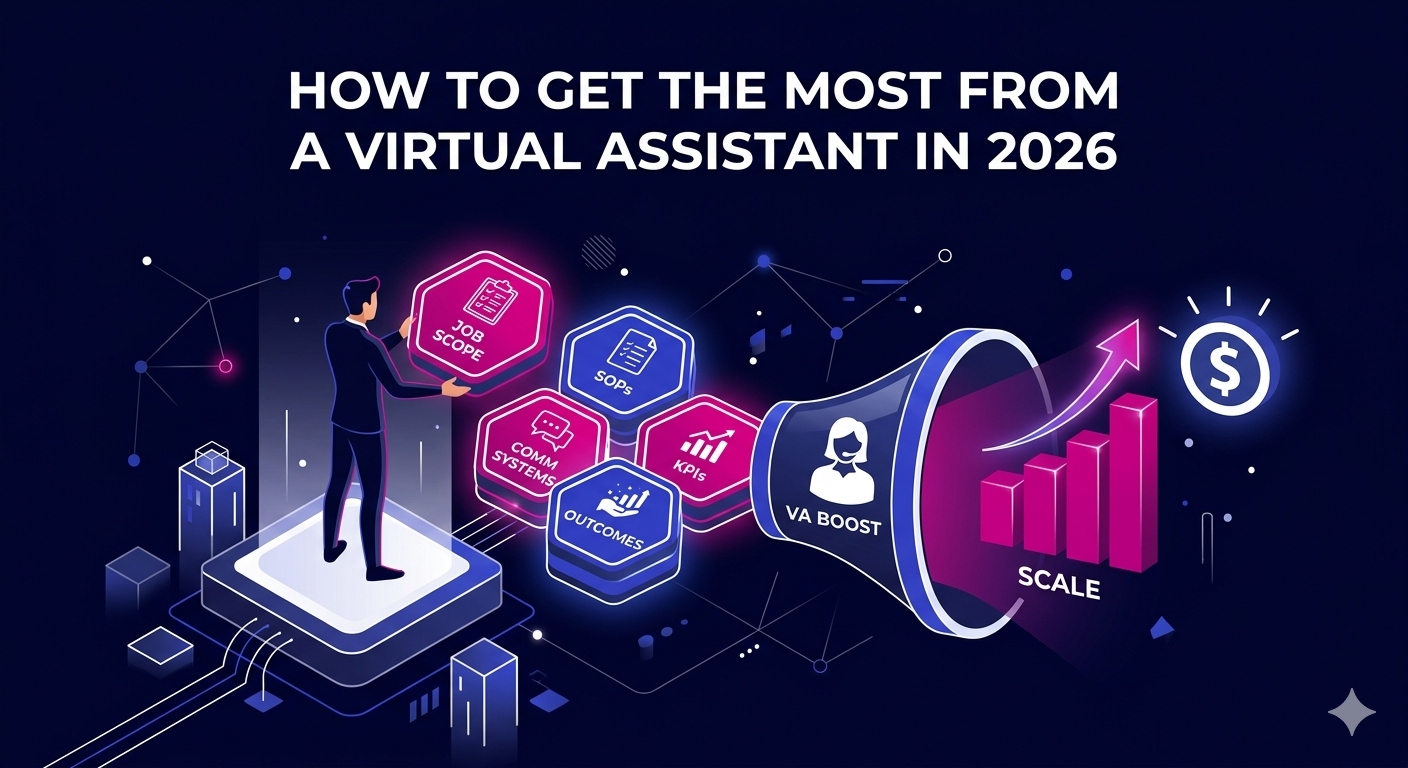
Hiring a virtual assistant is one of the smartest moves a business owner can make in 2026. But hiring one and actually getting the most from a virtual assistant are two very different things. Too many entrepreneurs bring on a VA, hand over a loose list of tasks, and then wonder why results fall short of expectations.
The truth is, a virtual assistant is only as effective as the systems, communication, and clarity you put in place. When you build the right framework, a skilled VA can save you 15 to 20 hours per week, help you scale operations, and let you focus on the work that actually grows revenue.
This guide walks you through exactly how to get the most from a virtual assistant, from the first day onboarding to long-term performance management.
Start With Role Clarity Before Anything Else
The biggest mistake business owners make is hiring a virtual assistant before they know what they need. Before your VA starts, take time to define the role in precise terms.
Write a Detailed Job Scope Document
A job scope document is not a job description. It is a living reference that outlines every recurring task, tool used, deadline, and expected output. Your VA should be able to open this document on day one and understand exactly what success looks like.
Include the following:
- Daily, weekly, and monthly tasks with clear deadlines
- Tools and platforms they will use (CRM, calendar, project management)
- Communication expectations (response times, check-in frequency)
- Output standards and quality benchmarks
- Escalation process for problems or blockers
Define Outcomes, Not Just Activities
Rather than assigning tasks like “manage inbox,” assign outcomes like “inbox response time under 4 hours, with all leads flagged in CRM by end of day.” Outcome-based delegation gives your VA the freedom to work efficiently while keeping you aligned on results.
Build a Solid Onboarding Process
Getting the most from a virtual assistant starts long before they complete their first task. A structured onboarding process sets the tone for the entire working relationship.
Create a Shared Knowledge Base
A knowledge base is a central location where your VA can find answers without interrupting you. Use tools like Notion, Google Drive, or Confluence to store:
- Brand guidelines and tone of voice documents
- Standard operating procedures (SOPs) for key tasks
- Login credentials via a secure password manager
- Frequently asked questions and common scenarios
- Contact lists and vendor information
Run a 30-Day Ramp-Up Plan
Do not expect full productivity on day one. A 30-day ramp-up plan eases your VA into the role and gives both parties time to identify gaps.
- Week 1: Orientation, access setup, shadowing existing workflows
- Week 2: Handling low-stakes tasks with close feedback loops
- Week 3: Taking ownership of core recurring tasks
- Week 4: Full task ownership with a performance check-in
If you are looking to work with pre-vetted remote professionals who hit the ground running, explore the virtual assistant services at The Remote Reps, where talent is matched to your specific business needs.
Set Up the Right Communication Systems
Communication is where most VA relationships break down. Getting the most from a virtual assistant means creating clear channels so nothing falls through the cracks.
Choose the Right Tools
Align on a communication stack early. Avoid scattering conversations across email, WhatsApp, Slack, and text. Pick two tools maximum:
- Async updates: Slack, Teams, or Loom for recorded video updates
- Task tracking: Asana, ClickUp, or Trello for visibility on workload
- Video calls: Zoom or Google Meet for weekly check-ins
Establish a Weekly Check-In Rhythm
A 20 to 30 minute weekly call does more for VA performance than any other single habit. Use this time to:
- Review what was completed the prior week
- Prioritize the upcoming week’s workload
- Address blockers or unclear instructions
- Give direct, constructive feedback
Consistency in check-ins builds trust, improves output quality, and gives your VA the confidence to take on more responsibility over time.
Delegate Strategically to Maximize Output
Many business owners delegate the tasks they dislike rather than the tasks that create the most leverage. To truly get the most from a virtual assistant, think strategically about what to offload.
Prioritize High-Frequency, Low-Complexity Tasks First
Start by delegating tasks that are repetitive and time-consuming. These are easy to document, easy to hand off, and instantly free up your calendar. Examples include:
- Email filtering, sorting, and drafting responses
- Calendar management and meeting scheduling
- Data entry and CRM updates
- Travel research and booking
- Invoice tracking and follow-ups
Graduate to Higher-Value Work Over Time
Once your VA has demonstrated reliability with routine tasks, begin handing over more complex responsibilities. These might include research projects, report preparation, social media coordination, or customer communication workflows. A skilled VA can grow into a strategic partner when given the right development path.
According to Harvard Business Review’s research on effective delegation, leaders who delegate more high-value work to capable team members consistently outperform those who try to manage everything themselves.
Provide Consistent Feedback and Recognition
A virtual assistant working remotely is not getting the ambient feedback that comes from being in an office. If you want your VA to improve and stay engaged, feedback has to be intentional.
Normalize Constructive Feedback Early
Set the expectation from week one that feedback is a regular part of the workflow, not a sign of dissatisfaction. Use specific examples rather than vague impressions. Instead of “this report was not great,” say “the report was missing the revenue breakdown by region, which was in last month’s version.”
Acknowledge Good Work Regularly
Remote workers often feel disconnected from the impact of their contributions. Taking 30 seconds to say “great job catching that error in the spreadsheet” builds loyalty, increases motivation, and reduces turnover. A VA who feels valued performs at a higher level consistently.
Measure Performance With Simple Metrics
You cannot manage what you do not measure. Getting the most from a virtual assistant means tracking a small set of meaningful metrics rather than obsessing over every detail.
Track These Key Performance Indicators
- Task completion rate: What percentage of assigned tasks are completed on time?
- Error rate: How often do tasks need to be revised or corrected?
- Response time: Are communications being handled within agreed timeframes?
- Output volume: Are productivity levels meeting expectations week over week?
Review these metrics monthly and use them as the basis for performance conversations. Pair metrics with context because a high revision rate in week one is normal, while the same rate in month six signals a training gap.
Scale the Relationship Over Time
The businesses that extract the most value from virtual assistants treat the relationship as long-term. Rather than churning through VAs, they invest in a core group and grow capabilities over time.
As your VA builds familiarity with your business, they become faster, more accurate, and more proactive. They start to anticipate your needs, flag problems before they escalate, and suggest improvements to existing workflows. That level of value only comes from a stable, invested working relationship.
If you are ready to build that kind of team, The Remote Reps connects businesses with elite remote talent across a wide range of specializations.
Frequently Asked Questions: How to Get the Most from a Virtual Assistant
How do I get the most from a virtual assistant from day one?
To get the most from a virtual assistant from day one, prepare a detailed job scope document, set up a shared knowledge base, and complete a structured onboarding plan. The more clarity you provide upfront, the faster your VA can deliver results without constant supervision.
What tasks should I delegate to get the most from a virtual assistant?
Start by delegating high-frequency, low-complexity tasks like email management, scheduling, data entry, and research. Once your VA proves reliable, hand over more complex projects. Strategic delegation is the key to getting the most from a virtual assistant over the long term.
How often should I communicate with my VA to get the most from a virtual assistant?
A weekly 20 to 30 minute video check-in, combined with daily async updates via Slack or a task management tool, is the most effective rhythm. Consistent communication is essential if you want to get the most from a virtual assistant without micromanaging.
How do I measure whether I am getting the most from a virtual assistant?
Track four core metrics: task completion rate, error rate, response time, and output volume. Review these monthly and hold performance conversations based on data rather than impression. Measurement is what turns a good VA relationship into an exceptional one.
Can I get the most from a virtual assistant for specialized tasks like marketing or customer support?
Yes. Many virtual assistants specialize in areas like SEO, social media, lead generation, or customer support. Matching the right skill set to your needs is the foundation of getting the most from a virtual assistant. Platforms like The Remote Reps offer specialists across dozens of categories including customer support and digital marketing.
How long does it take to start getting the most from a virtual assistant?
Most businesses see strong results within 60 to 90 days when they follow a structured onboarding plan and maintain consistent feedback. The ramp-up period is normal, and getting the most from a virtual assistant is a process that compounds the longer the relationship continues.