In 2026, staying visible on social media is not optional for any business that wants to grow. But managing multiple platforms, maintaining a consistent posting schedule, and engaging with audiences daily is a full-time job. That is exactly why more businesses are turning to a remote social media scheduler and manager to handle it all. This role combines strategic content planning with hands-on execution, and when done right, it delivers measurable results without the overhead of an in-house hire.
This guide breaks down what a remote social media scheduler and manager actually does, why the role matters more than ever, how to find the right person, and what to expect from the engagement.
What Is a Remote Social Media Scheduler and Manager?
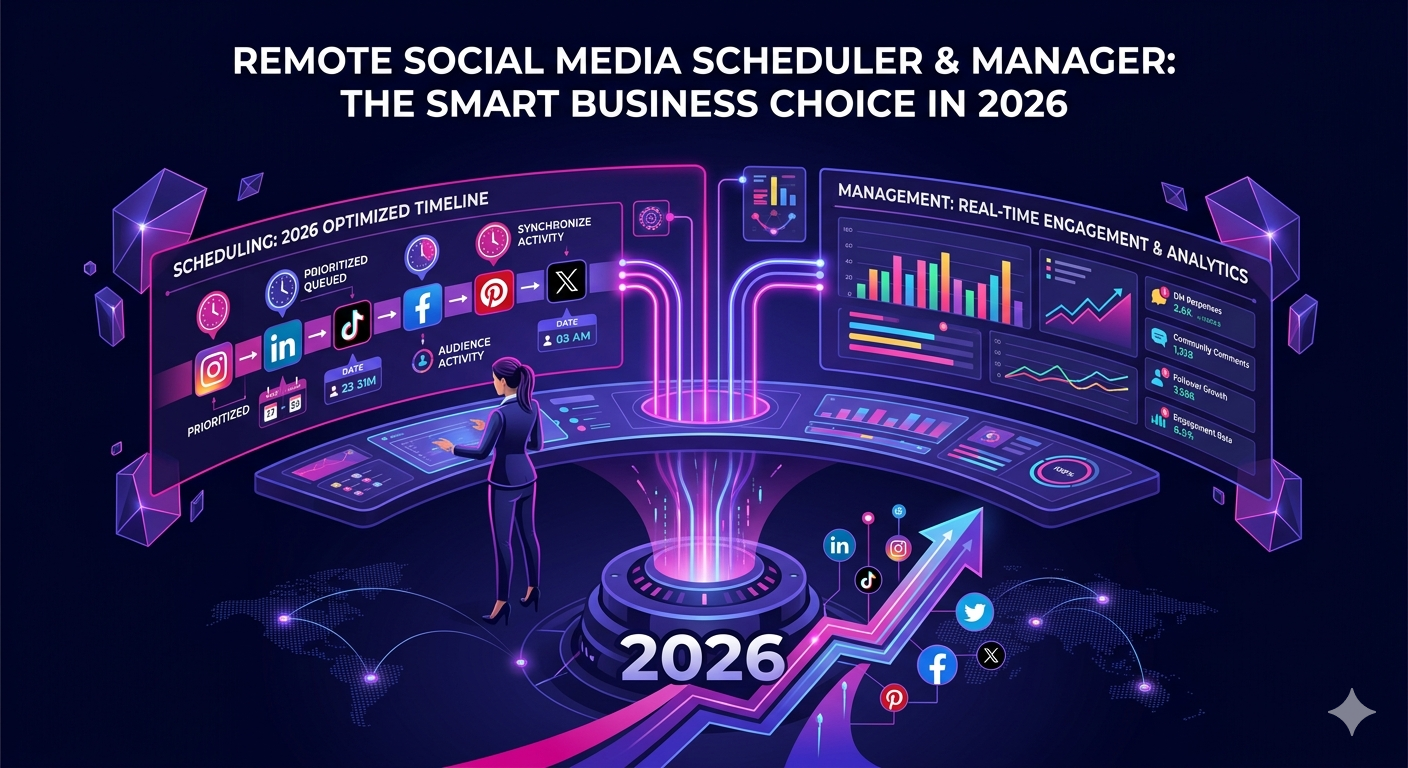
A remote social media scheduler and manager is a digital marketing professional who works off-site to plan, create, schedule, publish, and monitor content across your brand’s social media channels. Unlike a generalist virtual assistant, this role is specifically focused on social platforms such as Instagram, LinkedIn, TikTok, Facebook, Pinterest, and X.
The role typically covers two interconnected functions:
- Scheduling: Using tools like Buffer, Hootsuite, Later, or Sprout Social to queue content in advance, maintain a consistent posting cadence, and ensure optimal publish times based on audience behavior data.
- Management: Actively monitoring comments, responding to messages, tracking performance metrics, refining strategy based on analytics, and keeping your brand voice consistent across all channels.
Together, these functions ensure your social media presence stays active, strategic, and aligned with your broader marketing goals, regardless of what is happening internally in your business.
Why Businesses Are Hiring Remote Social Media Managers in 2026
The shift toward remote work has accelerated talent access for businesses of all sizes. You no longer need to be located in a major metro area to hire top-tier social media talent. A skilled remote social media scheduler and manager can work from anywhere in the world while delivering consistent, high-quality output on a schedule that works for your business.
The Business Case for Going Remote
Here is why the remote model makes sense for this specific role:
- Lower cost: Remote professionals, particularly those based in regions with lower costs of living, offer competitive rates without sacrificing quality. Businesses can save 40 to 60 percent compared to hiring locally in-house.
- Around-the-clock coverage: A remote manager in a different time zone can schedule and publish content during hours when your local team is offline, which is especially valuable for global brands.
- Specialized expertise: Remote hiring opens your candidate pool dramatically. You can find someone with deep experience in your specific industry, niche, or preferred platforms.
- Flexibility to scale: As your content needs grow, you can expand the scope of work without the friction of renegotiating an employment contract.
- No office overhead: Remote workers require no physical workspace, equipment procurement, or benefits packages that inflate the cost of traditional employment.
Core Responsibilities of a Remote Social Media Scheduler and Manager
Understanding the full scope of this role helps you hire the right person and set realistic expectations from day one.
Content Calendar Development
A skilled remote social media manager builds and maintains a monthly content calendar that maps out every post, story, reel, and campaign in advance. This prevents last-minute scrambling and ensures your content strategy is intentional rather than reactive.
Content Creation and Curation
While some businesses provide content assets, a strong remote social media scheduler and manager can also create original graphics using tools like Canva or Adobe Express, write compelling captions, and source relevant third-party content to keep feeds varied and engaging.
Scheduling and Publishing
Using professional scheduling tools, your remote manager queues posts at optimal times based on your audience’s activity patterns. This eliminates the need for anyone on your internal team to log in daily and hit publish manually.
Community Engagement
Social media is a two-way channel. Your remote manager responds to comments and direct messages, engages with relevant accounts in your industry, and flags any brand mentions that require a direct response from your team. This kind of active community management builds loyalty and trust over time.
Performance Tracking and Reporting
A results-driven remote social media manager tracks key performance indicators including reach, impressions, engagement rate, follower growth, link clicks, and conversions. They deliver regular reports and use that data to adjust the strategy month over month.
Trend Monitoring
Social media moves fast. A dedicated remote scheduler and manager stays on top of platform algorithm changes, emerging content formats, trending audio, hashtag performance, and competitor activity so your brand never falls behind.
Tools a Remote Social Media Scheduler and Manager Uses Daily
Familiarity with the right tools is a strong indicator of a professional remote social media manager. Here are the platforms they should know in 2026:
- Scheduling tools: Buffer, Hootsuite, Later, Sprout Social, Publer
- Design tools: Canva, Adobe Express, CapCut (for video)
- Analytics platforms: Native analytics on each platform, Google Analytics 4, Sprout Social reports
- Project management: Trello, Asana, Notion, ClickUp
- Communication: Slack, Zoom, Google Meet
When interviewing candidates, ask them to walk you through their typical workflow using these tools. Their answer tells you a great deal about their level of experience and professionalism.
How to Find and Hire a Remote Social Media Scheduler and Manager
The hiring process for a remote social media role does not have to be complicated, but it does require a clear approach to avoid common pitfalls.
Step 1: Define the Scope Clearly
Before you post a job, document exactly what you need. How many platforms? How many posts per week? Does the role include content creation, or will you provide assets? Is community management included? A clear scope attracts the right applicants and prevents misaligned expectations later.
Step 2: Look for Platform-Specific Experience
A remote social media manager who specializes in LinkedIn B2B content has a different skill set than one who excels at TikTok or Instagram. Match the candidate’s background to your primary platform priorities.
Step 3: Review Portfolios and Case Studies
Ask for samples of content calendars, examples of past posts, and data on results they have delivered. Engagement rate improvements, follower growth percentages, and campaign outcomes are the metrics that matter most.
Step 4: Test for Brand Voice Adaptability
Give shortlisted candidates a short paid test task: write five captions for your brand based on a brief you provide. This is the fastest way to assess whether they can adapt to your voice and tone before committing to a longer engagement.
Step 5: Use a Trusted Remote Staffing Partner
The most efficient way to hire is through a platform that has already vetted candidates for you. Rather than spending weeks sifting through applications, you can work with a specialized remote staffing service that pre-screens talent based on your criteria.
If you are ready to find a qualified professional, connect with an experienced remote social media scheduler and manager who is matched to your business goals and ready to deliver results from day one.
What to Expect in the First 90 Days
Setting realistic expectations helps both you and your remote manager succeed. Here is a general timeline:
- Days 1 to 14: Onboarding, brand guidelines review, account access setup, and content calendar planning for the first month.
- Days 15 to 30: First full month of scheduled content goes live. Engagement monitoring begins and initial performance data is collected.
- Days 31 to 60: Strategy refinements based on early data. Testing of different content formats, posting times, and caption styles.
- Days 61 to 90: A clearer performance picture emerges. Most businesses see measurable improvements in consistency, engagement rate, and audience growth by this point.
For more context on how businesses are structuring remote digital marketing roles in 2026, industry research on social media management best practices provides data-backed perspective on what high-performing teams look like today.
Red Flags to Watch for When Hiring a Remote Social Media Manager
Not every applicant who claims social media expertise will deliver results. Watch for these warning signs during the hiring process:
- No portfolio or vague examples with no performance data attached
- Inability to explain what metrics they track and why
- Unfamiliarity with scheduling tools commonly used in 2026
- Poor written communication skills in their initial outreach or interview
- Promising rapid follower growth without a clear strategy behind it
- No questions about your brand, audience, or goals during the interview
A genuine professional will ask thoughtful questions before proposing solutions. That curiosity is a strong signal of competence.
Frequently Asked Questions
What does a remote social media scheduler and manager do on a daily basis?
A remote social media scheduler and manager typically spends their day reviewing scheduled content, responding to community engagement, monitoring analytics, creating new content assets, and staying current on platform trends. The exact daily tasks depend on the scope agreed upon during onboarding, but consistency and proactive communication are always central to the role.
How is a remote social media scheduler and manager different from a virtual assistant?
While a virtual assistant may handle a broad range of administrative tasks, a remote social media scheduler and manager is a specialist focused entirely on social platforms. They bring strategic thinking, platform expertise, content creation skills, and data analysis capabilities that go well beyond general administrative support.
What tools should a remote social media scheduler and manager know in 2026?
In 2026, a competent remote social media scheduler and manager should be proficient with scheduling platforms like Buffer, Later, or Hootsuite, design tools like Canva, analytics dashboards including Google Analytics 4 and native platform insights, and project management tools such as Notion or Asana for workflow coordination.
How much does it cost to hire a remote social media scheduler and manager?
Costs vary based on experience, scope, and location. In 2026, most businesses pay between $800 and $2,500 per month for a skilled remote social media scheduler and manager handling two to four platforms. Hiring through a specialized remote staffing agency typically provides better value than sourcing independently because vetting is handled for you.
How do I maintain brand control when working with a remote social media scheduler and manager?
Maintaining brand control is straightforward when you establish clear brand guidelines upfront, implement a content approval workflow, and hold regular check-ins to review performance and provide feedback. Most professional remote social media managers will ask for a brand brief before they begin and will submit content for approval before publishing.
How quickly will I see results from a remote social media scheduler and manager?
Most businesses working with a dedicated remote social media scheduler and manager begin to see improvements in posting consistency and engagement within the first 30 days. More significant results such as follower growth, increased reach, and lead generation typically materialize between 60 and 90 days as the strategy is refined based on real performance data.
Final Thoughts
A remote social media scheduler and manager is not a luxury in 2026. For any business that is serious about building a consistent, high-performing social presence, it is a practical and cost-effective investment. The right professional brings specialized skills, a structured workflow, and a results-driven mindset that transforms your social channels from an afterthought into a genuine growth engine.
Whether you are starting from scratch or looking to replace an inconsistent in-house effort, now is the right time to make the move. Find your ideal remote social media partner and start building the brand presence your business deserves.