
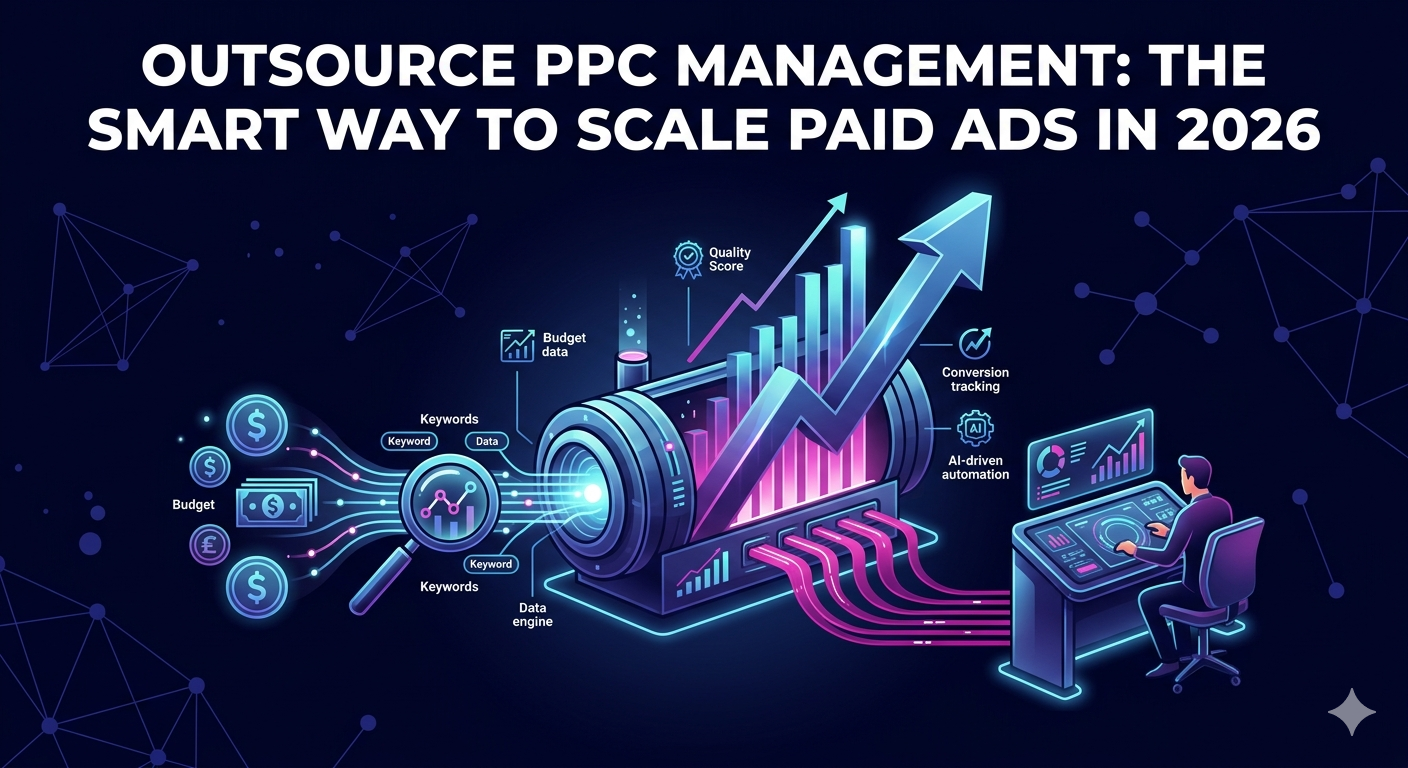
If your pay-per-click campaigns are eating through budget without delivering consistent returns, the problem is rarely the platform. More often, it is the absence of a dedicated expert managing your campaigns with precision and strategy. Businesses that outsource PPC management gain access to specialist-level talent without the cost of a full-time in-house hire, and the results speak for themselves. This guide breaks down everything you need to know before making the move.
What Does It Mean to Outsource PPC Management?
When you outsource PPC management, you hand responsibility for your paid search and paid social campaigns to an external specialist or team. This could be a freelance PPC expert, a dedicated remote professional, or a specialized agency. The outsourced manager handles all aspects of campaign strategy, execution, optimization, and reporting on your behalf.
Platforms commonly covered under outsourced PPC management include Google Ads, Microsoft Ads, Meta Ads, LinkedIn Ads, and YouTube Ads. The scope depends entirely on where your target audience spends their time and where your ad budget is allocated.
What an Outsourced PPC Manager Handles
- Keyword research, match type selection, and negative keyword management
- Campaign architecture across Search, Display, Shopping, and Performance Max
- Ad copywriting and creative briefing for responsive and expanded ads
- Bid strategy selection and budget allocation across campaigns
- Audience targeting, remarketing lists, and customer match setup
- Conversion tracking via Google Tag Manager and Google Analytics 4
- Regular A/B testing of ad copy, landing pages, and audience segments
- Weekly or monthly performance reporting with clear KPI tracking
Why More Businesses Are Choosing to Outsource PPC in 2026
The paid advertising landscape has become significantly more complex over the past few years. Automation features, AI-driven bidding, privacy restrictions, and shifting match type behaviors mean that managing PPC effectively requires full-time attention and continuous learning. Most business owners and internal marketing generalists simply do not have the bandwidth to keep up.
Outsourcing solves this problem directly. You bring in someone whose entire focus is paid media, and your campaigns benefit from that concentrated expertise every single day.
The Core Business Benefits
- Lower overhead: You avoid the salary, benefits, and training costs tied to a full-time PPC hire.
- Faster results: Experienced specialists hit the ground running rather than spending months learning the basics.
- Scalability: You can increase or reduce scope based on seasonal demand and budget shifts.
- Reduced wasted spend: Expert account structure and negative keyword management alone can cut wasted ad spend by 20 to 40 percent in the first 90 days.
- Accountability: Outsourced managers are judged by results, creating a performance-driven relationship from day one.
- Access to broader skill sets: A specialist who manages multiple accounts across industries brings pattern recognition that in-house hires rarely develop as quickly.
When Is the Right Time to Outsource PPC Management?
Not every business is at the same stage of readiness. Here are the clearest signals that it is time to bring in outside help for your PPC campaigns.
Signs You Should Outsource PPC Now
- Your cost per acquisition has been rising month over month with no clear explanation
- Campaigns have been running on default settings for months without structured testing
- You are spending more than $3,000 per month on ads but have no dedicated manager
- Your internal team is stretched thin and PPC optimization keeps getting deprioritized
- You are launching into a new market or channel and need someone who already knows the terrain
- Conversion tracking is broken or inconsistent, making it impossible to accurately measure ROI
Any one of these situations is a strong enough reason to act. Multiple signals together make the case even more urgent.
How to Evaluate and Hire an Outsourced PPC Manager
The quality of candidates in the outsourced PPC space varies enormously. Knowing what to look for during the hiring process will save you months of frustration and wasted budget.
Qualifications to Look For
- Google Ads certifications (Search, Display, Shopping, Video)
- Proven track record managing accounts with budgets similar to yours
- Demonstrable results: lower CPAs, higher ROAS, or improved Quality Scores
- Experience with your specific industry or business model
- Proficiency with analytics tools including GA4, Looker Studio, and Tag Manager
Questions to Ask Before You Hire
- What is the largest monthly budget you have managed, and what were the results?
- How do you approach a new account in the first 30 days?
- How do you handle a campaign that is not converting after two weeks of testing?
- What does your reporting process look like, and how often will we meet?
- How do you stay current with Google Ads platform updates and policy changes?
If you want to skip the screening process entirely, working with a specialist talent platform is a far more efficient path. The Remote Reps connects businesses with vetted remote PPC experts who have been pre-screened for both technical skills and client communication ability, so you spend less time interviewing and more time growing.
Outsource PPC Management vs. Hiring a PPC Agency
This is one of the most common questions businesses ask before making a decision. Both options have merit, but they serve different situations.
Dedicated Outsourced Specialist
- One person focused entirely on your account
- Direct communication with the person doing the actual work
- Lower cost than most agency retainers for comparable ad budgets
- More flexibility in scope and hours
- Easier to build a long-term working relationship
PPC Agency
- Team-based approach that may benefit large, complex accounts
- Built-in redundancy if a team member leaves
- Often assigns junior staff to smaller accounts
- Higher retainer fees with less direct accountability
- Longer onboarding and communication chains
For most small to mid-sized businesses spending between $3,000 and $50,000 per month on paid ads, outsourcing to a dedicated remote PPC specialist delivers better value than a traditional agency arrangement.
What to Expect in Terms of Pricing
The cost to outsource PPC management depends on the specialist’s experience level, the number of platforms managed, and the overall complexity of your account. Here are typical 2026 market ranges:
- Junior specialist (1 to 2 years): $600 to $1,500 per month
- Mid-level specialist (3 to 5 years): $1,800 to $3,500 per month
- Senior specialist (5 or more years with proven results): $4,000 to $7,000 per month
- Performance-based models: A flat base retainer plus a percentage of revenue or ad spend is increasingly common in 2026
It is also worth considering what you stand to gain. A specialist who reduces your cost per lead by 35 percent on a $10,000 monthly budget delivers $3,500 in monthly savings, which more than covers their fee.
Outsourcing PPC Alongside Other Digital Channels
PPC rarely operates in isolation. The most effective digital marketing strategies integrate paid search with SEO, paid social, and conversion rate optimization. If you are scaling multiple channels simultaneously, you may also want to explore working with a broader remote digital marketing specialist from The Remote Reps who can help coordinate strategy across channels.
For businesses running advertising across the open web, programmatic, or connected TV, pairing your outsourced PPC manager with a dedicated remote media buyer creates even stronger coverage across your full paid media mix.
You can also learn more about Google’s own best practices for paid search by reviewing Google’s official guide to outsourcing and managing PPC campaigns effectively, which outlines platform-level standards your outsourced manager should be meeting.
FAQ Section
What exactly happens when I outsource PPC management?
When you outsource PPC management, an external specialist takes over the planning, setup, optimization, and reporting for your paid advertising campaigns. You retain ownership of your ad accounts while the specialist handles day-to-day management, testing, and strategic decisions. You typically meet for check-ins weekly or biweekly to review performance and align on priorities.
How long does it take to see results after I outsource PPC management?
Most businesses see measurable improvements within 30 to 60 days of outsourcing PPC management to a qualified specialist. The first month is typically focused on auditing the existing account, fixing structural issues, and establishing clean conversion tracking. Meaningful performance gains usually become visible by the end of month two or three, depending on budget size and historical data available.
Is it risky to outsource PPC management to someone outside my company?
The risk is low when you take the right precautions. Always retain admin access to your ad accounts and never hand over billing ownership. Grant the outsourced PPC manager access at the user or standard admin level only. Work with specialists sourced through reputable talent platforms where candidates have been vetted, and use a written agreement that clearly outlines deliverables, reporting frequency, and notice periods.
Can I outsource PPC management for multiple platforms at once?
Yes. Many specialists who handle outsourced PPC management are proficient across Google Ads, Microsoft Ads, and Meta Ads simultaneously. For businesses running very large budgets across five or more platforms, it may make sense to hire separate specialists for search and paid social to ensure each channel receives dedicated attention. Discuss platform coverage during the hiring process to make sure expectations are aligned.
How do I measure success after I outsource PPC management?
The primary metrics to track when you outsource PPC management are cost per acquisition, return on ad spend, conversion rate, and click-through rate. Your outsourced manager should provide regular reports that clearly show trends across these metrics over time. Improvement does not always mean every metric moves in the right direction immediately, but you should see a clear positive trajectory within the first 90 days.