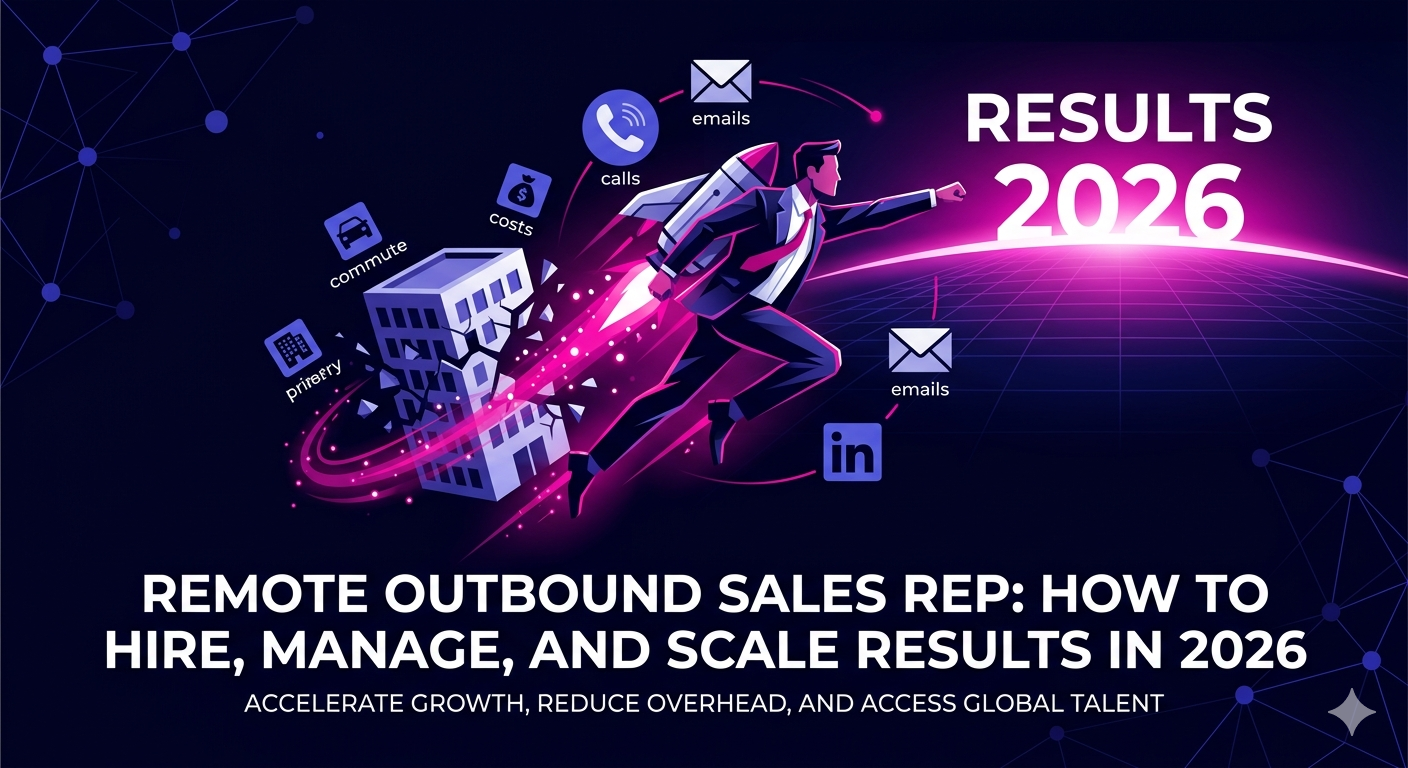
The way businesses build sales teams has shifted permanently. In 2026, companies of every size are choosing to hire a remote outbound sales rep instead of building a costly in-office team. The results speak for themselves: faster ramp times, access to global talent, and leaner cost structures that free up budget for growth.
Whether you are a founder trying to build your first pipeline or a sales leader looking to expand capacity without adding overhead, this guide covers everything you need to know about working with a remote outbound sales rep effectively.
What Does a Remote Outbound Sales Rep Actually Do?
A remote outbound sales rep is a sales professional who works outside your physical office and focuses entirely on generating new business through proactive outreach. Unlike inbound roles that wait for leads to arrive, outbound reps go out and find them.
Their daily work typically includes:
- Building and managing targeted prospect lists
- Cold calling, cold emailing, and LinkedIn outreach
- Qualifying leads against your ideal customer profile
- Booking discovery calls or demos for your closing team
- Updating your CRM and tracking outreach activity
- Following up with prospects across multiple touchpoints
The remote element does not change what they do. It changes where and how they work, and in most cases, it makes them more productive because they eliminate commute time, work in focused environments, and have access to modern sales tools built for distributed teams.
Why Companies Are Choosing Remote Outbound Sales Reps in 2026
The shift toward remote outbound sales talent has accelerated for practical reasons. Here is why businesses are making the move and not looking back.
Lower Cost Without Lower Quality
Hiring a full-time, in-office outbound sales rep in a major city can cost between $70,000 and $100,000 per year when you include salary, benefits, office overhead, and equipment. A skilled remote outbound sales rep operating from a different region or country can deliver comparable or better output at a fraction of that cost. Many companies are reallocating those savings directly into their tech stack and marketing budget.
Access to a Larger Talent Pool
When geography is no longer a constraint, you can hire the best person for the role rather than the best person within a 30-mile radius. In 2026, some of the most talented outbound sales professionals are based in markets where the cost of living is lower, which benefits both sides of the arrangement.
Flexibility and Scalability
Remote outbound reps can be engaged on a full-time, part-time, or contract basis. This flexibility allows you to scale your outbound capacity in response to growth targets, seasonal demand, or market expansion without being locked into long-term employment commitments.
Faster Time to Pipeline
Because remote outbound reps are specialists, they typically ramp faster than generalist hires. They arrive with established prospecting habits, familiarity with outbound tools, and a clear understanding of what drives meetings booked.
Key Skills to Look for in a Remote Outbound Sales Rep
Not every salesperson excels in an outbound role, and not every outbound rep thrives in a remote environment. The right hire combines both skill sets effectively.
Strong Outbound Fundamentals
- Experience writing and optimizing cold email sequences
- Comfort with cold calling and handling objections confidently
- Understanding of how to build a targeted prospect list
- Familiarity with sales engagement platforms like Outreach, Apollo, or Salesloft
Remote Work Discipline
- Proven track record of hitting activity and pipeline targets remotely
- Strong written communication skills for async team updates
- Comfort using collaboration tools like Slack, Zoom, and CRM dashboards
- Self-motivated with minimal need for micromanagement
Coachability and Process Orientation
The best remote outbound reps are not just hard workers. They follow processes, document their activity accurately, and respond well to coaching. This is especially important when you cannot observe their work in real time. Look for candidates who can articulate their methodology clearly and who ask smart questions during the interview process.
How to Onboard a Remote Outbound Sales Rep for Fast Results
Onboarding a remote outbound sales rep effectively is one of the most important factors in getting a strong return on your investment. A poor onboarding experience leads to slow ramp times and high early turnover.
Week One: Foundation
Focus the first week entirely on product knowledge, your ideal customer profile, and your messaging framework. Provide written resources they can reference independently. Set up all tools and CRM access before day one so there is no wasted time on logistics.
Week Two: Shadowing and Practice
Have your new rep shadow existing calls, review past winning sequences, and practice their pitch in mock call roleplays. This builds confidence and ensures they represent your brand accurately before going live.
Week Three Onward: Managed Launch
Begin live outreach with close monitoring. Review call recordings, provide sequence feedback, and hold brief daily check-ins for the first two weeks of active outreach. Establish clear weekly activity targets so performance is measurable from the start.
Measuring Performance: What to Track
Managing a remote outbound sales rep well means measuring the right things. Avoid the trap of tracking only lagging indicators like revenue. Focus on leading activity metrics that predict pipeline health:
- Calls made and connected per day
- Emails sent and reply rates
- LinkedIn connections and response rates
- Meetings booked per week
- Show rates and qualified meeting percentages
- Pipeline value generated per month
Weekly one-on-ones are essential for a remote outbound sales rep. Use these sessions to review metrics, discuss objections they are hearing in the field, refine messaging, and address any blockers. Consistency in these check-ins directly correlates with rep performance and retention.
Common Mistakes When Hiring a Remote Outbound Sales Rep
- Skipping a structured interview process: Test outbound skills directly by asking candidates to draft a cold email or walk through a cold call scenario live.
- Unclear expectations at the start: Reps who do not know their weekly activity targets or quota cannot succeed. Define these on day one.
- Inadequate tooling: Expecting strong results without providing a proper CRM, sequencing platform, and data source is setting your rep up to fail.
- Neglecting culture and communication: Remote reps who feel isolated disengage quickly. Invest time in making them feel part of the team.
If you want to skip the hiring process entirely and get a fully managed, high-performing outbound function running quickly, explore The Remote Reps’ remote sales rep services to see how experienced outbound professionals can be deployed for your business without the hassle of direct hiring.
Research from LinkedIn’s B2B sales trend reports on outbound sales representatives consistently shows that personalized, multi-channel outbound outperforms single-channel approaches by a significant margin, reinforcing why finding a rep with multi-channel expertise is critical in 2026.
Conclusion: The Right Remote Outbound Sales Rep Moves Your Pipeline Forward
Hiring a remote outbound sales rep is one of the highest-leverage moves a growing company can make in 2026. You get a dedicated professional focused entirely on generating new opportunities, without the overhead and complexity of traditional in-house hiring.
The key is hiring the right person, setting clear expectations, providing the tools they need to succeed, and managing performance consistently. Do those things well, and a remote outbound sales rep can become one of your most valuable growth assets.
Ready to build a pipeline-generating outbound function without the headaches of hiring? Connect with The Remote Reps today and find your ideal outbound sales professional.
Frequently Asked Questions About Remote Outbound Sales Reps
What is a remote outbound sales rep and how do they differ from an inbound rep?
A remote outbound sales rep proactively reaches out to potential customers through cold calling, email, and LinkedIn to generate new leads and book meetings. An inbound rep responds to leads that have already shown interest. The outbound model is ideal for companies that want to create demand rather than wait for it.
How much does it cost to hire a remote outbound sales rep in 2026?
The cost of a remote outbound sales rep varies based on experience, location, and engagement type. Fully remote reps working from lower cost-of-living regions can offer competitive rates well below the $70,000 to $100,000 annual cost of an equivalent in-office hire, making this model highly attractive for budget-conscious growth teams.
How long does it take for a remote outbound sales rep to start generating results?
Most remote outbound sales reps can begin active outreach within one to two weeks of onboarding. Initial results such as positive replies and booked meetings typically begin appearing within the first three to five weeks. Full ramp, where a rep is consistently hitting targets, usually takes sixty to ninety days depending on the complexity of your sales cycle.
What tools does a remote outbound sales rep need to be effective?
A remote outbound sales rep needs a reliable CRM such as HubSpot or Salesforce, a sales engagement or sequencing platform like Apollo or Outreach, a verified prospect data source, and communication tools for team collaboration. Providing these on day one significantly shortens ramp time and improves early performance.
How do I manage and hold a remote outbound sales rep accountable?
Managing a remote outbound sales rep effectively requires clear weekly activity targets, consistent one-on-one check-ins, CRM visibility into daily activity, and regular review of call recordings and sequence performance. Accountability comes from measuring the right leading indicators, not just final revenue outcomes.
Can a remote outbound sales rep represent my brand as well as an in-house hire?
Yes. With a thorough onboarding process that covers your product, messaging, and customer personas, a remote outbound sales rep can represent your brand just as effectively as someone in the office. Many companies report that their remote reps outperform in-house counterparts because they operate with greater focus and fewer distractions.