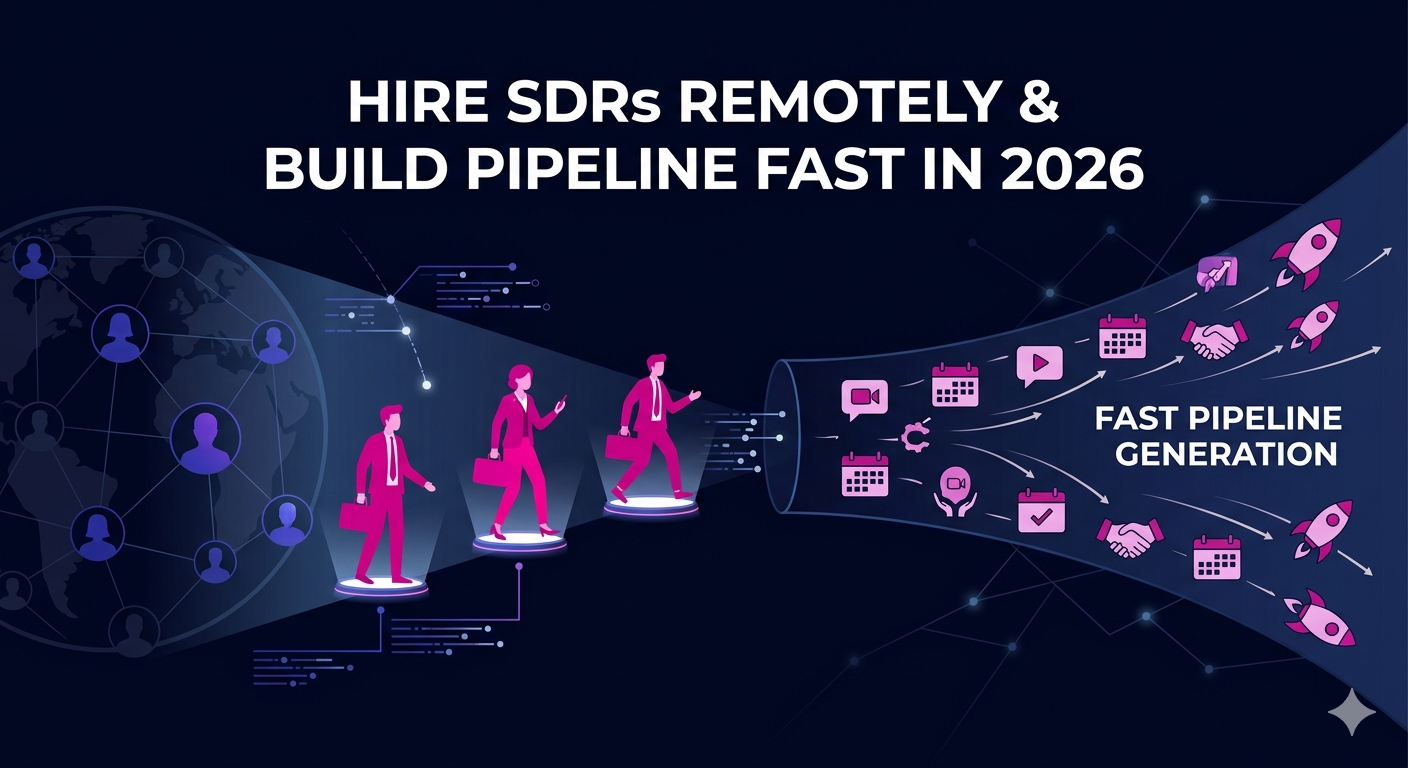
Finding great Sales Development Representatives has always been competitive. But in 2026, the conversation has shifted. Companies are no longer asking whether remote SDRs can perform, they are asking how to find and hire the best ones as efficiently as possible. If you are looking for the best way to hire SDRs remotely, this guide will walk you through every step of the process, from defining your requirements to running an effective remote hiring process and setting your new reps up for long-term success.
The payoff is significant. Remote SDRs typically cost less to hire and retain, ramp faster when onboarded well, and give you access to a global talent pool that your local market simply cannot match.
Why More Companies Are Choosing to Hire SDRs Remotely in 2026
The shift to remote SDR hiring is not a trend. It is a structural change in how B2B sales teams are built. Several forces are driving this shift simultaneously in 2026.
- Top SDR talent is increasingly distributed across geographies and unwilling to relocate
- Sales engagement tools, CRMs, and video platforms make remote SDR workflows seamless
- Remote SDRs in certain markets deliver strong performance at significantly lower fully loaded cost
- Companies can build follow-the-sun outreach coverage by hiring across time zones
- Remote hiring dramatically shortens time-to-pipeline compared to local recruiting cycles
For startups, scale-ups, and even enterprise teams building new pipeline functions, understanding the best way to hire SDRs remotely is now a core competency, not an optional skill.
Step 1: Define the Role Before You Post a Single Job
The most common mistake companies make when hiring SDRs remotely is starting with a generic job description. Before anything else, you need to be precise about what this person will actually do.
Key Questions to Answer Before Hiring a Remote SDR
- Will this SDR focus on outbound, inbound, or a blend of both?
- What markets, verticals, or geographies will they target?
- What tools will they use, and do they need to bring their own tech stack experience?
- What does a qualified meeting look like for your team?
- What volume of activity do you expect weekly, and what metrics will you track?
- Who will they report to, and how will performance be reviewed?
Answering these questions upfront gives you a clear hiring profile and makes it much easier to evaluate candidates against objective criteria rather than gut feeling.
Build a Tight Ideal Candidate Profile
Your Ideal Candidate Profile (ICP) for SDR hiring should mirror the rigor you apply to your customer ICP. Define the industries they should have sold into, the outreach methods they should be fluent in, the tools they should know, and the specific performance benchmarks from prior roles you will use to screen them. This profile becomes your evaluation rubric throughout the entire process.
Step 2: Choose the Right Channels to Find Remote SDR Talent
Where you look for remote SDRs determines the quality and volume of candidates you attract. The best way to hire SDRs remotely involves using a combination of targeted channels rather than relying on a single source.
Top Channels for Finding Remote SDRs in 2026
- Specialized remote sales talent platforms: Platforms that focus specifically on vetted, remote sales professionals save significant screening time and surface candidates who already have remote work experience
- LinkedIn talent search: LinkedIn remains the most powerful direct-sourcing tool for SDR roles, particularly when filtering for specific tools, industries, and activity metrics
- SDR outsourcing and staffing agencies: Agencies that specialize in placing remote SDRs offer pre-vetted candidates and often include support with onboarding and performance management
- Referral networks: Your existing sales team is one of the best sources for SDR referrals, since high performers tend to know other high performers
- Targeted job boards: Remote-first job boards that attract candidates who prefer distributed work environments generate higher quality applicants for remote SDR roles
Step 3: Structure a Remote SDR Hiring Process That Actually Works
A poor hiring process is the fastest way to make a bad hire even in the best talent market. The best way to hire SDRs remotely requires a structured, consistent evaluation process that tests for the specific skills remote SDRs need.
Stage 1: Application Screening
Ask for a brief written response to a specific question as part of the application. Something like: “Describe a cold outreach sequence you built from scratch. What was your reply rate and what did you learn?” This immediately filters out low-effort applicants and surfaces candidates who can think and communicate in writing, a critical skill for remote SDRs.
Stage 2: Async Video or Written Assessment
Before investing time in a live interview, send qualified candidates a short async assessment. Ask them to write a cold email targeting a specific persona, or record a 90-second video explaining your value proposition as if speaking to a prospect. This tests communication quality, coachability, and work ethic before you commit a live call to them.
Stage 3: Live Competency Interview
The live interview for a remote SDR should include a role-play scenario where the candidate handles a cold call opening or an objection. It should also include structured questions about their past metrics, specifically meetings booked per month, email reply rates, and ramp time in previous roles. Remote candidates should be able to speak fluently about their own performance data.
Stage 4: Reference Checks With Prior Managers
Always check references with direct managers, not just HR contacts. Ask specifically about the SDR’s self-management, how they handled feedback, their consistency in hitting targets, and whether they would rehire them. For remote roles, self-management is especially critical since there is no office environment to provide structure.
Step 4: Evaluate Candidates Against Remote-Specific Criteria
Beyond core SDR skills, the best way to hire SDRs remotely means screening for attributes that predict success in a distributed work environment.
Must-Have Traits for Remote SDR Success
- Documented track record of hitting activity and meeting targets without daily supervision
- Strong written communication skills for email outreach and async team collaboration
- Proficiency with remote sales tools including Apollo, Outreach, Instantly, HubSpot, or Salesforce
- Comfort working in asynchronous environments across time zones
- Data literacy and the ability to self-report metrics accurately and proactively
- Clear, organized communication style in Slack or email-based team environments
Step 5: Onboard Remote SDRs for Speed and Performance
A strong hire can still fail with a weak onboarding process. Remote SDR onboarding needs to be structured, well-documented, and time-bound. Leaving a new remote SDR to figure things out on their own is one of the most common and avoidable reasons for early attrition.
A 30-Day Remote SDR Onboarding Framework
- Week 1: Product knowledge, ICP deep dive, tool setup, and access to all platforms
- Week 2: Messaging training, sequence review and approval, practice outreach with feedback
- Week 3: Live outreach begins, daily activity logged, manager reviews all replies and responses
- Week 4: First qualified meetings expected, performance review against 30-day targets, feedback loop established
Setting clear 30, 60, and 90-day milestones helps remote SDRs understand exactly what success looks like and gives you objective data to assess whether the hire is working.
Where to Find Pre-Vetted Remote SDR Talent
If you want to skip the lengthy recruiting process and access remote SDRs who are already screened, trained, and ready to produce pipeline, working with a specialized provider is one of the fastest paths to results.
The Remote Reps connects B2B companies with remote SDRs who are pre-vetted and ready to build pipeline from day one. Whether you need one dedicated rep or a full outbound team, the platform is built around delivering the best way to hire SDRs remotely without the typical friction of a full recruiting cycle.
For additional benchmarks on how companies are structuring remote SDR hiring and performance standards, LinkedIn Talent’s guide to hiring remote sales reps remotely provides data-backed insights on what top-performing remote SDR candidates look like and where to find them.
Conclusion: Stop Delaying and Start Hiring Remote SDRs the Right Way
The best way to hire SDRs remotely in 2026 is not a mystery. It requires a precise role definition, the right sourcing channels, a structured evaluation process, and a disciplined onboarding framework. Companies that get these four elements right consistently build remote SDR teams that outperform their in-house counterparts at a lower cost and faster timeline.
If you are ready to stop guessing and start building a remote SDR function that generates real pipeline, the tools, talent, and frameworks are all available to you right now.
Frequently Asked Questions: Best Way to Hire SDRs Remotely
What is the best way to hire SDRs remotely for a startup?
The best way to hire SDRs remotely for a startup is to start with a tightly defined role and ICP, source candidates through specialized remote sales talent platforms or staffing agencies, and use a structured evaluation process that includes a written assessment and a live role-play. Startups with limited recruiting resources often get the fastest results by working with an outsourced SDR provider rather than running a full independent hiring cycle.
How long does it take to hire SDRs remotely using the best process?
Using the best way to hire SDRs remotely, a well-structured process typically takes two to four weeks from job posting to signed offer. Screening and async assessments can happen in parallel, which compresses the timeline significantly compared to traditional in-person hiring. Working with a specialized platform or agency can reduce this to one to two weeks for pre-vetted candidates.
What tools should remote SDRs know when hiring the best candidates?
The best way to hire SDRs remotely involves screening for proficiency in the tools your team already uses. In 2026, the baseline expectation is familiarity with prospecting platforms such as Apollo or ZoomInfo, sales engagement tools like Outreach or Instantly, a CRM such as HubSpot or Salesforce, and a communication platform like Slack. Candidates who cannot demonstrate competency in these tools will require significantly longer ramp time.
Should I hire SDRs remotely as employees or contractors?
The best way to hire SDRs remotely depends on your stage and goals. Early-stage companies often benefit from starting with contractors or outsourced SDRs to validate their outbound motion before committing to full-time employment. As your pipeline model matures and you have clear performance data, transitioning top performers to full-time remote employees creates more stability and deeper product knowledge over time.
What are the biggest mistakes companies make when hiring SDRs remotely?
The most common mistakes when following an ineffective approach instead of the best way to hire SDRs remotely include writing vague job descriptions, skipping structured skills assessments, failing to check references with direct managers, and neglecting onboarding after the hire. Each of these mistakes independently increases the risk of a poor hire. Together, they almost guarantee early attrition and wasted budget.
How do I measure whether my remote SDR hiring process is working?
You are following the best way to hire SDRs remotely when your new hires consistently hit activity targets in their first 30 days, book their first qualified meeting within 30 to 45 days, and reach full ramp within 60 to 90 days. Track time-to-first-meeting, 90-day retention rate, and meetings booked per month as your primary hiring process quality indicators.