
Running a small law firm means wearing many hats simultaneously. You are meeting clients, preparing filings, managing deadlines, and trying to grow your practice, all at once. The administrative and research workload alone can consume hours that should be spent on billable work. Hiring a remote paralegal for your small law firm is one of the most practical and cost-effective decisions you can make in 2026 to reclaim that time and operate at a higher level.
Remote paralegals are no longer a niche arrangement. They are a mainstream solution that thousands of small and solo practices rely on to handle legal research, document drafting, case management, client intake, and much more. This guide covers everything you need to know to hire the right person, manage them effectively, and see a measurable return on your investment.
Why Small Law Firms Are Choosing Remote Paralegal Support in 2026
The legal industry has undergone a significant operational shift over the past few years. Cloud-based case management platforms, secure document sharing tools, and e-signature software have made it entirely practical for paralegals to support attorneys from any location. Small firms that once believed full-time, in-office staff were the only option have discovered that remote legal support delivers the same quality of work at considerably lower cost.
For a small law firm, the financial case is compelling. A full-time in-office paralegal in the United States typically costs between $55,000 and $80,000 per year when salary, payroll taxes, benefits, and office overhead are factored in. A skilled remote paralegal working on a part-time or contract basis can deliver equivalent results for a fraction of that amount, with no office space required and no commitment to full-time hours when workload fluctuates.
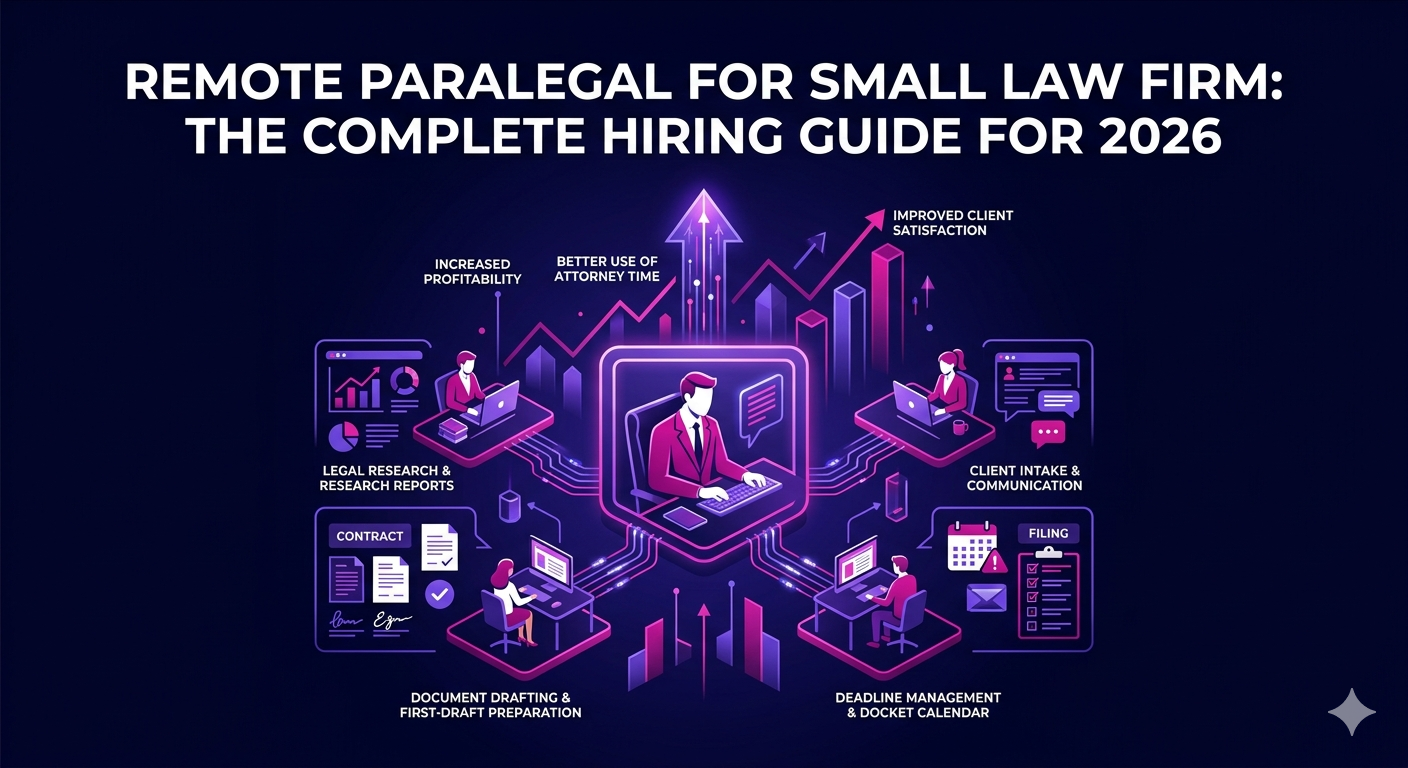
According to the American Bar Association’s resources on paralegal utilization, law firms that effectively leverage paralegal support consistently report higher profitability, better use of attorney time, and improved client satisfaction scores. Remote arrangements extend those benefits further by removing geographic constraints from your hiring process.
What Can a Remote Paralegal Do for a Small Law Firm?
Before hiring, it helps to understand the full scope of tasks a remote paralegal can handle. Many small firm attorneys are surprised by how much can be managed remotely with the right systems in place.
Legal Research and Case Preparation
Remote paralegals conduct thorough legal research using platforms like Westlaw, LexisNexis, and Casetext. They compile case summaries, review relevant statutes and case law, and organize findings into clear, attorney-ready reports. This research support alone can save attorneys several hours per week on each active matter.
Document Drafting and Review
From contracts and pleadings to demand letters and discovery requests, remote paralegals handle first-draft document preparation across a wide range of practice areas. They work from your templates and style preferences, allowing you to review and finalize rather than draft from scratch every time.
Client Intake and Communication
Coordinating initial consultations, gathering client information, and managing intake questionnaires are all tasks a remote paralegal handles efficiently. Keeping clients informed about case progress through routine status updates is another function that improves client experience without requiring attorney time.
Court Filing and Deadline Management
Remote paralegals monitor filing deadlines, prepare court documents for e-filing, and maintain your docket calendar. This function is particularly valuable for small firms where a missed deadline can have serious professional consequences.
Case File Organization and Management
Maintaining organized, up-to-date digital case files within your practice management software is a core paralegal function that remote professionals handle just as effectively as in-office staff. Platforms like Clio, MyCase, and PracticePanther are fully cloud-based and designed for remote collaboration.
How to Hire a Remote Paralegal for Your Small Law Firm
A thoughtful hiring process saves time, reduces turnover, and ensures you bring on someone who fits both your practice area and your working style. Follow these steps to hire with confidence:
Step 1: Define the Role and Practice Area Fit
Paralegal experience is not one-size-fits-all. A paralegal with strong family law experience may not be the best fit for a business litigation practice. Before posting a role, list the specific tasks you need covered, the practice areas involved, and the software your firm uses. This specificity dramatically improves the quality of applications you receive.
Step 2: Specify Availability and Time Zone Requirements
Consider how much real-time collaboration is required. If you need someone available during court hours or for client calls, specify your required working hours upfront. Many remote paralegals offer flexible scheduling, but setting clear expectations before the hire prevents friction later.
Step 3: Source From Legal-Focused Talent Platforms
General freelance platforms make it difficult to filter for genuine legal expertise. Working with a platform that specializes in remote legal professionals gives you access to candidates who have already been evaluated for legal knowledge and professional standards. Explore the remote paralegal services at The Remote Reps to connect with pre-vetted legal talent suited for small firm environments.
Step 4: Assess With a Paid Skills Test
A brief paid assignment, such as drafting a standard demand letter from a fact pattern or summarizing a provided case, reveals far more than a resume. Evaluate the quality of legal writing, attention to detail, adherence to instructions, and turnaround time. This practical screen reduces the risk of a mismatch significantly.
Step 5: Establish a Clear Onboarding Process
Even experienced paralegals need time to learn your firm’s preferences, templates, and workflows. Prepare a short onboarding document covering your style guide, filing procedures, communication expectations, and any jurisdiction-specific requirements. A well-structured first two weeks sets the tone for a long and productive working relationship.
Managing a Remote Paralegal Effectively in a Small Firm Setting
The concerns most small firm attorneys raise about remote staff are rooted in accountability and communication. Both are entirely manageable with the right structure in place.
- Use a shared task management system: Tools like Asana, Trello, or the task functions within your case management software keep assignments visible and deadlines clear for both parties.
- Schedule brief daily or weekly check-ins: A fifteen-minute video call at the start of the week to review priorities and address questions prevents small misunderstandings from growing into larger problems.
- Set clear turnaround expectations: Specify expected delivery times for recurring task types from day one. This removes ambiguity and builds a reliable workflow rhythm.
- Provide timely feedback: Remote professionals improve faster when feedback is specific and prompt. If a drafted document needs adjustment, explain the reasoning so the paralegal can apply it independently on the next task.
- Protect client confidentiality: Ensure your remote paralegal signs a confidentiality agreement, uses secure file sharing platforms, and follows your firm’s data security protocols. Most experienced legal professionals are already familiar with these requirements.
The Cost Advantage of a Remote Paralegal for a Small Law Firm
Beyond the obvious salary savings, hiring a remote paralegal for your small law firm reduces costs across multiple dimensions. You are not paying for office supplies, workstation equipment, or additional software licenses in many cases. You are not managing payroll complexity tied to a full-time employee. And you retain the flexibility to scale hours up or down based on your actual caseload rather than carrying fixed labor costs through slower periods.
For attorneys billing at $200 to $500 per hour, freeing even five to ten hours per week through paralegal delegation can generate $4,000 to $20,000 in additional monthly billable revenue. The return on investment from well-utilized remote paralegal support is one of the clearest in any professional service firm.
Building a Stronger Small Firm Practice With Remote Legal Support
The most successful small law firms in 2026 are not the ones with the largest office space or the biggest headcount. They are the ones that leverage skilled remote professionals to maximize the value of every attorney hour while keeping overhead lean and client service high.
A well-placed remote paralegal for your small law firm is not just a cost-saving measure. It is a strategic investment in your capacity to take on more clients, deliver better service, and build a sustainable practice without burning out in the process.
If you are ready to find experienced remote legal support tailored to small firm needs, browse the full selection of pre-vetted professionals available through The Remote Reps legal staffing services and start the conversation today.
Frequently Asked Questions About Hiring a Remote Paralegal for a Small Law Firm
What does a remote paralegal for a small law firm typically handle?
A remote paralegal for a small law firm typically handles legal research, document drafting, client intake coordination, court filing preparation, deadline tracking, and case file management. The specific tasks depend on your practice area and the volume of work, but most experienced remote paralegals can manage a broad range of administrative and substantive legal support functions independently.
Is it ethical for a small law firm to use a remote paralegal?
Yes, using a remote paralegal for a small law firm is entirely ethical provided the supervising attorney maintains proper oversight of all paralegal work, as required by applicable state bar rules. The remote nature of the arrangement does not change the ethical obligations surrounding supervision, client confidentiality, or unauthorized practice of law. Most bar associations have published guidance confirming that remote legal support arrangements are permissible when properly supervised.
How much does a remote paralegal for a small law firm cost?
The cost of a remote paralegal for a small law firm varies by experience level, practice area specialization, and region. Rates generally range from $18 to $45 per hour for contract or part-time arrangements. This compares favorably to the $55,000 to $80,000 annual cost of a full-time in-office paralegal, and the flexibility of remote hiring means you only pay for the hours your workload actually requires.
What software should a remote paralegal use for a small law firm?
A remote paralegal for a small law firm should be comfortable with your case management platform, whether that is Clio, MyCase, PracticePanther, or another system. They should also be proficient with legal research databases, secure document sharing tools, and e-filing portals relevant to your jurisdiction. Most experienced remote paralegals come familiar with these platforms and require minimal additional training.
How do I ensure client confidentiality when using a remote paralegal?
To protect client confidentiality when working with a remote paralegal for your small law firm, require a signed confidentiality and non-disclosure agreement before any client information is shared. Use encrypted file sharing platforms, avoid transferring sensitive documents via personal email, and ensure your paralegal works on a secure, private network. These are standard precautions that experienced remote legal professionals already expect and follow.
Can a remote paralegal for a small law firm work across different practice areas?
Yes, many remote paralegals have experience across multiple practice areas, including family law, real estate, business law, estate planning, and personal injury. However, if your firm handles highly specialized work such as patent prosecution or complex securities litigation, it is worth sourcing a paralegal with specific experience in that niche. Being clear about practice area requirements during the hiring process ensures you find someone who can contribute from day one.