
If you are running an online store and trying to scale, understanding how to hire remote employees for ecommerce is one of the most valuable skills you can develop. The right remote hires free you from day-to-day operations, keep your customer experience sharp, and let you expand into new markets without adding physical overhead. In 2026, the talent pool for remote ecommerce roles is deeper and more specialized than ever before, which means opportunity, but also complexity if you do not have a clear hiring process.
This guide walks you through every stage, from defining what you need to onboarding your first remote ecommerce hire so you can build a team that actually delivers results.
Why Ecommerce Businesses Are Going Remote
The shift toward remote teams in ecommerce is not just a cost play. It reflects a fundamental change in how online businesses operate. Here is why remote hiring has become the standard for growing ecommerce brands in 2026:
- Access to global talent with specialized ecommerce skills at competitive rates
- Ability to cover time zones for customer support and order management
- Faster scaling without the delays of local recruitment
- Lower overhead compared to in-office team structures
- Flexibility to hire role by role as the business grows
Whether you are selling on Shopify, Amazon, or a custom storefront, remote employees can handle nearly every function in your operation.
Step 1: Define the Roles You Actually Need
Before you post a job listing, get specific about what is slowing your growth or consuming your time. Many ecommerce founders try to hire a generalist and end up with someone who is mediocre at everything. Instead, identify the single bottleneck that a new hire would solve.
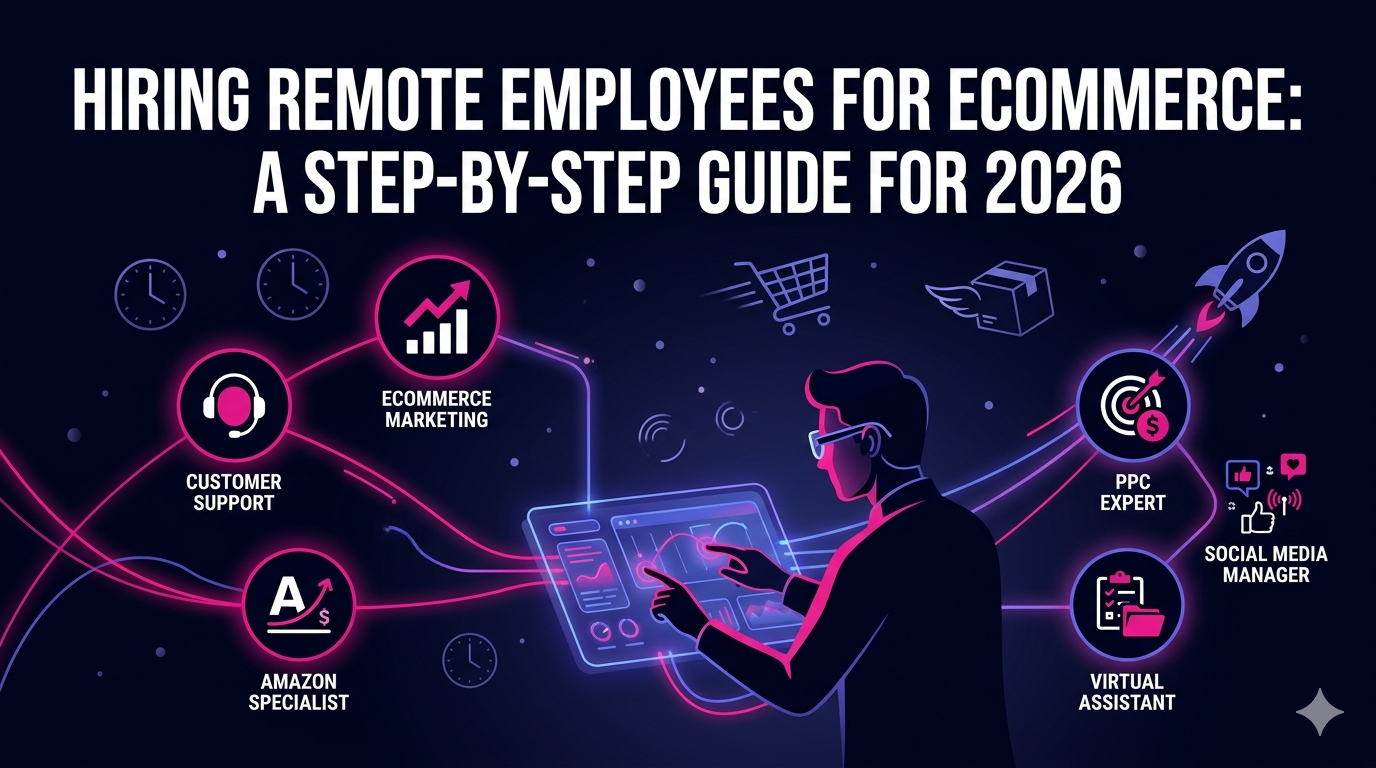
Common Remote Roles in Ecommerce
- Customer support specialist: Handles tickets, returns, refunds, and reviews across channels
- Ecommerce marketing expert: Manages campaigns, product promotions, and conversion optimization
- Amazon specialist: Oversees listings, PPC campaigns, and seller account health
- Social media manager: Creates and schedules content, manages community engagement
- PPC expert: Runs and optimizes paid ads on Google, Meta, and TikTok
- Virtual assistant: Handles admin, order processing, supplier communication, and data entry
Mapping your tasks to specific roles before you hire prevents mismatched expectations and high turnover.
Step 2: Write a Role-Specific Job Description
A vague job description attracts vague applicants. When learning how to hire remote employees for ecommerce, the job description is your first filter. Be direct about what the role involves, what tools the person needs to know, and what success looks like in the first 90 days.
What to Include in Your Ecommerce Job Description
- A one-paragraph summary of your store and its stage of growth
- Specific responsibilities listed in plain language
- Required tools such as Shopify, Klaviyo, Gorgias, Google Ads, or Amazon Seller Central
- Hours per week, time zone expectations, and contract type
- Clear metrics for performance, such as response time targets or ROAS goals
Avoid overly long lists of requirements. Focus on the five to seven skills that are non-negotiable for the role.
Step 3: Source Candidates Through the Right Channels
Where you look determines the quality of candidates you find. For remote ecommerce hiring in 2026, the most effective sourcing methods include:
- Specialist staffing platforms focused on remote ecommerce and marketing talent
- LinkedIn with targeted Boolean search strings
- Niche job boards for remote marketers, developers, and customer support professionals
- Referrals from your existing network of ecommerce operators
- Managed talent services that pre-vet candidates for you
Working with a dedicated remote staffing service like The Remote Reps ecommerce marketing experts eliminates the sourcing burden entirely. Their team places vetted specialists who understand ecommerce platforms, funnels, and performance metrics from day one.
Step 4: Screen for Ecommerce-Specific Skills
Generic hiring interviews do not reveal whether someone can handle the pace and specifics of ecommerce. You need a structured screening process that tests real skills, not just communication style.
Screening Questions for Remote Ecommerce Hires
- What ecommerce platforms have you worked with, and at what revenue scale?
- Walk me through how you would handle a spike in customer complaints after a product launch.
- What tools do you use to manage your workflow and communicate asynchronously?
- Describe a campaign or process improvement you owned from start to finish.
- How do you prioritize when managing multiple tasks across different store functions?
Skills Tests Worth Using
- A short customer support simulation using real ticket scenarios
- A sample ad account audit or keyword research task for marketing roles
- A product listing review and optimization exercise for Amazon or Shopify roles
Testing real tasks filters out candidates who look strong on paper but struggle in practice.
Step 5: Evaluate Remote Work Readiness
Technical skill is only one part of hiring remote employees for ecommerce. Remote work readiness matters just as much. Look for candidates who demonstrate:
- A reliable setup including fast internet, a dedicated workspace, and backup equipment
- Experience with async communication tools like Slack, Notion, or ClickUp
- A track record of managing their own schedule and hitting deadlines without micromanagement
- Clear written communication, since most ecommerce team interaction happens in writing
- Proactive problem-solving rather than waiting for instructions
Ask for references from previous remote roles specifically, since remote and in-office performance can differ significantly.
Step 6: Structure a Trial Period
Even the best-screened hire can turn out to be a poor fit. A paid trial period of two to four weeks protects both sides. During the trial, assign real tasks with clear deliverables and deadlines. Evaluate not just the output but how the person communicates, asks questions, and handles feedback.
A structured trial also helps you refine the role itself. You often discover tasks you had not accounted for once someone is actually doing the job.
Step 7: Onboard for Speed and Clarity
Poor onboarding is one of the top reasons remote hires underperform in their first 60 days. When you hire remote employees for ecommerce, invest time upfront in a thorough onboarding process:
- Provide a written overview of your store, brand voice, and core products
- Grant tool access on day one with a clear walkthrough of each platform
- Document processes in short video walkthroughs using Loom or similar tools
- Set 30-day, 60-day, and 90-day goals with measurable outcomes
- Schedule a brief daily or weekly check-in for the first month
The faster a new hire understands your business context, the faster they deliver real value.
Step 8: Build a Culture of Accountability and Communication
Remote ecommerce teams work best when expectations are explicit and feedback is regular. Establish a lightweight management rhythm that keeps things moving without creating meeting overload:
- Weekly async updates summarizing progress, blockers, and upcoming priorities
- A shared project board where task status is always visible
- Monthly performance check-ins tied to the metrics set during hiring
- A clear escalation path for urgent issues like order errors or ad account suspensions
For external perspective on managing distributed teams effectively, Remote’s guide to hiring and managing remote employees offers practical frameworks used by thousands of global companies.
Common Mistakes to Avoid When Hiring Remote Ecommerce Staff
Even experienced operators make avoidable mistakes when building their first remote ecommerce team. The most common ones include:
- Hiring based on availability rather than fit for the specific role
- Skipping skills tests because a candidate has an impressive portfolio
- Failing to document processes before handing them off
- Underestimating onboarding time for tools like Amazon Seller Central or Klaviyo
- Paying below-market rates and expecting above-market performance
- Not setting clear KPIs, then being frustrated when results are vague
Awareness of these traps puts you ahead of most ecommerce founders who are figuring this out the hard way.
Final Thoughts: Build Your Ecommerce Remote Team the Right Way
Knowing how to hire remote employees for ecommerce is not just an operational advantage, it is a growth strategy. The brands winning in 2026 are not the ones with the biggest budgets. They are the ones with the most capable, well-managed remote teams handling execution while founders focus on vision and partnerships.
Start with one hire, do it well, and build from there. The process outlined above scales whether you are bringing on your first customer support rep or your tenth ecommerce specialist.
Ready to hire your first remote ecommerce team member? Explore vetted Amazon and ecommerce experts at The Remote Reps and connect with pre-screened talent ready to contribute from week one.
Frequently Asked Questions
How do I start the process of hiring remote employees for ecommerce?
The best way to start hiring remote employees for ecommerce is to identify the specific bottleneck in your business first. Whether it is customer support response times, poor ad performance, or slow listing updates, naming the problem helps you define the role clearly. From there, write a targeted job description, source through specialist channels, and run a structured screening process before making an offer.
What roles should I prioritize when I hire remote employees for ecommerce?
The highest-priority roles depend on your current stage, but most ecommerce brands benefit first from hiring customer support and a marketing specialist. Once order volumes and revenue justify it, adding an Amazon expert, PPC manager, or social media manager accelerates growth. Start with the role that removes the biggest daily constraint on your time or revenue.
How much does it cost to hire remote employees for ecommerce?
Costs vary widely based on role, experience level, and geography. A part-time remote VA for basic ecommerce admin might range from a few hundred to one thousand dollars per month. A full-time ecommerce marketing expert or Amazon PPC specialist typically costs more, but significantly less than a comparable in-office hire when you factor out benefits, equipment, and office space. Using a vetted staffing service also reduces the hidden cost of bad hires.
What tools should remote ecommerce employees know how to use?
The tools depend on the role, but commonly expected platforms for remote ecommerce hires include Shopify or WooCommerce for store management, Amazon Seller Central for marketplace roles, Klaviyo or Mailchimp for email, Gorgias or Zendesk for customer support, Google Ads and Meta Ads Manager for paid media, and project management tools like ClickUp, Asana, or Notion for day-to-day coordination.
How do I manage remote employees hired for ecommerce operations?
Managing remote ecommerce employees effectively starts with clear expectations set during onboarding. Use a shared project board for task visibility, schedule brief weekly check-ins, and track performance against the KPIs defined at hire. Keep communication async by default and document processes in writing or short video walkthroughs. The goal is to create a system where your team can operate with autonomy while you stay informed without micromanaging.
Is it better to hire a freelancer or a full-time remote employee for ecommerce?
Freelancers work well for project-based or specialized tasks such as a one-time SEO audit, a product photography session, or a site redesign. When you need consistent, ongoing support in areas like customer service, marketing execution, or account management, a full-time or part-time remote employee is a better investment. They develop deep familiarity with your brand, tools, and processes over time, which directly improves output quality and reliability.