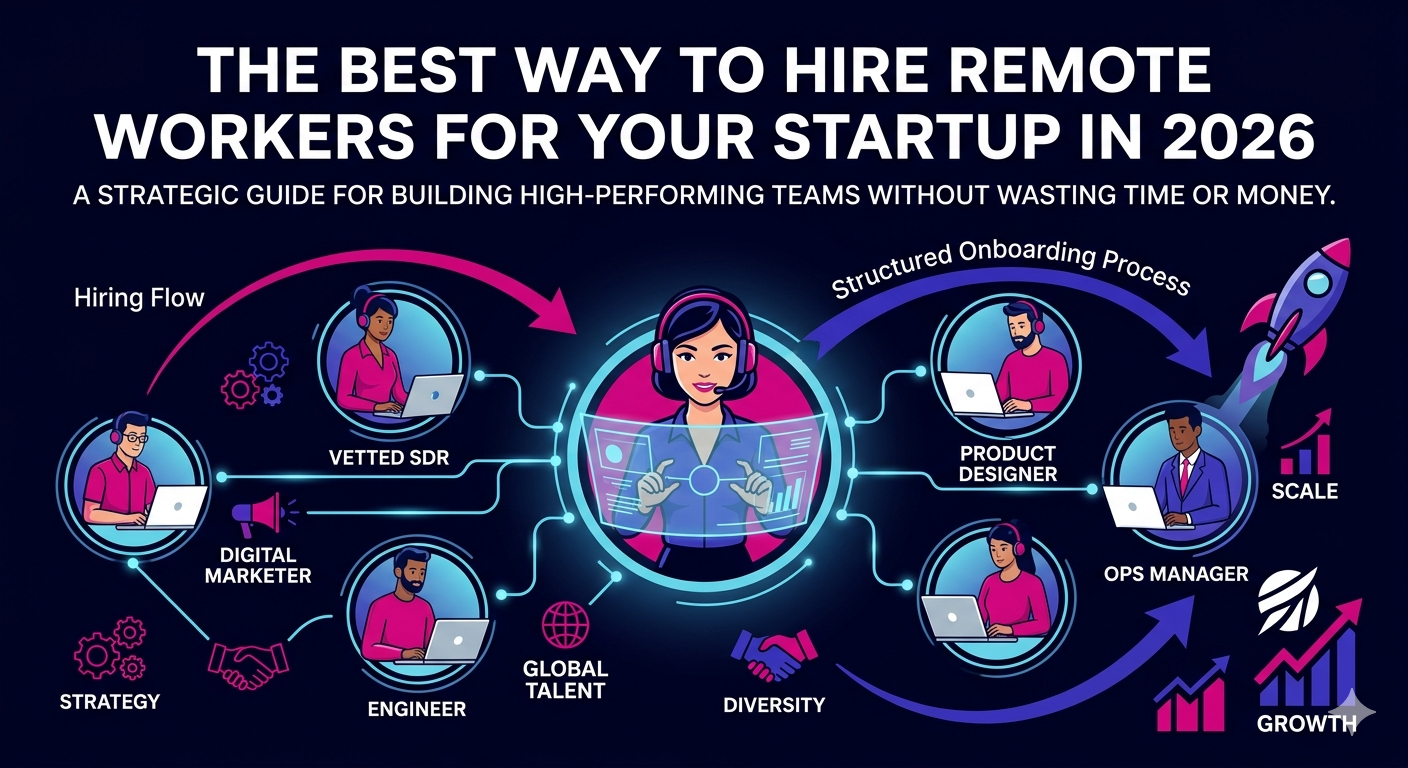
Building a startup is hard enough. Trying to staff it while competing against enterprises with deep pockets makes it even harder. But here is the good news: the best way to hire remote workers for a startup does not require a big budget or a massive HR department. It requires a clear strategy, the right channels, and a smart onboarding process. This guide walks you through every step so you can build a high-performing remote team without wasting time or money.
Why Remote Hiring Is the Startup Advantage in 2026
Remote work is no longer a perk. For startups, it is a competitive edge. By removing geographic barriers, you gain access to a global talent pool, reduce overhead costs, and build a more diverse team. According to a 2026 report by Buffer, over 97% of remote workers want to continue working remotely at least part of the time. That means top candidates are actively seeking remote roles, and startups that offer them hold a real advantage.
For early-stage companies, hiring remote workers also means lower burn rates. You skip the office lease, the commuter benefits, and the local salary premiums. Those savings can be redirected straight into product development and growth.
Step 1: Define the Role Before You Post It
The most common mistake startups make when hiring remotely is rushing the job description. A vague listing attracts unqualified applicants and wastes everyone’s time. Before you post anything, get crystal clear on the following:
- What specific outcomes do you need this person to deliver in their first 90 days?
- What tools, platforms, and time zones are required?
- Is this a full-time hire, a part-time contractor, or a project-based role?
- What does success look like in 6 months?
A well-defined role attracts self-starters who are comfortable working independently, which is exactly what remote startups need.
Step 2: Choose the Right Hiring Channels
Specialized Remote Talent Platforms
General job boards like Indeed or LinkedIn are flooded with applicants. For startups, it is far more efficient to use platforms built specifically for remote hiring. These include role-specific platforms where candidates are already pre-screened for remote readiness.
For sales and marketing roles, working with a specialist service is one of the best ways to hire remote workers for a startup. Platforms like The Remote Reps give startups direct access to vetted remote sales reps, SDRs, digital marketers, and other go-to-market professionals who are ready to contribute from day one.
Freelance Networks and Talent Marketplaces
For short-term or project-based needs, platforms such as Toptal, Contra, and Workana are worth exploring. These networks are especially useful for technical roles or specialized marketing tasks where you need proven expertise without a long hiring process.
Your Own Network
Do not underestimate the power of referrals. Post your open roles on LinkedIn, ask your advisors, and tap into startup communities on Slack and Discord. Referred hires tend to onboard faster and stay longer.
Step 3: Screen for Remote Readiness, Not Just Skills
Technical skills are table stakes. What actually separates great remote hires from poor ones is their ability to work independently, communicate asynchronously, and manage their own time. When evaluating candidates, look for:
- Previous remote work experience and how they structured their day
- Written communication skills (since remote work is heavily text-based)
- Comfort with tools like Slack, Notion, Asana, and Zoom
- A track record of meeting deadlines without micromanagement
- Proactive communication style and ownership mentality
Use a short asynchronous task as part of the screening process. Ask candidates to record a 3-minute Loom video explaining how they would approach a core part of the job. Their ability to communicate clearly on camera tells you a lot.
Step 4: Run a Structured Interview Process
Startups often skip structure in the name of speed. This leads to inconsistent hiring decisions. A simple three-stage process works well for most remote roles:
Stage 1: Async Screening
Send a short questionnaire or video prompt. This filters out low-effort applicants immediately and saves hours of scheduling.
Stage 2: Skills Assessment
Give a realistic, time-boxed task relevant to the role. For a remote SDR position, this might be writing a cold email sequence or role-playing a discovery call. Keep the task under two hours and respect the candidate’s time.
Stage 3: Video Interview
Focus this conversation on culture fit, communication style, and long-term motivation. Ask situational questions: “Tell me about a time you had to solve a problem without being able to ask your manager immediately.” Their answer reveals their remote work maturity.
Step 5: Make a Competitive Offer
Startups cannot always win on base salary. But they can win on other dimensions. Consider what makes your offer compelling:
- Flexible working hours and location independence
- Equity or performance bonuses
- Clear career growth path within the company
- A strong mission and culture that gives work meaning
- A stipend for home office setup or professional development
Being transparent about what you offer and why it matters is itself a competitive advantage. Candidates who align with your mission will choose meaning over marginal salary differences.
Step 6: Onboard with Intention
The best way to hire remote workers for a startup means nothing if your onboarding process fails them in the first 30 days. Remote onboarding requires more deliberate effort than in-person onboarding. Build a structured 30-60-90 day plan that includes:
- A written onboarding guide covering tools, processes, and expectations
- Scheduled one-on-one check-ins for the first month
- Clear 30-day milestones so they know what winning looks like
- Introductions to key team members and stakeholders
- Access to all tools and documentation from day one
A smooth onboarding experience reduces early churn, accelerates time-to-productivity, and signals to new hires that your startup is organized and serious.
Step 7: Build a Culture That Retains Remote Talent
Hiring is only half the battle. Retention is where startups often lose ground. For remote teams, culture has to be built intentionally because it does not happen passively in a hallway or a lunch room. Practices that help include weekly all-hands calls, async team channels for non-work topics, regular public recognition, and clear performance feedback loops.
Remote workers who feel connected to the mission and to their teammates stay longer, perform better, and become strong recruiters for your next hire.
If you are looking for proven, pre-vetted remote talent across sales, marketing, and operations, explore The Remote Reps’ sales rep services to see how fast you can get the right person in the right role.
For additional insight on building remote teams effectively, Remote.com’s 2026 workforce research on hiring remote workers for startups provides useful global benchmarks and compensation data.
Frequently Asked Questions
What is the best way to hire remote workers for a startup on a tight budget?
The best way to hire remote workers for a startup with limited resources is to focus on role clarity and targeted platforms. Start by defining exactly what outcomes you need, then use specialized remote talent platforms or referral networks rather than expensive recruiters. Contract or part-time hires can also help you test fit before committing to full-time roles.
How long does the best way to hire remote workers for a startup typically take?
With a streamlined process, most startups can move from job posting to signed offer in two to four weeks. Using async screening tools and pre-vetted talent platforms significantly reduces this timeline. The best way to hire remote workers for a startup is to eliminate unnecessary stages while keeping quality high.
Is the best way to hire remote workers for a startup different from hiring in-house employees?
Yes, in several key ways. When you hire remote workers for a startup, you need to screen specifically for remote work skills like async communication, self-management, and digital tool fluency. The interview process, onboarding plan, and retention strategies also need to be adapted for a distributed environment.
Can a startup hire remote workers internationally?
Absolutely. Hiring internationally is one of the biggest advantages of remote work. You gain access to highly skilled talent at a wider range of compensation levels. Use Employer of Record (EOR) services to handle legal and payroll compliance in foreign countries. This is a core part of the best way to hire remote workers for a startup looking to scale efficiently.
What roles are best suited for remote hiring at a startup?
Nearly any role can be filled remotely in 2026. That said, the best way to hire remote workers for a startup often starts with sales reps, SDRs, digital marketers, customer support agents, virtual assistants, and content specialists. These roles are output-driven and integrate well into remote workflows from day one.